

Korean BBQ Meatballs are a flavor explosion that’s both spicy and sweet, glazed in sticky gochujang sauce, and brightened with garlic, ginger, sesame, and scallions. Juicy beef and pork meatballs soak up every drop of that glossy Korean BBQ glaze, creating bite-sized morsels bursting with umami heat. Whether you pile them over steaming jasmine rice or tuck them into lettuce wraps for a lighter bite, these meatballs bring big flavors to any meal—get ready to roll, bake, and glaze your way to a delicious dinner everyone will rave about!
Key Ingredients
Let’s round up everything you need to build these spicy-sweet Korean BBQ Meatballs. Each component works together to create a tender, juicy bite coated in a glossy gochujang glaze.
- 1 1/2 pounds (680 g) ground beef (80–90% lean): The main protein base that stays juicy and flavorful.
- 1/2 pound (225 g) ground pork (or use all beef if preferred): Adds a bit of extra fat for richness and moisture.
- 1/2 cup panko breadcrumbs: Light, airy binder that soaks up milk for tender meatballs.
- 1/4 cup whole milk: Tenderizes and hydrates the breadcrumbs for a moist texture.
- 1 large egg: Acts as a glue to hold the meatballs together.
- 4 cloves garlic, finely minced: Infuses savory, aromatic depth into both meatballs and glaze.
- 2 green onions, finely sliced (white and green parts separated): White parts add oniony bite in the mix; green tops are for garnish.
- 1 tablespoon fresh ginger, finely grated: Gives a bright, zippy warmth to the meatball mixture.
- 2 tablespoons low-sodium soy sauce: Brings salty umami to the meatballs.
- 1 tablespoon sesame oil: Introduces nutty richness throughout.
- 1 tablespoon gochujang (Korean chili paste), adjust to heat preference: The signature spicy-sweet punch in the meatballs.
- 1 tablespoon brown sugar: Balances heat with caramel-like sweetness.
- 1/2 teaspoon black pepper: Provides a gentle background heat.
- 1/2 teaspoon fine sea salt (reduce if not using low-sodium soy): Enhances all other flavors.
- 1/3 cup low-sodium soy sauce: Base for the sticky Korean BBQ glaze.
- 1/3 cup water: Thins the glaze to the perfect consistency.
- 3 tablespoons brown sugar: Sweetens the sauce for a glossy finish.
- 1–2 tablespoons gochujang (to taste): Adjusts the glaze’s spiciness.
- 1 tablespoon rice vinegar: Adds bright acidity for balance.
- 1 tablespoon honey or maple syrup: Boosts sweetness and shine.
- 2 cloves garlic, minced: Layers more savory depth into the sauce.
- 1 teaspoon fresh ginger, grated: Keeps the glaze zesty and fragrant.
- 1 tablespoon sesame oil: Rounds out the sauce with nutty aroma.
- 1 tablespoon cornstarch mixed with 2 tablespoons water (slurry): Thickens the glaze to cling perfectly.
- 1 tablespoon toasted sesame seeds: For a crunchy, nutty garnish.
- 2 green onions, thinly sliced: Fresh, crisp topping that brightens each bite.
- Cooked white rice or jasmine rice: The ideal bed to soak up extra sauce.
- Kimchi or pickled vegetables (optional): Adds tangy crunch alongside the meatballs.
- Thinly sliced cucumber or carrot matchsticks (optional): Refreshing, crisp contrast.
- Lime or lemon wedges (optional, for a light squeeze of acid): A quick citrus pop just before eating.
How To Make Korean BBQ Meatballs
These Korean BBQ Meatballs come together in clear stages: mixing a seasoned meat base, shaping and cooking the meatballs, whipping up a sticky gochujang glaze, and then tossing everything together for maximum flavor. Follow each numbered step to ensure your meatballs are tender, perfectly browned, and coated in that irresistible sweet-spicy sauce.
1. In a small bowl, combine the panko breadcrumbs and milk, stirring until the crumbs soak up the liquid. Let it rest for 5 minutes to soften fully.
2. In a large mixing bowl, add ground beef, ground pork, the soaked panko mixture, egg, minced garlic, grated ginger, and the white parts of the green onions.
3. Pour in soy sauce, sesame oil, gochujang, brown sugar, then sprinkle in black pepper and sea salt. Using clean hands or a spatula, gently mix until evenly combined—avoid overmixing to keep meatballs tender.
4. Line a baking sheet with parchment paper or lightly grease it. Using a tablespoon or small scoop, portion the mixture into equal mounds. Roll each mound gently between your palms to form 1–1¼-inch meatballs and place on the tray with space between.
5. For the oven method, preheat to 400°F (200°C). Arrange meatballs on a lined sheet and bake 14–18 minutes until cooked through (160°F/71°C) and lightly browned. For extra caramelization, switch to broil for the last 1–2 minutes.
6. (Pan-sear option) Heat 1–2 tablespoons neutral oil in a skillet over medium-high heat. Add meatballs without crowding, sear on all sides for 6–8 minutes until golden and cooked through. Transfer to a plate.
7. Meanwhile, make the glaze: whisk cornstarch slurry in a small bowl. In a saucepan, combine soy sauce, water, brown sugar, gochujang, rice vinegar, honey, garlic, ginger, and sesame oil. Simmer, then stir in the slurry and cook 2–4 minutes until glossy and thick.
8. Transfer meatballs into the warm sauce, toss gently to coat, and let them simmer in the glaze 2–3 minutes so flavors meld. Thin with a splash of water if the sauce gets too thick.
9. Garnish and serve: pile meatballs on rice or skewers, sprinkle with toasted sesame seeds and green onion tops, and serve hot with optional kimchi, cucumber sticks, or a wedge of lime.
Serving Suggestions
These Korean BBQ Meatballs are a real crowd-pleaser and versatile enough for weeknight dinners or party spreads. Below are four ways to present them so everyone can enjoy that spicy-sweet, sticky glaze in style:
- Serve them over a bed of steamed jasmine rice, letting the glossy sauce drizzle down for a comforting bowl.
- Thread meatballs onto bamboo skewers for easy finger food at game day or gatherings—serve with small dipping bowls of extra sauce.
- Wrap a few in buttery lettuce leaves topped with cucumber matchsticks for a refreshing, low-carb appetizer or lunch.
- Plate alongside kimchi and pickled carrots for a vibrant Korean-inspired spread that balances heat, tang, and crunch.
Tips For Perfect Korean BBQ Meatballs
Ready to level up these meatballs? A few smart tweaks and substitutions can tailor the recipe to your taste and ensure every bite is juicy, tender, and packed with flavor.
- For a lighter version, swap in ground turkey or chicken; add an extra tablespoon of oil to the mixture so the meatballs stay moist, and watch cooking time closely.
- Gochujang heat levels vary—start with less when making the glaze, taste, then add more to dial up the spice.
- No panko on hand? Use regular breadcrumbs for a slightly denser but still delicious texture in your meatballs.
- To deepen that “BBQ” vibe, stir in ½ teaspoon smoked paprika or a drop of liquid smoke into the glaze for extra smoky notes.
- Serve these meatballs in lettuce wraps with rice, sliced cucumber, and a drizzle of extra glaze for a playful finger-food twist.
- Toast sesame seeds at home by dry-toasting in a pan over medium heat for 2–3 minutes, shaking often, until fragrant and lightly golden.
How To Store It
If you’ve got leftovers or want to prep ahead, proper storage keeps these meatballs juicy and the glaze as irresistible as day one. Follow these methods to lock in flavor and freshness:
- Refrigerate in Airtight Containers: Store cooled meatballs and glaze separately for up to 3 days. Reheat the glaze gently, add meatballs, and warm through on low.
- Freeze for Later: Flash-freeze cooked, cooled meatballs on a tray, then transfer to a freezer bag for 2–3 months. Thaw overnight in the fridge before reheating in the sauce.
- Keep Sauce Separate: Storing meatballs and glaze apart prevents sogginess. Combine and reheat just before serving for that perfect sticky coating.
- Gentle Reheating: Warm meatballs over low heat with a splash of water or extra sauce to maintain gloss and prevent drying out.
Frequently Asked Questions
Here are some quick answers to common queries about these Korean BBQ Meatballs:
- How do I know when the Korean BBQ meatballs are fully cooked?
The meatballs are done when they reach an internal temperature of 160°F (71°C). In the oven, that’s about 14–18 minutes at 400°F; pan-searing takes 6–8 minutes, searing all sides.
- Can I substitute different meats or adjust the fat content?
Yes. Swap ground pork for extra beef, or use turkey/chicken for a lighter option. If using lean poultry, add an extra tablespoon of oil and watch cooking times—they may be ready a minute or two sooner.
- What should I do if my Korean BBQ glaze is too thin or too thick?
To thicken, simmer longer so water evaporates. To thin, stir in a tablespoon or two of water. Always add the cornstarch slurry slowly while whisking to control consistency.
- How far in advance can I prepare the meatballs and glaze?
Cook and cool meatballs, then store both meatballs and glaze separately in the fridge for up to 3 days. For longer storage, freeze meatballs (up to 2–3 months), then thaw overnight before reheating in the warm glaze.
- Why do I soak panko breadcrumbs in milk before mixing?
Soaking panko in milk softens the crumbs, helping them bind with the meat and distribute moisture evenly, which ensures tender, juicy meatballs.
- How can I adjust the heat level of the meatballs and glaze?
Reduce or increase gochujang in half-teaspoon increments. For milder flavor, start light and taste the glaze before adding more chili paste. Add red pepper flakes for extra kick.
- What’s the best way to toast sesame seeds for garnish?
Heat a dry skillet over medium, add seeds, and stir constantly for 2–3 minutes until fragrant and lightly golden. Remove immediately to avoid burning.
- How do I prevent the meatballs from falling apart during cooking?
Mix gently without overworking, roll balls lightly without compressing, and chill them briefly if they feel too soft before cooking to help maintain shape.
What Makes This Special
These Korean BBQ Meatballs strike the perfect balance between sweet, spicy, and savory, making them unforgettable at the dinner table or party spread. The secret lies in the juicy beef-pork blend, softened panko, and that bold gochujang glaze that clings to every curve. Each bite delivers garlicky, gingery heat tempered by brown sugar and sesame—the kind of recipe you’ll want to print, save, and make again. Give it a whirl, then drop a comment below to let me know how your meatballs turned out or if you have questions—I’m here to help!
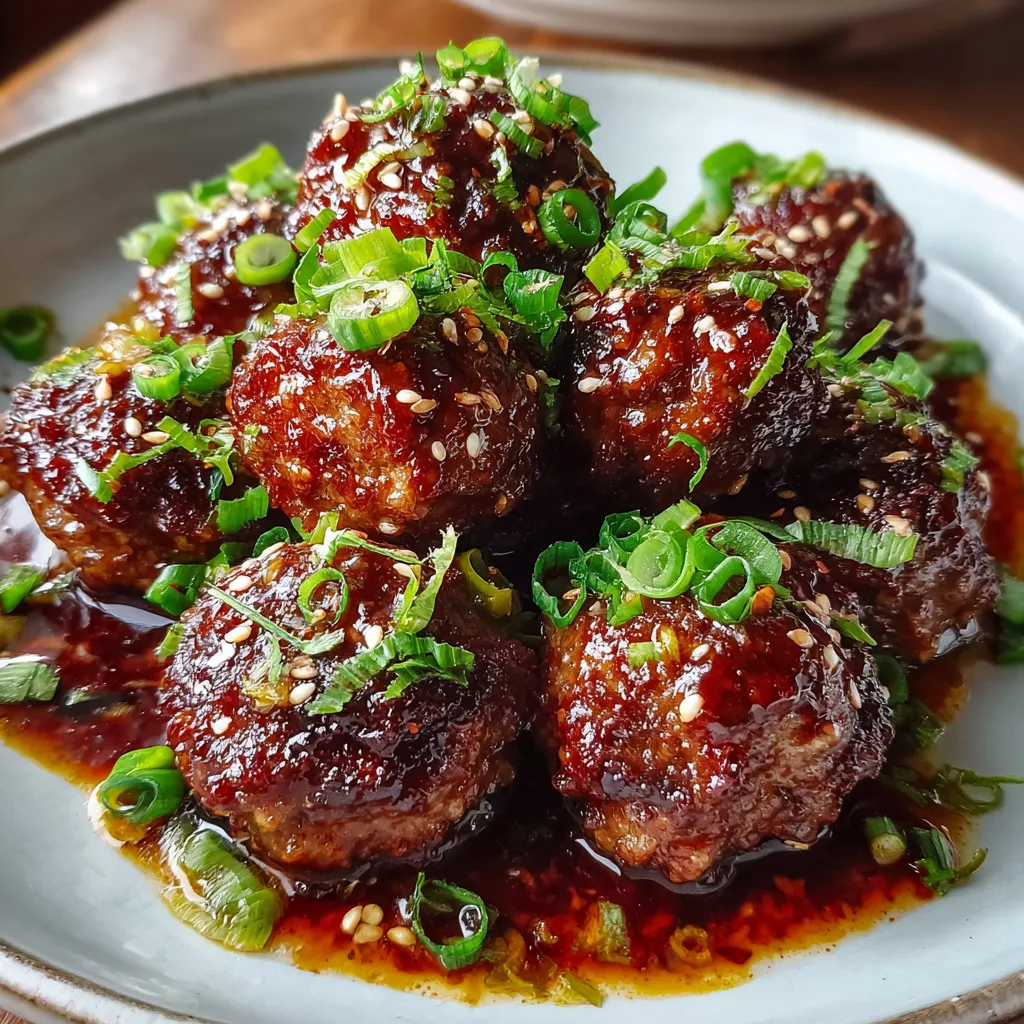

Korean BBQ Meatballs
Description
Juicy beef and pork meatballs bathed in a glossy, spicy-sweet Korean BBQ glaze, then finished with toasted sesame seeds and scallions. Each bite bursts with garlic, ginger and umami heat, perfect over steamed rice or in lettuce wraps.
Ingredients
Instructions
-
Prepare the meatball mixture:
-
- In a small bowl, combine the panko breadcrumbs and milk. Stir and let sit for 5 minutes until the breadcrumbs absorb the liquid and soften.
-
- In a large mixing bowl, add the ground beef and ground pork.
-
- Add the soaked panko mixture, egg, minced garlic, grated ginger, white parts of the sliced green onions, soy sauce, sesame oil, gochujang, brown sugar, black pepper, and salt.
-
- Using clean hands or a spatula, gently mix until everything is evenly combined. Avoid overmixing to keep the meatballs tender.
-
Shape the meatballs:
-
- Line a baking sheet or large plate with parchment paper or lightly oil it.
-
- Using a tablespoon or small scoop, portion the meat mixture into equal mounds.
-
- Roll each portion gently between your palms to form meatballs about 1 to 1 1/4 inches in diameter (roughly 24–30 meatballs, depending on size).
-
- Place the meatballs on the prepared tray, leaving a little space between each.
-
Cook the meatballs (oven method):
-
- Preheat the oven to 400°F (200°C).
-
- Lightly grease a rimmed baking sheet or line it with parchment paper.
-
- Arrange the meatballs in a single layer on the sheet.
-
- Bake for 14–18 minutes, or until cooked through and lightly browned. Internal temperature should reach 160°F (71°C).
-
- If you want a bit more browning or caramelization, switch to broil for the last 1–2 minutes, watching carefully to avoid burning.
-
Pan-sear option:
-
- Heat 1–2 tablespoons of neutral oil in a large skillet over medium-high heat.
-
- Add meatballs in a single layer without crowding (cook in batches if needed).
-
- Sear on all sides for 6–8 minutes total until nicely browned and cooked through.
-
- Transfer cooked meatballs to a plate while you prepare the glaze.
-
Make the Korean BBQ glaze:
-
- In a small bowl, whisk together the cornstarch and 2 tablespoons of water to form a smooth slurry and set aside.
-
- In a medium saucepan or large skillet, add soy sauce, water, brown sugar, gochujang, rice vinegar, honey, minced garlic, grated ginger, and sesame oil.
-
- Place over medium heat and whisk to combine. Bring to a gentle simmer, stirring occasionally.
-
- Once simmering, give the cornstarch slurry a quick stir, then drizzle it into the sauce while whisking.
-
- Continue to simmer for 2–4 minutes until the sauce thickens to a glossy, slightly syrupy consistency that coats the back of a spoon.
-
- Taste and adjust: add a bit more brown sugar for sweetness, gochujang for heat, or a splash more rice vinegar for brightness if desired.
-
- Reduce heat to low to keep the glaze warm.
-
Coat the meatballs:
-
- If you baked the meatballs, transfer them directly from the baking sheet into the pan with the warm glaze.
-
- Gently toss or roll the meatballs in the sauce until they are evenly coated and glossy.
-
- Let them simmer in the glaze for 2–3 minutes so the flavor penetrates slightly.
-
- If the sauce becomes too thick, thin it with a tablespoon or two of water and stir to bring back to a silky consistency.
-
Garnish and serve:
-
- Transfer the glazed Korean BBQ meatballs to a serving platter or shallow bowl.
-
- Sprinkle generously with toasted sesame seeds and the sliced green onion tops.
-
- Serve hot over steamed white or jasmine rice, or thread onto skewers for a party appetizer.
-
- Add kimchi, pickled vegetables, sliced cucumber, or carrot matchsticks on the side for crunch and freshness.
-
- If you like a hint of brightness, squeeze a bit of lime or lemon juice over just before eating.
-
Make-ahead and reheating:
-
- To make ahead, cook the meatballs and cool completely, then store them and the cooled glaze separately in airtight containers in the refrigerator for up to 3 days.
-
- Reheat the glaze gently in a pan with a splash of water, add the meatballs, cover, and warm over low heat until heated through, stirring occasionally.
-
- For freezing, place cooked and cooled meatballs on a tray to freeze solid, then transfer to a freezer bag or container for up to 2–3 months. Thaw overnight in the fridge before reheating in the glaze.
Note
- For a lighter version, you can use all ground turkey or chicken; just add an extra tablespoon of oil to keep them moist and watch the cooking time.
- Gochujang varies in heat level by brand; start with less and add more after tasting the sauce.
- If you do not have panko, use regular breadcrumbs; the texture will be slightly denser but still delicious.
- For extra smokiness and “BBQ” flavor, add 1/2 teaspoon smoked paprika or a drop of liquid smoke to the glaze.
- These meatballs are excellent in lettuce wraps with rice, sliced cucumber, and a drizzle of extra glaze.
- To toast sesame seeds at home, dry-toast them in a small pan over medium heat for 2–3 minutes, shaking often, until fragrant and lightly golden.