

Garlic Parmesan Focaccia Bread brings a taste of Italian countryside into your home as bubbling Parmesan peeks from each olive-oil–lustred dimple. Fluffy dough gives way to a golden crust kissed by garlic-infused olive oil, fresh rosemary, and melted cheese, creating soft, herb-studded bites you won’t be able to resist. Whether you pair it with soup, salad, or enjoy it solo, this intermediate-level flatbread is an invitation to roll up your sleeves and savor every aromatic slice!
Key Ingredients
Before we get started, here’s a quick look at the ingredients that lend our focaccia its incredible flavor and texture.
- 3 1/4 cups (390 g) all-purpose flour: Provides structure for a soft, elastic dough that traps air pockets as it rises.
- 1 1/4 cups (300 ml) warm water, about 105–110°F (40–43°C): Activates the yeast and hydrates the flour for a tender crumb.
- 2 1/4 teaspoons (7 g) active dry yeast (1 standard packet): Leavens the dough for that airy, bubbly texture.
- 2 teaspoons granulated sugar or honey: Feeds the yeast to jumpstart the fermentation process.
- 1 1/2 teaspoons fine sea salt: Enhances flavor and strengthens gluten for better structure.
- 1/4 cup (60 ml) extra-virgin olive oil, plus more for greasing and topping: Adds richness, keeps the dough moist, and creates a golden crust.
- 2 tablespoons unsalted butter, melted: Blends with olive oil to carry garlic and herb flavors deep into the crumb.
- 4–5 large garlic cloves, very finely minced or grated: Delivers a punch of savory garlic in every bite.
- 1 teaspoon garlic powder (optional, for extra flavor): Boosts the garlicky aroma without extra moisture.
- 1/2–3/4 teaspoon freshly ground black pepper: Adds a subtle spicy kick.
- 1 teaspoon dried Italian herb mix or dried oregano: Infuses classic Mediterranean herb notes.
- 1/2 teaspoon dried thyme (optional): Lends an earthy, fragrant layer.
- 1/2 teaspoon crushed red pepper flakes (optional, for a mild heat): Introduces a gentle heat to balance richness.
- 3/4 cup (60 g) freshly grated Parmesan cheese, divided: Provides nutty umami and cheesy pockets.
- 2 tablespoons freshly grated Parmesan for finishing (optional, extra): Sprinkles a final savory crunch on top.
- 2–3 tablespoons chopped fresh rosemary leaves or 1 1/2 tablespoons dried rosemary: Offers a bright, piney herbal note.
- Flaky sea salt (such as Maldon) for topping: Adds bursts of salty crunch and visual appeal.
- Olive oil spray or additional olive oil for the pan: Ensures the dough doesn’t stick and builds a crispy bottom crust.
How To Make Garlic Parmesan Focaccia Bread
Turning simple pantry staples into rustic Italian flatbread is a joyful process. We’ll start by crafting a fragrant garlic–butter oil blend, then proof and knead the dough until smooth. After a couple of rising periods and expert dimpling, we’ll shower the surface with cheese and herbs before baking to a sun-kissed finish. Follow these detailed steps and you’ll have warm, herb-studded slices in no time.
1. Prepare the garlic oil-butter mixture
In a small bowl, combine the melted butter and 1/4 cup of olive oil. Stir in the minced garlic, garlic powder (if using), black pepper, Italian herb mix, thyme, and crushed red pepper flakes until evenly incorporated. Cover and set aside to let the flavors bloom while you prepare the dough.
2. Activate the yeast
In a medium bowl or measuring jug, whisk the warm water and sugar or honey until dissolved. Sprinkle the active dry yeast over the surface and let it sit undisturbed for 5–10 minutes until a creamy, foamy layer forms. If no foam appears, discard and start again with fresh yeast and correct water temperature.
3. Make the dough
In a large mixing bowl, whisk together the flour and sea salt. Create a well in the center and pour in the activated yeast mixture. Add half of the garlic oil-butter blend (give it a quick stir first) and 1/4 cup of the freshly grated Parmesan. Mix with a wooden spoon or silicone spatula until a shaggy dough forms. Turn the dough onto a lightly floured surface and knead for 7–10 minutes until smooth, elastic, and slightly tacky—adding flour sparingly only if it’s too sticky. Alternatively, use a stand mixer with a dough hook on medium-low speed for 5–7 minutes.
4. First rise
Lightly grease a large bowl with olive oil. Shape the dough into a smooth ball, place it in the bowl, and turn once to coat. Cover tightly with plastic wrap or a damp towel. Let rise in a warm, draft-free spot for 60–90 minutes, or until doubled in size.
5. Prepare the baking pan
Generously oil a 9×13-inch baking pan (or a large pizza pan) with olive oil or parchment-lined and oiled parchment. Drizzle 1–2 tablespoons of olive oil over the bottom and spread it evenly to build a crisp, golden base.
6. Shape the focaccia
After the dough doubles, gently punch down to release excess gas. Transfer to the oiled pan and, using oiled fingertips, press and stretch the dough to fill the pan. If it springs back, let it rest for 5–10 minutes and then try again. Cover loosely and rest for 15–20 minutes.
7. Dimple and top the dough
Preheat your oven to 425°F (220°C) with a rack in the center. Oil your fingertips with the remaining garlic oil-butter mixture and press straight down into the dough to create deep dimples all over. Stir the flavor-infused oil again and brush generously across the surface, ensuring herbs and garlic settle into each indentation. Sprinkle the remaining Parmesan (reserve a bit for after baking) and chopped rosemary, then finish with flaky sea salt.
8. Second rise
Let the topped dough rest, uncovered or loosely covered, for 20–30 minutes until just puffy. It won’t double again but should feel airy.
9. Bake the focaccia
Slide the pan into the preheated oven and bake for 18–25 minutes, rotating halfway, until the edges are deep golden and the top is lightly browned. For a darker crust, bake 2–4 minutes longer, watching to prevent garlic burn.
10. Finish and cool
Remove from the oven and immediately brush any remaining garlic oil mixture over the hot surface. Sprinkle extra Parmesan if desired, add a final pinch of flaky salt and a few rosemary leaves, then let cool in the pan for 10–15 minutes to set the crumb.
11. Serve
Cut into squares or strips with a sharp knife or pizza cutter. Enjoy warm or at room temperature, alongside marinara, pesto, or simply with olive oil and balsamic for dipping.
Serving Suggestions
Now that your Garlic Parmesan Focaccia Bread is golden and fragrant, let’s explore four crowd-pleasing ways to serve each slice.
- Dip and Drizzle: Present warm squares with a dish of extra-virgin olive oil and aged balsamic vinegar for dipping, highlighting the bread’s garlicky, cheesy depth.
- Sandwich Base: Split the focaccia horizontally and layer with fresh mozzarella, ripe tomato slices, and basil leaves for an Italian-inspired sandwich that showcases the fluffy interior.
- Breakfast Toast: Lightly toast slices, then top with a poached egg and sprinkle with flaky sea salt for a savory morning treat alongside sautéed greens.
- Soup Companion: Cut into thick wedges to accompany hearty soups like tomato bisque or minestrone; the herby Parmesan crust stands up to rich, flavorful broths.
Tips For Perfect Garlic Parmesan Focaccia Bread
Focaccia is wonderfully forgiving, so don’t be shy about making it your own. If you have extra time, try an overnight rise by refrigerating the dough after mixing for 8–24 hours—this deepens the flavor and adds a subtle tang. For a chewier texture, swap in bread flour or replace up to half of the all-purpose flour with whole wheat. Love extra toppings? Scatter halved cherry tomatoes, olives, or red onion slices across the surface just before baking for a colorful twist. And if raw garlic feels too sharp, gently sauté the minced cloves in your butter–oil mixture for 1–2 minutes over low heat, then cool before using. Finally, baking in a cast-iron skillet gives an irresistibly crisp edge and rustic presentation every time.
- For an overnight rise, refrigerate the dough, covered, after step 3 for 8–24 hours, then bring to room temperature, shape, and proceed; this deepens flavor.
- Bread flour can replace some or all of the all-purpose flour for a chewier, more open crumb.
- Add halved cherry tomatoes, olives, or thin red onion slices on top before baking for a more decorative, flavorful focaccia.
- If you prefer a milder garlic flavor, lightly sauté the minced garlic in the butter-oil mixture for 1–2 minutes over low heat, then cool before adding.
- This dough also works in a 10–12 inch cast-iron skillet for an extra crisp edge and rustic presentation.
How To Store It
After enjoying fresh slices, you’ll want to keep your focaccia tasting just as good—luckily it stores beautifully under a few conditions. Whether you’re saving it for tomorrow’s lunch or planning ahead for a freezer stash, these methods will help maintain that tender crumb, crisp crust, and savory garlic–Parmesan flavor.
- Room Temperature: Wrap cooled focaccia tightly in plastic wrap or place in an airtight container. Store at room temperature for up to 2 days, keeping the crust tender and the interior soft.
- Refrigeration: For longer freshness, wrap the bread in foil or plastic and refrigerate for up to 4 days. Bring slices to room temperature or reheat in a low oven before serving.
- Freezing: Slice cooled focaccia into portions, wrap each piece in plastic, and place in a freezer-safe bag. Freeze for up to 2 months and thaw at room temperature or gently reheat in a 350°F oven.
- Reheating: To restore crispiness, preheat the oven to 350°F (175°C), unwrap the piece, and heat for 5–10 minutes until warmed through and the crust revives its crunch.
Frequently Asked Questions
Here are answers to some common questions when baking Garlic Parmesan Focaccia Bread:
- How can I tell if the yeast has properly activated?
After dissolving the sugar or honey in the warm water, sprinkle on the yeast and let it sit undisturbed for 5–10 minutes until foamy and creamy. If no foam appears, discard and repeat with fresh yeast and correct water temperature.
- My dough keeps springing back when I try to stretch it in the pan. What should I do?
If the dough resists stretching, cover it loosely and let it rest for 5–10 minutes to allow the gluten to relax. Then gently press it out to the edges without tearing.
- The bottom of my focaccia isn’t as crispy as I’d like. How can I improve it?
Generously oil your 9×13-inch pan before adding the dough. Drizzle 1–2 tablespoons of olive oil into the pan and spread it evenly so the dough bakes in a thin layer of oil. Baking at 425°F on a middle rack also encourages a crisp, golden bottom.
- I love a strong garlic flavor but worry about burning. How can I maximize garlic taste without overbrowning?
Lightly sauté the minced garlic in the butter–oil mixture over low heat for 1–2 minutes until fragrant, then cool before using. This mellows the raw bite and reduces the risk of burning in the oven.
- Can I swap in bread flour or whole wheat flour for all-purpose flour?
Yes. Using bread flour gives you a chewier, more open crumb, while substituting up to half with whole wheat adds nuttiness and extra fiber. You may need a splash more water with whole wheat.
- What’s the best way to store and reheat leftover focaccia?
Wrap cooled focaccia tightly at room temperature for up to 2 days or refrigerate for up to 4 days. To refresh, reheat in a 350°F oven for 5–10 minutes until warmed through and the crust re-crisps.
What Makes This Special
What really sets this Garlic Parmesan Focaccia Bread apart is its unbeatable combination of bubbling cheese, aromatic garlic–herb oil, and a pillowy interior contrasted by a crisp, golden crust. The simple dimpling technique ensures every bite is infused with flavor, and you can customize it with an overnight rise or skillet bake to suit your schedule. Feel free to print this recipe and tuck it into your collection for the next time you crave a taste of Italy. Drop a comment below if you give it a try or have any questions—I’d love to hear how your focaccia turns out!
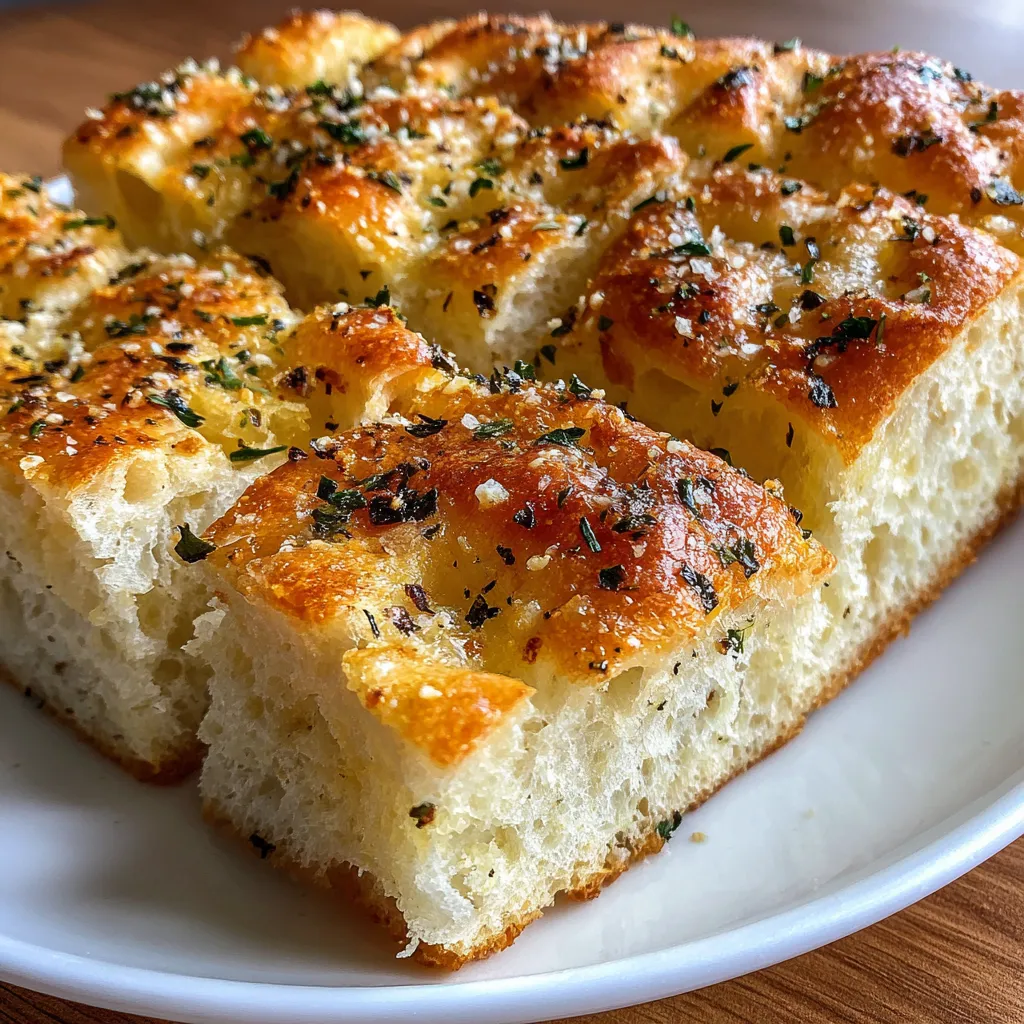

Garlic Parmesan Focaccia Bread
Description
Fluffy dough gives way to a golden crust kissed by garlic-infused olive oil, fresh rosemary, and melted Parmesan, filling the air with aromatic warmth and offering soft, herb-studded bites.
Ingredients
Instructions
-
Prepare the garlic oil-butter mixture:
-
a. In a small bowl, combine the melted butter and 1/4 cup olive oil.
-
b. Stir in the minced garlic, garlic powder (if using), black pepper, Italian herb mix, thyme, and red pepper flakes.
-
c. Set aside to let the flavors bloom while you prepare the dough.
-
Activate the yeast:
-
a. In a medium bowl or measuring jug, combine warm water and sugar or honey. Stir to dissolve.
-
b. Sprinkle the active dry yeast over the surface and let it sit undisturbed for 5–10 minutes until foamy and creamy.
-
c. If the mixture does not foam, discard and repeat with fresh yeast.
-
Make the dough:
-
a. In a large mixing bowl, whisk together the flour and sea salt.
-
b. Make a well in the center and pour in the activated yeast mixture.
-
c. Add about half of the garlic oil-butter mixture (stir it first so garlic is evenly distributed) and 1/4 cup of the grated Parmesan.
-
d. Mix with a wooden spoon or silicone spatula until a shaggy dough forms and most of the flour is moistened.
-
e. Turn the dough out onto a lightly floured surface and knead for about 7–10 minutes until smooth, elastic, and slightly tacky but not sticky. Add a small amount of flour at a time only if the dough is very sticky.
-
f. Alternatively, use a stand mixer with a dough hook on medium-low speed for 5–7 minutes until the dough is smooth and pulls away from the sides of the bowl.
-
First rise:
-
a. Lightly oil a large clean bowl with olive oil.
-
b. Shape the dough into a smooth ball, place it in the bowl, and turn it once to coat it lightly with oil.
-
c. Cover the bowl tightly with plastic wrap or a clean damp kitchen towel.
-
d. Let the dough rise in a warm, draft-free place for 60–90 minutes, or until doubled in size. Rising time will vary depending on room temperature.
-
Prepare the baking pan:
-
a. Lightly oil a 9 x 13 inch (23 x 33 cm) baking pan or a large round pizza pan with olive oil, or line with parchment and then oil the parchment.
-
b. Drizzle 1–2 tablespoons of olive oil into the base of the pan and spread it evenly. This creates a crisp, golden bottom crust.
-
Shape the focaccia:
-
a. Once the dough has doubled, gently punch it down to release excess gas.
-
b. Transfer the dough to the oiled pan.
-
c. Using your fingertips, gently press and stretch the dough to fill the pan. If the dough springs back, let it rest for 5–10 minutes and try again until it reaches the edges.
-
d. Cover loosely with plastic wrap or a towel and let it rest for 15–20 minutes.
-
Dimple and top the dough:
-
a. Preheat your oven to 425°F (220°C) with a rack in the middle.
-
b. After the rest, generously oil your fingertips with some of the remaining garlic oil-butter mixture.
-
c. Press your fingers straight down into the dough to create deep dimples all over the surface, almost to the bottom of the pan.
-
d. Stir the garlic oil-butter mixture again and spoon or brush most of it evenly over the surface of the dough, making sure garlic and herbs are well scattered into the dimples.
-
e. Sprinkle the remaining grated Parmesan (reserve a little if you want some for finishing after baking) and the chopped fresh rosemary evenly over the top.
-
f. Finish with a generous pinch or two of flaky sea salt.
-
Second rise:
-
a. Let the topped dough rise, uncovered or loosely covered, in a warm place for 20–30 minutes until slightly puffy. It will not double, but you should see some light airiness.
-
Bake the focaccia:
-
a. Place the pan in the preheated oven.
-
b. Bake for 18–25 minutes, rotating the pan halfway through, until the focaccia is deep golden brown around the edges and lightly golden on top.
-
c. If you like a darker, crispier crust, bake an additional 2–4 minutes, watching closely so the garlic does not burn.
-
Finish and cool:
-
a. Remove the focaccia from the oven and immediately brush or drizzle any remaining garlic oil-butter mixture over the hot surface.
-
b. Sprinkle the extra 2 tablespoons grated Parmesan on top while the bread is still hot, if using.
-
c. Add a final light sprinkle of flaky sea salt and a few extra rosemary leaves, if desired.
-
d. Let the focaccia cool in the pan for at least 10–15 minutes before cutting. This helps the crumb set and keeps it soft and airy.
-
Serve:
-
a. Use a sharp knife or pizza cutter to cut into squares or strips.
-
b. Serve warm or at room temperature on its own, or with marinara, pesto, or a simple dish of olive oil and balsamic vinegar for dipping.
-
c. Store leftovers wrapped at room temperature for up to 2 days or in the refrigerator for up to 4 days. Rewarm in a 350°F (175°C) oven for 5–10 minutes to refresh.
Note
- For an overnight rise, refrigerate the dough, covered, after step 3 for 8–24 hours, then bring to room temperature, shape, and proceed; this deepens flavor.
- Bread flour can replace some or all of the all-purpose flour for a chewier, more open crumb.
- Add halved cherry tomatoes, olives, or thin red onion slices on top before baking for a more decorative, flavorful focaccia.
- If you prefer a milder garlic flavor, lightly sauté the minced garlic in the butter-oil mixture for 1–2 minutes over low heat, then cool before adding.
- This dough also works in a 10–12 inch cast-iron skillet for an extra crisp edge and rustic presentation.