

Creamy Classic Italian Pasta Carbonara takes simple dried spaghetti or rigatoni and transforms it into silky, mouthwatering ribbons coated in a sumptuous emulsion of eggs, Pecorino Romano, and Parmigiano-Reggiano. Crispy, golden guanciale adds bursts of savory crunch while generous freshly ground black pepper brings that signature kick. Whether you’re craving an authentic Roman dinner or a quick gourmet treat, this lusciously creamy pasta will win over everyone at your table.
Key Ingredients
Before diving in, let’s meet the stars of this dish—each one plays its part in creating that legendary carbonara magic.
- 400 g (14 oz) dried spaghetti or rigatoni: The pasta foundation that soaks up the silky egg-cheese sauce and delivers satisfying bite.
- 150 g (5 oz) guanciale (or pancetta as a substitute), cut into small lardons: Renders rich, flavorful fat and crisps to golden perfection for savory crunch.
- 3 large eggs, room temperature: Provide the smooth, creamy body of the sauce when emulsified with cheese and heat.
- 2 large egg yolks, room temperature: Intensify richness and help create that ultra-luxe, velvety texture.
- 80 g (about 1 cup) freshly grated Pecorino Romano cheese: Sharp, salty flavor that defines traditional carbonara taste.
- 40 g (about 1/2 cup) freshly grated Parmigiano-Reggiano cheese: Adds nutty notes and balances the tang of Pecorino.
- 2–3 tbsp pasta cooking water (as needed): Starchy liquid that thins and binds the sauce into a glossy emulsion.
- 1 small garlic clove (optional), lightly crushed and left whole: Infuses subtle aroma into the rendered fat without overpowering the sauce.
- Freshly ground black pepper, to taste (be generous): Delivers the classic peppery bite that makes carbonara unmistakable.
- 1/2 tsp fine sea salt for the sauce (plus more for pasta water): Enhances all flavors in the egg-and-cheese mixture.
- Optional: a small knob of unsalted butter (about 10 g / 2 tsp) for extra creaminess: Melts into the pasta for an even silkier finish.
How To Make Creamy Classic Italian Pasta Carbonara
This section will guide you through each crucial step—from prepping ingredients to building the sauce—so you end up with irresistibly creamy carbonara every time. Follow the sequence carefully, use the rendered guanciale fat and pasta water to your advantage, and keep everything off direct heat when you add the eggs to avoid scrambling.
1. Prep the ingredients
Bring a large pot of water to a rolling boil. While it heats, cut the guanciale or pancetta into even lardons (about 0.5–1 cm) and finely grate both Pecorino Romano and Parmigiano-Reggiano into a bowl, mixing cheeses together.
2. Salt the pasta water
Once boiling, season with fine sea salt until the water tastes like the sea (about 1–1.5 tbsp for 4 L). Add the pasta and cook, stirring occasionally, until it’s just al dente according to package directions.
3. Make the egg and cheese mixture
In a large mixing bowl, whisk together the whole eggs and yolks. Stir in the grated cheeses, ground black pepper, and ½ tsp sea salt. Whisk vigorously until the mixture forms a glossy, lump-free paste.
4. Cook the guanciale
Place a cold skillet over medium heat, add guanciale and optional garlic clove. Cook, stirring occasionally, until the fat renders and the meat is crisp and golden (6–8 minutes). Remove and discard the garlic, then turn off the heat and let the pan cool for 1–2 minutes.
5. Reserve pasta water
Scoop out 1–1.5 cups of the starchy cooking water about 1–2 minutes before the pasta finishes. Keep it in a heatproof cup to adjust sauce consistency later.
6. Combine pasta with guanciale
Drain the al dente pasta, leaving it slightly wet. Return it to the skillet, set over low heat, and toss for 30–60 seconds so each strand glistens with rendered fat. Stir in the butter knob if using until melted.
7. Temper the egg mixture
Remove the skillet from heat. Whisk 2–3 tbsp of hot pasta water into the egg-cheese paste until silky and slightly loose, taking care to stir constantly.
8. Create the creamy carbonara sauce
Transfer pasta and guanciale into the tempered mixture. Using tongs or forks, toss vigorously for 45–60 seconds, adding more pasta water a tablespoon at a time until the sauce is glossy, smooth, and clings to the pasta.
9. Adjust seasoning and texture
Taste and finish with extra black pepper or a sprinkle of Pecorino Romano for more zest. If the sauce thickens too much, loosen it with another splash of hot pasta water.
10. Plate and serve
Twirl portions into warm bowls, top with extra grated cheese and a final crack of black pepper. Serve immediately to enjoy that perfect, creamy consistency.
Serving Suggestions
Elevate your Creamy Classic Italian Pasta Carbonara experience with these simple serving ideas:
- Warm Plates: Preheat serving bowls or plates in the oven or with hot water to keep the carbonara glossy and fluid longer.
- Crisp Salads: Pair with a fresh arugula salad dressed in lemon vinaigrette to cut through the richness and add peppery brightness.
- Crusty Bread: Offer slices of toasted Italian bread or ciabatta to mop up every last drop of sauce—pure comfort!
- Wine Pairing: Choose a crisp Italian white like Frascati or a light-bodied Chianti to complement the salty cheese and guanciale.
Tips For Perfect Creamy Classic Italian Pasta Carbonara
With these friendly pointers, you’ll nail authentic texture and flavor every time you make this beloved Roman classic.
- Use guanciale if possible; its unique cured flavor and fat content give the most authentic Italian taste.
- Work off the heat when adding the egg mixture; direct flame will scramble the eggs instead of forming a silky sauce.
- Always use freshly grated hard cheeses; pre-grated varieties often contain anti-caking agents that affect texture.
- Reserve more pasta water than you think you need; it is the key to adjusting creaminess and silkiness.
- For richer flavor, use 2 whole eggs and 3 yolks instead of 3 eggs + 2 yolks, but keep total volume similar.
- True Italian carbonara traditionally does not include cream, onions, or mushrooms; the creaminess comes from eggs, cheese, and fat.
- Room-temperature eggs emulsify better and reduce the risk of shock-cooking into scrambled bits.
- Serve on warm plates to keep the sauce fluid and glossy for longer.
How To Store It
Leftover carbonara can still shine if stored and reheated thoughtfully. Keep it creamy and flavorful by avoiding drying out or overheating, and you’ll enjoy that comforting taste later in the week.
- Refrigerate in an airtight container: Cool the pasta quickly, transfer to a sealed dish, and store for up to 2 days to preserve freshness.
- Stovetop reheating: Warm gently over low heat with a splash of reserved pasta water or milk, tossing constantly to revive silkiness.
- Avoid high-power microwaving: If microwaving, use short intervals at low power and stir between bursts to prevent the eggs from becoming rubbery.
- Freeze with caution: While possible, freezing can alter the sauce’s texture. Thaw slowly in the fridge and reheat on the stove with extra liquid for best results.
Frequently Asked Questions
Have questions? Let’s clear up common carbonara conundrums.
- Can I substitute pancetta for guanciale, and how will it affect the flavor?
Yes, pancetta works in a pinch. It’s cured pork belly rather than cheek, so you’ll get a milder, slightly less silky fat but still delicious savory results.
- How do I prevent the eggs from scrambling when I make the sauce?
Always remove the pan from heat before adding eggs. Temper the mixture with hot pasta water, then toss quickly—this gentle heat cooks the eggs into a creamy sauce rather than curds.
- What should I do if my carbonara sauce turns out too thick or sticky?
Stir in reserved hot pasta water one tablespoon at a time until the sauce loosens and becomes glossy, ensuring it clings beautifully without pooling.
- Can I add cream to make the sauce richer, and is it traditional?
Traditional carbonara never uses cream; the eggs, cheese, and rendered fat create all the creaminess. For extra richness, stick to butter and extra yolks.
- Which steps can I prepare ahead of time to streamline cooking?
Grate and mix the cheeses, cut the guanciale, and whisk eggs with salt and pepper. Store these in the fridge, then finish the recipe fresh for ideal texture.
- How do I know when my spaghetti or rigatoni is perfectly al dente?
Taste a piece 1–2 minutes before the lower end of cooking time—it should be firm with a tiny toothsome center, holding up well when tossed in sauce.
- What’s the best way to store and reheat leftover carbonara?
Store in an airtight container for up to 2 days. Reheat gently on the stove with a splash of water, tossing until the sauce loosens and regains its creamy sheen.
What Makes This Special
This Creamy Classic Italian Pasta Carbonara is a testament to simple ingredients and clever technique coming together in harmony. The magic lies in emulsifying eggs, cheese, rendered guanciale fat, and starchy pasta water into a silky, indulgent sauce without a drop of cream. It works because every step—from tempering the eggs off heat to reserving just enough pasta water—ensures perfect texture and authentic Roman flavor. Print this guide, save it for your next dinner party, and don’t hesitate to drop a comment or question below if you give it a whirl or need a hand mastering the toss!
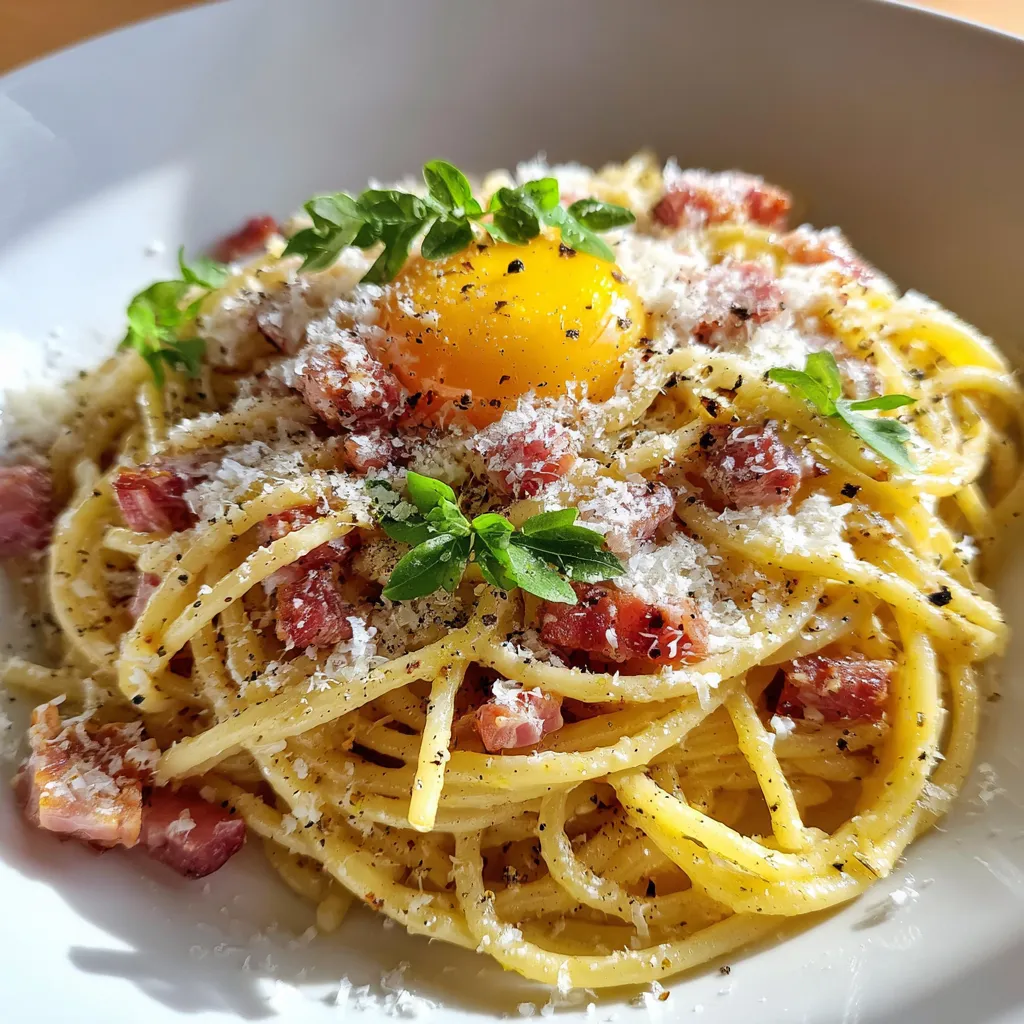

Creamy Classic Italian Pasta Carbonara
Description
Silken ribbons of spaghetti are bathed in a creamy emulsion of eggs and Pecorino, flecked with pepper, while crisp guanciale adds bursts of savory crunch.
Ingredients
Instructions
-
Prep the ingredients:
-
- Bring a large pot of water to a rolling boil.
-
- Cut the guanciale or pancetta into small, even strips or cubes (about 0.5–1 cm).
-
- Finely grate the Pecorino Romano and Parmigiano-Reggiano and mix them together in a bowl.
-
Salt the pasta water:
-
- When the water boils, add enough salt so it tastes like the sea (about 1–1.5 tbsp for 4 L of water).
-
- Add the pasta and cook until just al dente according to package directions, stirring occasionally to prevent sticking.
-
Make the egg and cheese mixture:
-
- In a large mixing bowl (big enough to hold the pasta later), combine the whole eggs and egg yolks.
-
- Add the grated Pecorino Romano and Parmigiano-Reggiano to the eggs.
-
- Season with a generous amount of freshly ground black pepper and about 1/2 tsp of fine sea salt.
-
- Whisk vigorously until you have a thick, smooth, creamy paste. It should be glossy and homogeneous with no lumps of cheese.
-
Cook the guanciale:
-
- While the pasta cooks, place a large skillet or sauté pan over medium heat.
-
- Add the guanciale to the cold pan (and the optional whole garlic clove if using).
-
- Cook, stirring occasionally, until the fat renders out and the guanciale becomes golden, crisp at the edges, and fragrant (about 6–8 minutes).
-
- Adjust heat so it sizzles gently but does not burn. You want clear, rendered fat and caramelized meat.
-
- Remove the garlic clove and discard.
-
- Turn off the heat under the pan once the guanciale is crisp. Let it cool for 1–2 minutes so it’s hot but not smoking.
-
Reserve pasta water:
-
- About 1–2 minutes before the pasta is done, carefully scoop out about 1–1.5 cups of the starchy pasta cooking water and set it aside in a heatproof measuring cup.
-
- This water will be used to adjust the creaminess of the sauce.
-
Combine pasta with guanciale:
-
- When the pasta is al dente, drain it quickly (do not over-drain; a bit of clinging water is good).
-
- Immediately add the hot pasta to the pan with the guanciale and its rendered fat.
-
- Turn the heat back to low and toss well for 30–60 seconds so the pasta gets coated in the flavorful fat.
-
- If using, add a small knob of butter and let it melt into the pasta, tossing to coat.
-
Temper the egg mixture:
-
- Take the pan off the heat completely. This is crucial to avoid scrambling the eggs.
-
- Pour about 2–3 tbsp of the hot pasta water into the egg and cheese mixture while whisking constantly. This gently heats and loosens the mixture, making it silkier and less prone to curdling.
-
- The mixture should become slightly more fluid but still thick and creamy.
-
Create the creamy carbonara sauce:
-
- Quickly transfer the hot pasta and guanciale from the pan into the bowl with the tempered egg and cheese mixture.
-
- Using tongs or two forks, toss vigorously for 45–60 seconds, lifting the pasta and turning it so every strand is coated.
-
- If the sauce appears too thick or sticky, add more hot pasta water a tablespoon at a time, tossing constantly, until it becomes glossy, smooth, and creamy, clinging to the pasta without pooling at the bottom.
-
- The residual heat from the pasta will gently cook the eggs and create a silky sauce without scrambling them.
-
Adjust seasoning and texture:
-
- Taste the pasta and adjust with more black pepper if desired. Carbonara should be quite peppery.
-
- Add a small sprinkle of extra Pecorino Romano if you like a sharper, saltier finish, tossing again to incorporate.
-
- If the sauce thickens too much while standing, add another splash of hot pasta water and toss once more to loosen.
-
Plate and serve:
-
- Twirl portions of pasta into warm serving bowls or plates.
-
- Top each serving with a little extra grated Pecorino Romano and a final grind of fresh black pepper.
-
- Serve immediately while hot and creamy, as carbonara thickens quickly as it cools.
Note
- Use guanciale if possible; its unique cured flavor and fat content give the most authentic Italian taste.
- Work off the heat when adding the egg mixture; direct flame will scramble the eggs instead of forming a sauce.
- Always use freshly grated hard cheeses; pre-grated varieties often contain anti-caking agents that affect texture.
- Reserve more pasta water than you think you need; it is the key to adjusting creaminess and silkiness.
- For richer flavor, use 2 whole eggs and 3 yolks instead of 3 eggs + 2 yolks, but keep total volume similar.
- True Italian carbonara traditionally does not include cream, onions, or mushrooms; the creaminess comes from eggs, cheese, and fat.
- Room-temperature eggs emulsify better and reduce the risk of shock-cooking into scrambled bits.
- Serve on warm plates to keep the sauce fluid and glossy for longer.