

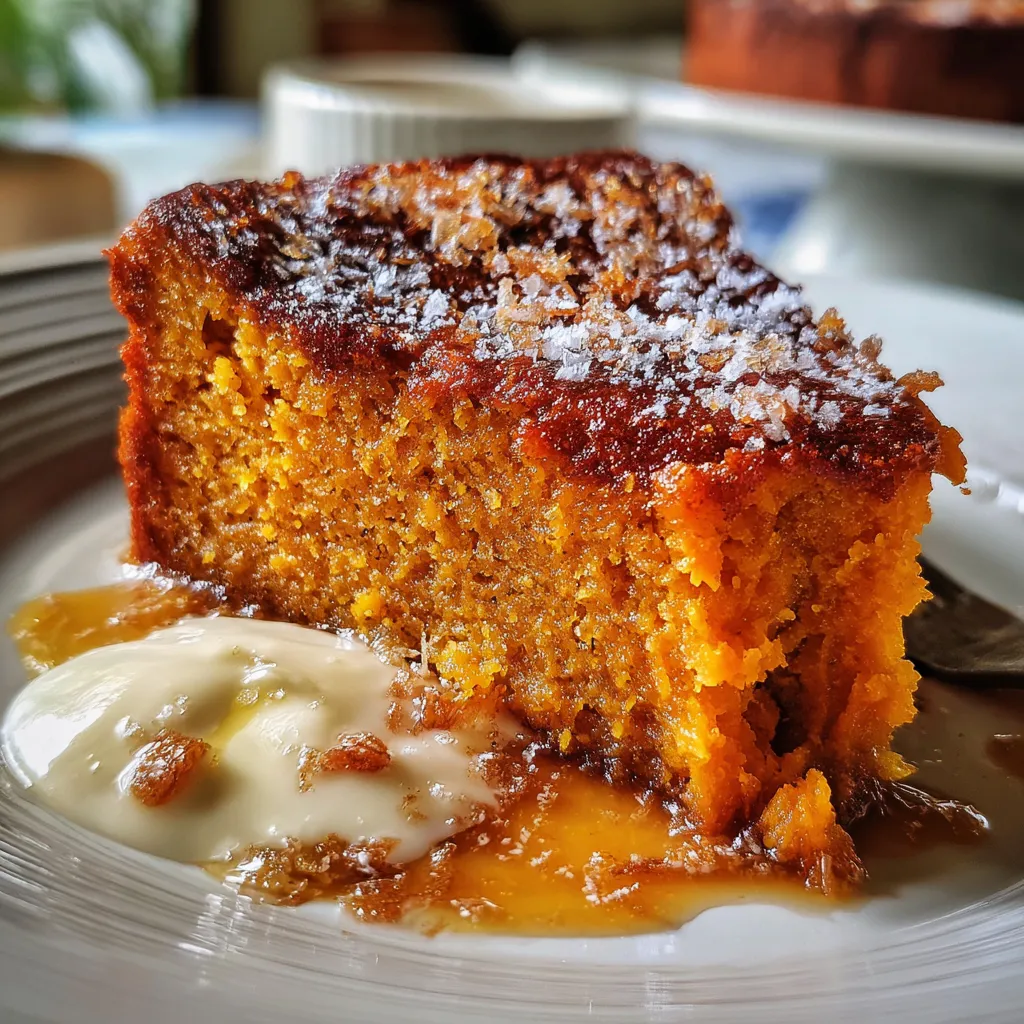
Sweet Potato Butter Cake is a celebration of cozy fall flavors and comforting textures. This moist sweet potato cake, enriched with velvety butter glaze spiced by cinnamon and nutmeg, offers a pillowy crumb that practically melts in your mouth. Topped with crunchy toasted pecans and a drizzle of maple syrup, it strikes the perfect balance between sweet and savory. Whether you’re serving it at a holiday gathering or enjoying a quiet slice with coffee, you’ll want to bookmark this recipe for seasons to come.
Key Ingredients
Get ready to gather a handful of pantry staples and fall produce to create both the cake and its luscious glaze.
- 2 medium sweet potatoes (about 400–450 g total), scrubbed: Roasted until tender, they form the naturally sweet base of both the cake and the glaze.
- 2–3 tbsp milk or cream: Added to the puree for a silky texture and richness without watering down the flavor.
- 1 tbsp unsalted butter: Blends into the puree to add creaminess and deepen the buttery taste.
- 1–2 tbsp brown sugar (optional, to taste): Enhances caramel notes in the sweet potato puree for extra warmth.
- Pinch of salt: Balances sweetness and brings out the earthiness of the potatoes.
- 1 3/4 cups (220 g) all-purpose flour: Provides the structure and tender crumb of the cake.
- 1 1/2 tsp baking powder: Works as a leavening agent to give the cake its lift.
- 1/2 tsp baking soda: Helps achieve a light texture and reacts with the puree for extra rise.
- 1/2 tsp fine sea salt: Enhances all the sweet and spiced flavors in the batter.
- 1 tsp ground cinnamon: Infuses the cake with a warm, classic fall spice note.
- 1/4 tsp ground nutmeg: Adds a hint of sweet, nutty warmth to the crumb.
- 1/4 tsp ground ginger (optional): Lends a subtle spicy kick for extra depth.
- 1/2 cup (115 g) unsalted butter, softened to room temperature: Creamed with sugar to create a light, airy batter.
- 1/2 cup (100 g) granulated sugar: Sweetens the cake without weighing down the texture.
- 1/2 cup (100 g) light brown sugar, packed: Contributes moisture and a touch of molasses flavor.
- 2 large eggs, at room temperature: Bind ingredients together and add richness.
- 1 tsp pure vanilla extract: Brings out all the warm flavors with its sweet floral notes.
- 1/2 cup (120 ml) whole milk, at room temperature: Moistens the batter and ensures a tender crumb.
- 1 cup (220 g) sweet potato puree (from above, cooled to room temperature): The heart of the cake, adding color, flavor, and moistness.
- 1/4 cup (60 g) sweet potato puree (reserved from above): Thinned into the glaze for a cohesive sweet potato theme.
- 6 tbsp (85 g) unsalted butter, very soft: Whipped into the glaze to create a silky, spreadable frosting.
- 1 1/2–2 cups (180–240 g) powdered sugar, sifted: Sweetens and thickens the glaze to your desired consistency.
- 1–2 tbsp milk or cream, as needed: Adjusts the glaze’s pourability or spreadability.
- 1/2 tsp vanilla extract: Infuses the glaze with extra aromatic sweetness.
- Pinch of salt: Balances the frosting’s richness and boosts flavor.
- Optional: 1/4 tsp cinnamon for a spiced glaze: Adds a hint of warm spice to the frosting.
- Toasted pecans or walnuts, roughly chopped: Provide a crunchy topping contrast.
- A drizzle of honey or maple syrup: Enhances sweetness and adds a glossy finish.
- Flaky sea salt for finishing: A final sprinkle to make the flavors pop.
How To Make Sweet Potato Butter Cake
From roasting the sweet potatoes to draping your cake in a glossy butter glaze, this recipe guides you through each stage with ease. You’ll transform fluffy puree into a spiced, tender batter, bake it to golden perfection, and finish with a silky, sweet potato-infused frosting. Follow these steps carefully for a showstopper bake that’s perfect for gatherings or a cozy night in.
1. Prepare the sweet potato puree. Preheat your oven to 400°F (200°C) and line a small baking tray with foil. Pierce the sweet potatoes with a fork and bake for 45–60 minutes until very soft. Let them cool slightly, peel off the skins, and transfer the flesh to a bowl. Add the butter, milk or cream, a pinch of salt, and brown sugar if desired. Mash until completely smooth and velvety, or blend in a food processor for silkiness. Measure out 1 cup (220 g) of puree for the cake and reserve 1/4 cup (60 g) for the glaze, allowing both to cool fully.
2. Prepare the cake pan. Lower the oven temperature to 350°F (175°C). Grease a 9-inch round or 8×8-inch square pan with butter, line the bottom with parchment paper, and lightly flour the sides, tapping out any excess.
3. Mix the dry ingredients. In a medium bowl, whisk together all-purpose flour, baking powder, baking soda, fine sea salt, ground cinnamon, nutmeg, and optional ginger until evenly blended. Set aside.
4. Cream the butter and sugars. In a large mixing bowl, beat softened butter, granulated sugar, and light brown sugar on medium speed for 3–4 minutes until light, fluffy, and pale. Scrape down the sides as needed.
5. Add eggs and flavoring. Add the eggs one at a time, beating well after each addition. Mix in the vanilla extract, then incorporate the cooled sweet potato puree on low speed until smooth and fully combined.
6. Combine wet and dry ingredients. Add half of the dry mixture to the batter and stir on low until just combined. Pour in the whole milk and mix gently, then fold in the remaining dry ingredients until no streaks of flour remain—avoid overmixing to keep the cake tender.
7. Bake the cake. Pour the batter into the prepared pan, smooth the top, and tap out air bubbles. Bake at 350°F (175°C) for 28–35 minutes, or until a toothpick inserted in the center comes out clean or with a few moist crumbs. Cool in the pan on a wire rack for 15 minutes, then run a knife around the edges, invert to remove parchment, and flip right-side up. Let cool completely before glazing.
8. Make the sweet potato butter glaze. In a medium bowl, beat the very soft butter until creamy, then blend in the reserved puree. Gradually add sifted powdered sugar on low speed to avoid a sugar cloud, then increase to medium until smooth. Mix in vanilla extract, a pinch of salt, and optional cinnamon. Adjust consistency with milk or cream a teaspoon at a time for your preferred pourable or spreadable texture.
9. Glaze and decorate the cake. Set the cooled cake on a serving plate. Pour or spread the sweet potato butter glaze over the top, letting it gently drip down the sides. While still soft, sprinkle on chopped toasted pecans or walnuts, drizzle with honey or maple syrup if using, and finish with a light sprinkle of flaky sea salt.
Serving Suggestions
Once your Sweet Potato Butter Cake is plated, these serving ideas will elevate each slice into a mini celebration. Whether you’re hosting brunch or craving a cozy dessert, these pairings bring out the best in every bite.
- Serve warm with a scoop of vanilla ice cream to contrast the cake’s spice and highlight its creamy texture.
- Top each slice with a dollop of whipped cream and a sprinkle of cinnamon for a café-style treat.
- Pair with a steaming mug of chai tea or pumpkin spice latte to echo those warm, seasonal flavors.
- Add a drizzle of maple syrup and extra toasted pecans for crunch and a hint of sticky sweetness.
Tips For Perfect Sweet Potato Butter Cake
This recipe is already a star, but these insider pointers will ensure your Sweet Potato Butter Cake turns out flawless every time. Think of it as chatting over coffee while we tweak the details to perfection!
- Roasting the sweet potatoes instead of boiling intensifies their natural sweetness and reduces excess moisture for a better-textured cake.
- For an extra-rich version, substitute half of the milk in the batter with heavy cream or evaporated milk to boost creaminess.
- You can turn this into a layer cake by baking in two 8-inch pans and doubling the glaze to use as frosting between layers and on top.
- A small amount of orange zest (about 1 tsp) in the batter or glaze adds a bright, aromatic note that pairs beautifully with sweet potato.
- Serve warm slices with a scoop of vanilla ice cream or a dollop of whipped cream for a dessert-style presentation that wows guests.
How To Store It
Keeping your Sweet Potato Butter Cake fresh and flavorful is easy with the right storage methods. Whether you finish the whole cake or have leftovers, follow these tips to maintain that perfect moist crumb and creamy glaze.
- Room temperature storage: Cover the cake loosely with plastic wrap or a cake dome and keep at room temperature for up to 2 days.
- Refrigeration: Store in an airtight container or wrapped in plastic wrap for up to 5 days. Bring slices to room temperature before serving to restore softness.
- Freezing unglazed cake: Wrap cooled, unglazed cake tightly in plastic wrap and aluminum foil. Freeze for up to 2 months; thaw overnight in the refrigerator before glazing.
- Thawing and glazing: After thawing, let the cake sit at room temperature while you prepare fresh glaze, then apply and decorate for a bakery-fresh finish.
Frequently Asked Questions
Got questions? Here are quick answers to the most common queries about this sweet potato delight.
- Q: How do I ensure the sweet potato puree is completely smooth and lump-free?
A: After roasting and scooping the flesh, add the butter, milk or cream, salt, and optional brown sugar while the potatoes are still warm. Mash initially with a fork or potato masher, then transfer to a blender or food processor and blend on high until velvety. Scrape down the sides and blend again if needed. If the puree still seems thick, add milk one teaspoon at a time until it reaches a smooth, pipe-able consistency. Cool it completely before folding into the cake batter or glaze to avoid deflating the cake.
- Q: Can I substitute the roasted sweet potatoes with canned puree, yams, or pumpkin?
A: You can use 1¼ cups of plain canned sweet potato or pumpkin puree in place of the homemade puree, though fresh roasted potatoes have a richer, less watery texture. If using canned pumpkin, reduce the milk in the batter by two tablespoons to compensate for added moisture. Yams can be roasted and used the same way as sweet potatoes but may taste earthier—balance with a touch more brown sugar or warm spices to replicate the cake’s intended sweetness and aroma.
- Q: How do I prevent the cake from sinking in the middle?
A: First, precisely measure your leavening agents: 1½ teaspoons baking powder and ½ teaspoon baking soda. Whisk them evenly into the flour and spices. When combining wet and dry ingredients, mix on low speed and stop as soon as the last streak of flour disappears to avoid developing excess gluten. Preheat your oven fully to 350°F (175°C) before baking, and avoid opening the oven door during the first 20 minutes. Finally, tap out air bubbles gently before baking and use the correct 9-inch round or 8×8-inch pan for even heat distribution.
- Q: How can I adapt this recipe to make a two-layer cake?
A: Divide the batter evenly between two 8-inch round pans prepared the same way you’d prepare a single pan—grease, line with parchment, and flour the sides. Bake at 350°F (175°C) for about 25–28 minutes, checking doneness with a toothpick. Reserve extra glaze by doubling the frosting ingredients so you have enough to spread between the layers and over the top and sides. For a clean finish, apply a thin crumb coat of glaze, chill for 15 minutes, then add a final coat and decorate with nuts or a drizzle of syrup.
- Q: Can I make this cake gluten-free, vegan, or dairy-free?
A: For gluten-free, substitute the all-purpose flour with a 1:1 gluten-free baking blend that contains xanthan gum, and follow all other steps as written. To go vegan, replace each egg with a flax “egg” (1 tablespoon flaxseed meal + 3 tablespoons water, chilled), use vegan butter or coconut oil, and swap whole milk for almond or oat milk. Ensure your powdered sugar is vegan if making the glaze. For a dairy-free but not vegan version, use plant-based butter and non-dairy milk throughout.
- Q: What’s the best way to store, refrigerate, and freeze leftovers?
A: Once glazed, let the cake set at room temperature for 20–30 minutes, then cover loosely with plastic wrap and store at room temperature for up to 2 days. For longer storage, refrigerate in an airtight container for up to 5 days; bring slices to room temperature before serving for the best texture. To freeze, skip the glaze, wrap the cooled unglazed cake tightly in plastic wrap and aluminum foil, and freeze for up to 2 months. Thaw overnight in the refrigerator, then warm briefly at room temperature before applying the glaze.
What Makes This Special
Sweet Potato Butter Cake works its magic by blending seasonal warmth with a luxuriously creamy frosting, creating a dessert that feels both homey and indulgent. The roasted sweet potatoes lend natural sweetness and moistness, while the spiced butter glaze ties every crumb together in perfect harmony. It’s the kind of treat you’ll want to print, save, and revisit whenever you crave comfort in cake form. If you give it a whirl, drop a comment below with your favorite twist or any questions—you know I love hearing about your baking adventures!

Sweet Potato Butter Cake
Description
This cake marries fluffy sweet potato puree with a creamy butter glaze spiced by cinnamon and nutmeg, its pillowy crumb draped in glossy frosting and crowned with toasted pecans for a satisfying crunch.
Ingredients
Instructions
-
Prepare the sweet potato puree:
-
1) Preheat your oven to 400°F (200°C). Line a small baking tray with foil.
-
2) Pierce the sweet potatoes several times with a fork. Place them on the tray and bake for 45–60 minutes, or until very soft when pierced with a knife.
-
3) Let the sweet potatoes cool until you can handle them, then peel off the skins and place the flesh in a bowl.
-
4) Add 1 tbsp butter, 2–3 tbsp milk or cream, a pinch of salt, and brown sugar if using. Mash until completely smooth and velvety. You can use a blender or food processor for extra smoothness.
-
5) Measure out 1 cup (220 g) of puree for the cake and 1/4 cup (60 g) for the glaze. Let both portions cool to room temperature before using.
-
Prepare the cake pan:
-
1) Reduce the oven temperature to 350°F (175°C).
-
2) Grease a 9-inch (23 cm) round cake pan or 8x8-inch (20x20 cm) square pan with butter. Line the bottom with parchment paper and lightly flour the sides, tapping out any excess.
-
Mix the dry ingredients:
-
1) In a medium bowl, whisk together the flour, baking powder, baking soda, salt, cinnamon, nutmeg, and ginger (if using).
-
2) Set aside.
-
Cream the butter and sugars:
-
1) In a large mixing bowl, add the softened butter, granulated sugar, and brown sugar.
-
2) Beat with a hand mixer or stand mixer on medium speed for 3–4 minutes, until light, fluffy, and noticeably paler.
-
3) Scrape down the sides of the bowl as needed.
-
Add eggs and flavoring:
-
1) Add the eggs one at a time, beating well after each addition until fully incorporated.
-
2) Beat in the vanilla extract.
-
3) Add the 1 cup cooled sweet potato puree and mix on low speed until smooth and evenly combined. The mixture will be thick and creamy.
-
Combine wet and dry ingredients:
-
1) Add half of the dry ingredient mixture to the sweet potato batter and mix on low speed just until combined.
-
2) Pour in the milk and mix gently until mostly incorporated.
-
3) Add the remaining dry ingredients and mix on low speed until no streaks of flour remain. Do not overmix; stop as soon as the batter is smooth.
-
Bake the cake:
-
1) Pour the batter into the prepared pan and smooth the top with a spatula.
-
2) Tap the pan gently on the counter a couple of times to release air bubbles.
-
3) Bake in the preheated 350°F (175°C) oven for 28–35 minutes, depending on pan size, until a toothpick inserted in the center comes out clean or with a few moist crumbs.
-
4) Remove from the oven and place the pan on a wire rack to cool for 15 minutes.
-
5) Run a knife around the edges, then carefully invert the cake onto the rack, peel off the parchment, and flip it upright. Let it cool completely before glazing.
-
Make the sweet potato butter glaze/frosting:
-
1) In a medium bowl, beat the softened butter until creamy and smooth.
-
2) Add the reserved 1/4 cup sweet potato puree and beat until fully blended and silky.
-
3) Gradually add 1 1/2 cups of the sifted powdered sugar, mixing on low to avoid a sugar cloud, then increasing to medium until smooth.
-
4) Add the vanilla, a pinch of salt, and cinnamon if using.
-
5) Add milk or cream 1 teaspoon at a time until the glaze reaches your desired consistency. For a pourable glaze, make it slightly thinner; for a spreadable frosting, keep it thicker.
-
6) If you prefer a sweeter or stiffer frosting, add the remaining powdered sugar and beat again.
-
Glaze and decorate the cake:
-
1) Place the cooled cake on a serving plate or stand.
-
2) Pour or spread the sweet potato butter glaze over the top, letting it gently drip down the sides if it is pourable.
-
3) While the glaze is still soft, sprinkle chopped toasted pecans or walnuts on top if using.
-
4) Optionally drizzle with a thin ribbon of honey or maple syrup and finish with a tiny pinch of flaky sea salt to enhance the flavors.
-
Serving and storage:
-
1) Allow the glazed cake to set at room temperature for at least 20–30 minutes before slicing, so the glaze firms slightly.
-
2) Slice with a sharp knife, wiping the blade between cuts for clean slices.
-
3) Store leftover cake covered at room temperature for up to 2 days, or in the refrigerator for up to 5 days. Bring chilled slices to room temperature before serving for the best texture.
-
4) The cake can be wrapped well and frozen (without glaze) for up to 2 months. Thaw overnight in the fridge, then glaze before serving.
Note
- Roasting the sweet potatoes instead of boiling intensifies their natural sweetness and reduces excess moisture for a better-textured cake.
- For an extra-rich version, substitute half of the milk in the batter with heavy cream or evaporated milk.
- You can turn this into a layer cake by baking in two 8-inch pans and doubling the glaze to use as frosting between layers and on top.
- A small amount of orange zest (about 1 tsp) in the batter or glaze adds a bright, aromatic note that pairs beautifully with sweet potato.
- Serve warm slices with a scoop of vanilla ice cream or a dollop of whipped cream for a dessert-style presentation.