

There’s something undeniably comforting about sinking your fork into a soft, pillowy potato dumpling that’s been lovingly crafted from simple pantry staples. Fluffy and tender on the inside, with just a hint of spice from nutmeg, German Potato Dumplings bring a touch of old-world charm right into your kitchen. Made from starchy Russet potatoes, a bit of flour, and eggs, these dumplings are so straightforward that even a beginner cook can master them. The process of boiling, ricing, and gently mixing feels almost therapeutic—like you’re part of a long tradition of home cooks who’ve shared laughter and stories around the same bubbling pot. The result is nothing short of magical: dumplings that float to the top of the water, ready to be bathed in melted butter and brightened with fresh parsley.
As these little clouds of goodness make their way from pot to plate, you’ll notice how they absorb every drop of sauce or butter you drizzle over them. Whether you’re ladling rich gravy from a Sunday roast or simply tossing them in melted butter and herbs, these dumplings stand up to bold flavors while retaining their light texture. They’re versatile enough to pair with sausages and sauerkraut on a cozy weeknight, yet elegant enough to elevate a festive dinner party. And let’s not forget the joy of customizing each bite: a surprise crouton in the center adds a crisp, savory kernel that delights with every mouthful. Trust me, once you get a taste of these homemade German Potato Dumplings, you’ll wonder how you ever lived without them.
KEY INGREDIENTS IN GERMAN POTATO DUMPLINGS
Every ingredient in this recipe plays a vital role in creating those fluffy, savory bites that have become a beloved comfort food across generations. From the starchy base that provides structure to the spices that lend subtle warmth, each component works together to form dumplings that are tender on the inside and lightly golden on the outside.
- Starchy potatoes
These are the heart of the recipe. Varieties like Russets or Yukon Golds give you a dry, fluffy mash that binds well and avoids gummy texture.
- All-purpose flour
Flour adds just enough structure to help the dumplings hold their shape while cooking, ensuring they stay light and tender.
- Eggs
Acting as a natural binder, the eggs help bring the mashed potatoes and flour together into a cohesive, workable dough.
- Salt
Essential for seasoning, salt enhances the potato’s natural sweetness and balances the richness of butter and eggs.
- Ground nutmeg
A tiny pinch of nutmeg adds a warm, nutty undertone that elevates the overall flavor profile without overwhelming the potatoes.
- Breadcrumbs
When the dough feels too sticky, breadcrumbs help absorb excess moisture, making it easier to shape perfect dumpling spheres.
- Croutons (optional)
Slide one into each dumpling for a surprise crunch and an extra boost of savory flavor at the center.
- Butter
Used for sautéing after boiling, butter creates a golden, slightly crisp exterior and a rich, indulgent finish.
- Fresh parsley
Bright green parsley adds a pop of color and a fresh, herbaceous note that balances the richness of each bite.
HOW TO MAKE GERMAN POTATO DUMPLINGS
Creating these dumplings is a simple, rewarding process that transforms everyday ingredients into a comforting classic. Follow each step carefully to achieve that characteristic light, pillowy texture and golden-brown exterior.
1. Begin by boiling the potatoes in their skins in a large pot of salted water until completely tender, approximately 20–25 minutes. This gentle boil preserves flavor and prevents the potatoes from absorbing too much water. Once fork-tender, drain the potatoes and let them cool slightly. Carefully peel them while they’re still warm for easy skin removal.
2. Mash the peeled potatoes thoroughly, using a potato ricer or heavy-duty masher, ensuring there are no lumps. Taking the time to remove every clump is crucial for a smooth dumpling interior that won’t break apart when cooked.
3. In a large mixing bowl, combine the mashed potatoes, flour, eggs, salt, and nutmeg. Use a sturdy spoon or your hands to mix until a firm dough forms. If the dough feels too moist or sticky to handle, gradually work in breadcrumbs until you reach a manageable, slightly tacky consistency.
4. Divide the dumpling dough into evenly sized pieces, shaping each into a ball about 2 inches in diameter. For a delightful surprise, gently press a crouton into the center of each ball and re-seal the dough around it.
5. Bring a large pot of salted water to a gentle simmer—not a rolling boil—to ensure even cooking. Carefully drop the dumplings in, spacing them so they don’t crowd. Cook for 15–20 minutes. They’re done when they float to the surface and the centers feel set.
6. Using a slotted spoon, lift each cooked dumpling from the water and let it drain on a paper towel or cooling rack. This step removes excess moisture, ensuring they crisp nicely in the next stage.
7. Melt butter in a frying pan over medium heat. Add the drained dumplings and sauté until each side turns golden brown and develops a slightly crisp crust—usually about 2–3 minutes per side.
8. Serve the dumplings hot, garnished with fresh chopped parsley and an extra drizzle of melted butter if desired. These dumplings shine when enjoyed immediately, offering a perfect combination of soft interior and lightly crisp exterior.
SERVING SUGGESTIONS FOR GERMAN POTATO DUMPLINGS
Choosing the right accompaniments for these dumplings can turn a humble side dish into the star of your meal. Here are some inspired ideas to showcase their fluffy texture and savory flavor in ways that will delight your family and friends.
- Serve alongside hearty roast meats such as beef brisket or pork shoulder. The dumplings soak up rich gravy perfectly, making each bite a comforting blend of tender potato and savory sauce.
- Pair with a selection of sautéed mushrooms and caramelized onions. The umami from the mushrooms and the sweetness of the onions create a delicious contrast to the soft dumpling core.
- Drizzle with brown butter and scatter toasted breadcrumbs over the top. The nutty butter and crunchy topping add layers of flavor and texture for an elevated twist.
- Offer as part of a vegetarian spread: top dumplings with roasted root vegetables, wilted spinach, and a velvety mushroom gravy. This combination highlights the dumplings’ versatility and keeps things meat-free.
HOW TO STORE GERMAN POTATO DUMPLINGS
Proper storage ensures that your homemade dumplings maintain their freshness, texture, and flavor, whether you’re saving leftovers for later or preparing batches in advance. Follow these tips to keep them tasting just like the moment they came off the pan.
When you have cooked dumplings cooling on the counter, allow them to come to room temperature first to prevent condensation in your storage container. Transfer them into an airtight container or a resealable plastic bag, placing parchment paper between layers to stop sticking. Store in the refrigerator for up to 3 days, reheating gently in a skillet with a bit of butter to restore their golden exterior.
For longer storage, lay the cooled dumplings on a baking sheet in a single layer and freeze until solid, about 1–2 hours. Once frozen, move them into a freezer-safe bag or container, separating layers with parchment paper. Frozen dumplings can be kept for up to 3 months. When ready to enjoy, boil or steam them straight from the freezer for a few extra minutes, then sauté in butter for that signature crisp finish.
If you prefer to freeze unboiled dough, shape the dumplings as directed and flash-freeze on a baking sheet. Once firm, transfer to a container. When it’s time to cook, drop the frozen dumplings into simmering water and follow the cooking times in the recipe, adding a few extra minutes as needed.
When reheating either refrigerated or frozen dumplings, avoid the microwave if possible—it can make them gummy. Instead, opt for a gentle pan-fry in butter or a quick steam to revive their tenderness without sacrificing texture.
CONCLUSION
This journey through German Potato Dumplings has taken us from boiling russet potatoes to shaping perfect, pillowy spheres, and finally to sizzling them in butter for a golden-brown finish. We’ve explored the key ingredients that give these dumplings their signature texture and flavor, dived into step-by-step instructions to guide even a beginner cook, and uncovered creative serving suggestions that turn a simple side into a memorable centerpiece. You’ve also learned smart storage methods so you can savor these dumplings throughout the week—or freeze batches for effortless future meals. Whether you’re making them for a cozy family dinner or a festive gathering, these dumplings bring warmth, tradition, and a bit of hearty German spirit to your table.
Feel free to print this article and save it in your recipe collection—your future self will thank you on days when you crave a dish that’s both comforting and impressive. You’ll find a handy FAQ section below to address any questions that pop up while you’re shaping, boiling, or sautéing. And, of course, sharing your experiences is part of the fun: drop your comments, questions, or feedback if you try the recipe or need a little extra guidance. I can’t wait to hear how your German Potato Dumplings turn out!
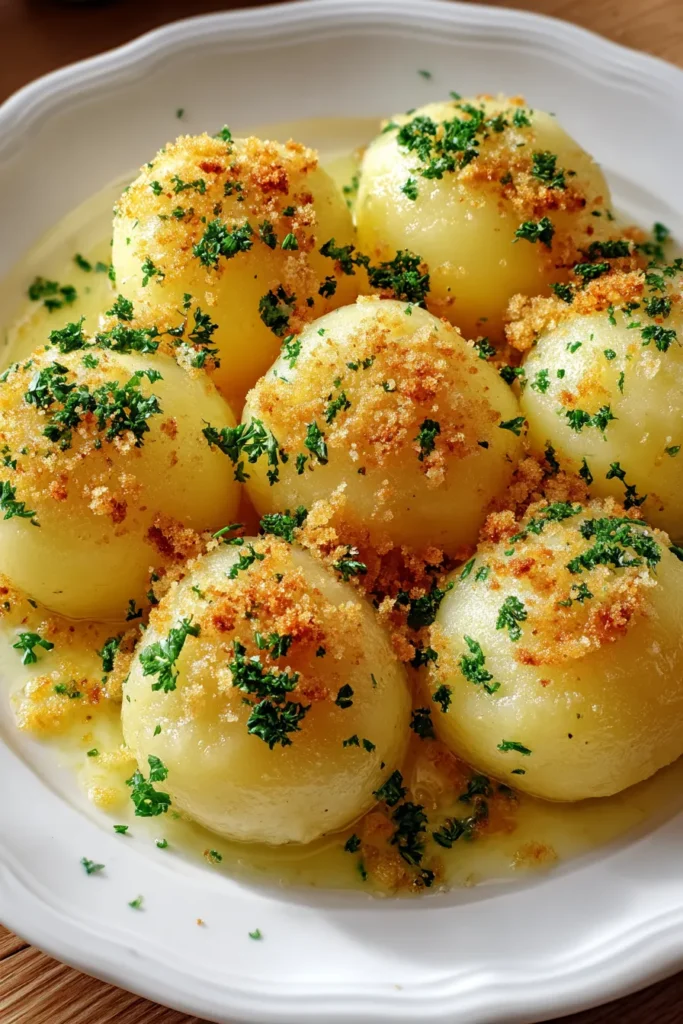

German Potato Dumplings
Description
These German Potato Dumplings are a delightful combination of starchy potatoes and simple ingredients, creating a tender, fluffy bite that pairs beautifully with rich sauces or can be enjoyed simply with butter and herbs.
Ingredients
Instructions
-
Begin by boiling the potatoes in their skins in a large pot of salted water until completely tender, approximately 20-25 minutes. Drain the potatoes and allow them to cool slightly, then peel them.
-
Mash the peeled potatoes thoroughly, using a potato ricer or masher, ensuring there are no lumps. This step is crucial as it creates a smooth dumpling texture.
-
In a large mixing bowl, combine the mashed potatoes, flour, eggs, salt, and nutmeg. Mix the ingredients together until they form a firm dough. If the dough is too sticky, incorporate breadcrumbs gradually until a workable dough is achieved.
-
Divide the dumpling dough into evenly sized pieces and shape each piece into a ball, approximately 2 inches in diameter. If desired, press a crouton into the center of each dumpling as a filling.
-
Bring a large pot of salted water to a gentle simmer. Carefully drop the dumplings into the pot without overcrowding. Allow them to cook for about 15-20 minutes. They are done when they float to the surface and have firmed up.
-
Using a slotted spoon, remove the cooked dumplings and drain them well on a paper towel.
-
Melt butter in a frying pan over medium heat and sauté the cooked dumplings until golden brown on the outside.
-
Serve the dumplings hot, garnished with fresh chopped parsley and additional melted butter if desired.
Note
- Traditionally, croutons can be used as a filling for a delightful burst of flavor when you cut into the dumpling.
- To ensure the best texture, make sure to use starchy potatoes and avoid overworking the dough.
- These dumplings pair beautifully with hearty meats and rich gravies, or they can be enjoyed on their own with a simple butter and herb topping.