

There is something truly magical about pulling a golden, savory meat pie out of the oven, especially when the kitchen smells like warm spices and rich meat. This classic French-Canadian meat pie brings warmth to the table with savory spiced ground meats and a buttery crust, making it a staple for holiday gatherings or cozy winter dinners. I remember the first time I made this; the combination of pork, beef, and veal simmered with cinnamon and cloves felt like a hug on a plate. It is an intermediate recipe that delivers huge flavor, and I really hope you give this hearty dish a try soon!
Key Ingredients
To get that authentic flavor profile, we need a specific blend of meats and aromatic spices. The trio of pork, beef, and veal is crucial for the texture, while the spices bridge the gap between savory and slightly sweet. Here is everything you need to get started.
- 1 lb ground pork: Adds essential fat and juiciness to the filling mixture.
- 1 lb ground beef: Provides a deep, robust meaty flavor that anchors the pie.
- 1 lb ground veal: Brings a delicate texture and lightness to balance the heavier meats.
- 1 onion, finely chopped: Sautéed to provide a savory aromatic base for the filling.
- 2 cloves garlic, minced: Infuses the meat mixture with a sharp, pungent kick.
- 1 teaspoon salt: Enhances all the savory notes within the meat and pastry.
- 1/2 teaspoon black pepper: Adds a subtle heat that cuts through the richness of the meat.
- 1/2 teaspoon ground cinnamon: Provides the signature warmth and festive aroma classic to tourtière.
- 1/4 teaspoon ground nutmeg: Offers a nutty, slightly sweet spice note that pairs well with pork.
- 1/4 teaspoon ground allspice: Ties the spice blend together with hints of clove and pepper.
- 1/4 cup beef broth: Adds moisture to the filling so it remains juicy inside the crust.
- 2 tablespoons fresh parsley, chopped: Introduces a pop of freshness and color to the cooked meat.
- 2 tablespoons olive oil: Used for sautéing the aromatics and browning the meat evenly.
- 2 pie crusts (homemade or store-bought): Forms the buttery, flaky vessel that holds the savory filling.
- 1 egg, beaten (for egg wash): Brushed on top to create a beautiful golden, shiny finish during baking.
How To Make Traditional French-Canadian Tourtière
Making this pie is a labor of love, but the process is actually quite straightforward. The secret lies in taking your time to brown the meats and letting those aromatic spices really bloom. We start by building a flavor base in the skillet, cooking the meat trio down until it is perfectly seasoned and fragrant. The most critical part is patience; letting the filling cool before it hits the crust ensures your pastry stays flaky and crisp rather than getting soggy. Once assembled, the oven does the heavy lifting, transforming your ingredients into a golden masterpiece.
1. In a large skillet, heat the olive oil over medium heat. Add the chopped onion and minced garlic. Sauté until the onion is translucent, about 5 minutes.
2. Add the ground pork, ground beef, and ground veal to the skillet. Cook until the meat is browned, breaking it apart with a wooden spoon as it cooks.
3. Once the meat is browned, season with salt, black pepper, cinnamon, nutmeg, and allspice. Mix well to combine all the flavors.
4. Pour in the beef broth and stir until the mixture is evenly coated. Allow it to simmer for about 10 minutes to develop the flavors, stirring occasionally.
5. Remove the skillet from heat and stir in the chopped parsley. Let the filling cool to room temperature.
6. Preheat the oven to 375°F (190°C). Roll out one of the pie crusts and fit it into a 9-inch pie plate.
7. Spoon the cooled meat filling into the pie crust, spreading it evenly.
8. Roll out the second pie crust and place it over the filling. Pinch the edges to seal, and cut small slits in the top crust to allow steam to escape.
9. Brush the top crust with the beaten egg for a shiny finish.
10. Bake the tourtière in the preheated oven for 45-50 minutes, or until the crust is golden brown.
11. Remove the tourtière from the oven and let it cool for about 10-15 minutes before slicing and serving.
Serving Suggestions
Serving tourtière is an event in itself. While the pie is undoubtedly the star of the show, the accompaniments play a huge role in balancing the richness of the meat trio. Because the filling is heavy and savory with those deep spices, you really want sides that offer acidity or a crisp texture. This contrast makes every bite exciting. Whether you are serving this for a fancy Christmas Eve dinner or a comforting Sunday family meal, here are a few ways to plate this dish to perfection.
- Tangy Pickles: Serve a generous side of crisp gherkins or homemade pickled beets to cut through the rich fat of the pork and beef mixture with bright acidity.
- Cranberry Sauce: Add a dollop of tart cranberry sauce on the side, as the sweetness and tartness perfectly complement the cinnamon and nutmeg in the meat pie.
- Green Salad: Pair a slice with a light mixed green salad dressed in a sharp vinaigrette to provide a refreshing, crunchy contrast to the dense, warm filling.
- Roasted Root Vegetables: For a heartier meal, serve alongside roasted carrots or parsnips which enhance the winter comfort food vibe without overpowering the main dish.
Tips For Perfect Traditional French-Canadian Tourtière
Over the years, I have learned that a few small details can take this recipe from good to absolutely unforgettable. Since this is an intermediate level dish, paying attention to the nuances makes a big difference. It is all about managing moisture and flavor balance. You do not want a dry pie, but you also want to avoid a soggy bottom crust. The beauty of this recipe is its versatility and how it matures over time. Don't stress too much about perfection; the rustic nature of a meat pie is part of its charm. Here are some helpful pointers straight from my kitchen notes to yours to ensure success.
- Traditional Sides: Remember that traditional tourtière is often served with a side of pickles or a dollop of cranberry sauce to balance the savory depth.
- Seasonal Timing: This dish is typically enjoyed during the holiday season, making it a festive favorite, but it is delicious enough to be served year-round.
- Meat Substitutions: Feel free to substitute or add other meats such as sausage or wild game to create your own unique variation of tourtière.
- Leftover Flavor: Plan ahead if possible because leftovers can be refrigerated and taste even better the next day as the flavors meld together.
How To Store It
One of the best things about making a large meat pie is the leftovers. As mentioned, the flavor actually improves after sitting for a bit, allowing the spices to permeate the meat more thoroughly. However, proper storage is key to keeping the crust flaky and ensuring food safety. Whether you are prepping this in advance for a holiday party or just saving a few slices for lunch, handling the temperature changes correctly matters. Here is how I recommend keeping your tourtière fresh and delicious for later enjoyment.
- Refrigeration: Allow the pie to cool completely, then cover it tightly with foil or plastic wrap and store it in the refrigerator for up to 3 to 4 days.
- Freezing Unbaked: Assemble the pie completely but do not bake it; wrap it tightly in plastic wrap and foil, then freeze for up to 3 months for a make-ahead meal.
- Freezing Baked: If you have already baked the pie, let it cool, wrap individual slices or the whole pie in freezer-safe materials, and freeze for up to 3 months.
- Reheating: To restore the crust's texture, reheat refrigerated or thawed slices in the oven at 350°F until warmed through, rather than using a microwave.
Frequently Asked Questions
I know that working with different ground meats and pie crusts can raise a few questions, especially if it is your first time making a French-Canadian classic. I have gathered the most common questions I get to help you feel confident in the kitchen.
- Q: Can I substitute the ground pork, beef, and veal with other types of meat?
A: Yes, while the recipe calls for equal parts ground pork, ground beef, and ground veal, the notes indicate that you can substitute or add other meats such as sausage or wild game to create your own variation of the dish.
- Q: What specific spices are required to season the meat filling?
A: According to the ingredient list and step 3, you need to season the browned meat with 1 teaspoon of salt, 1/2 teaspoon of black pepper, 1/2 teaspoon of ground cinnamon, 1/4 teaspoon of ground nutmeg, and 1/4 teaspoon of ground allspice.
- Q: Why is it important to let the meat filling cool before assembling the pie?
A: Step 5 specifies that you should let the filling cool to room temperature after stirring in the parsley. This prevents the heat from the filling from melting the fat in the pie crust too early, ensuring the pastry cooks correctly.
- Q: How long should the tourtière be baked and at what temperature?
A: You need to preheat your oven to 375°F (190°C) and bake the tourtière for 45 to 50 minutes. You will know it is done when the crust has turned a golden brown color.
- Q: What are traditional side dishes to serve with this recipe?
A: The recipe notes suggest that traditional tourtière is often served with a side of pickles or a dollop of cranberry sauce.
- Q: How does the flavor of the dish change if eaten as leftovers?
A: The notes mention that leftovers can be refrigerated and actually taste even better the next day because the flavors have time to meld together.
What Makes This Special
This recipe works because it feels like a celebration of winter comfort food without requiring a culinary degree to pull off. The blend of cinnamon and savory beef creates a smell that will literally drag your family members to the table by their noses. It is hearty, rich, and frankly, the leftovers are the breakfast of champions if you are brave enough. Please make sure to print this article or save it for your next holiday menu planning session. If you try this recipe, I would love to hear from you! Drop a comment below with your questions or let me know how your crust turned out. Happy baking!
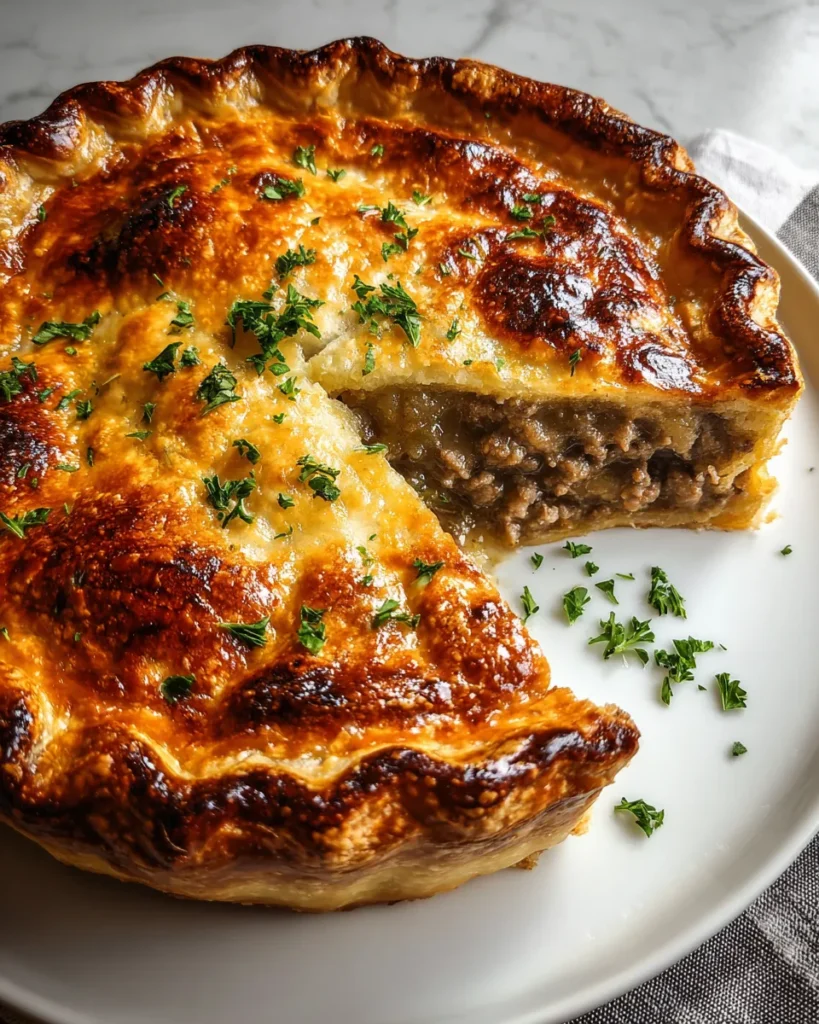

Traditional French-Canadian Tourtière
Description
A rich trio of ground pork, beef, and veal simmers with aromatic cinnamon and nutmeg before baking in a golden pastry shell. Serve this hearty pie with tangy pickles for a festive winter meal.
Ingredients
Instructions
-
In a large skillet, heat the olive oil over medium heat. Add the chopped onion and minced garlic. Sauté until the onion is translucent, about 5 minutes.
-
Add the ground pork, ground beef, and ground veal to the skillet. Cook until the meat is browned, breaking it apart with a wooden spoon as it cooks.
-
Once the meat is browned, season with salt, black pepper, cinnamon, nutmeg, and allspice. Mix well to combine all the flavors.
-
Pour in the beef broth and stir until the mixture is evenly coated. Allow it to simmer for about 10 minutes to develop the flavors, stirring occasionally.
-
Remove the skillet from heat and stir in the chopped parsley. Let the filling cool to room temperature.
-
Preheat the oven to 375°F (190°C). Roll out one of the pie crusts and fit it into a 9-inch pie plate.
-
Spoon the cooled meat filling into the pie crust, spreading it evenly.
-
Roll out the second pie crust and place it over the filling. Pinch the edges to seal, and cut small slits in the top crust to allow steam to escape.
-
Brush the top crust with the beaten egg for a shiny finish.
-
Bake the tourtière in the preheated oven for 45-50 minutes, or until the crust is golden brown.
-
Remove the tourtière from the oven and let it cool for about 10-15 minutes before slicing and serving.
Note
- Traditional tourtière is often served with a side of pickles or a dollop of cranberry sauce.
- This dish is typically enjoyed during the holiday season but can be served year-round.
- You can substitute or add other meats such as sausage or wild game to create your own variation of tourtière.
- Leftovers can be refrigerated and taste even better the next day as the flavors meld together.