

This Thai Peanut Sweet Potato Buddha Bowl celebrates a rainbow of textures and flavors in every vibrant forkful. It’s a lively, nourishing blend that feels like a hug from the inside out: tender, caramelized sweet potatoes mingle with nutty quinoa, crisp-edged edamame and bell pepper, refreshing cucumber slices, and a vibrant purple cabbage slaw. Each element contributes its own story—earthy sweetness, bright crunch, and a luscious swirl of creamy Thai peanut sauce that ties it all together. It’s the kind of recipe that makes you linger at the table, savoring each bite, and daydreaming about the next time you’ll whip it up.
With only a handful of simple steps and pantry staples, this beginner-friendly, vegetarian buddha bowl comes together in under an hour—15 minutes of prep and about 45 minutes of cooking. It’s perfect for busy weeknight dinners or meal-prep lunches that don’t skimp on excitement. Plus, you’ll love how easily you can customize it: swap in your favorite greens, add a protein boost, or dial up the spice in that peanut sauce. Trust me, once you’ve mastered this bowl, it will become a go-to healthy recipe in your repertoire, ready to satisfy any craving for warmth, crunch, and bold Thai-inspired flair.
KEY INGREDIENTS IN THAI PEANUT SWEET POTATO BUDDHA BOWL
Before you dive into the kitchen, let’s run through the star players in this nourishing buddha bowl. Each ingredient has its moment to shine—whether it’s adding vibrant color, textural contrast, or a burst of flavor. Here’s the lineup:
- Sweet potatoes
These cubed gems roast up with a slightly crisp exterior and soft, caramelized interior. Their natural sweetness provides a perfect counterpoint to the tangy peanut sauce.
- Olive oil
A drizzle of olive oil helps the sweet potatoes roast golden and gives the edamame and bell pepper a silky sheen when sautéed. It’s teamwork in a bottle!
- Salt and pepper
Simple seasoning essentials that enhance the natural flavors of every ingredient without stealing the show.
- Quinoa
Light, fluffy, and protein-packed, quinoa forms the sturdy base for your buddha bowl. It’s the canvas on which all other flavors shine.
- Water
Essential for cooking the quinoa until it’s perfectly tender and to thin out the peanut sauce to a pourable consistency.
- Edamame
Shelled and succulent, these bright-green pearls add protein, a satisfying pop, and a fresh, crisp bite.
- Red bell pepper
Sweet, crunchy, and colorful, red bell pepper slices bring juicy freshness and beautiful contrast.
- Cucumber
Thin, cool slices that lend a refreshing crunch and lighten every spoonful.
- Purple cabbage
Finely shredded, this cabbage adds vibrant color, a satisfying snap, and a boost of fiber.
- Roasted peanuts
Roughly chopped for an extra crunch and nutty punch. They echo the peanut sauce while adding textural excitement.
- Fresh cilantro
Bright, aromatic leaves that bring citrusy, herbaceous notes to each bite.
- Lime wedges
A squeeze of fresh lime juice brightens the entire dish with tangy zing.
For the Thai Peanut Sauce:
- Peanut butter
The creamy, rich backbone of the sauce, delivering that signature nutty goodness.
- Soy sauce
Provides depth and a savory umami boost.
- Honey or maple syrup
Adds a touch of sweetness to balance the saltiness and tang.
- Rice vinegar
Contributes a mild acidity that keeps the sauce lively.
- Fresh ginger
Grated to infuse zesty warmth and a hint of spice.
- Garlic
Minced for aromatic sharpness.
- Warm water
Used sparingly to thin the sauce to just the right consistency.
HOW TO MAKE THAI PEANUT SWEET POTATO BUDDHA BOWL
Let’s walk through the simple steps to assemble this colorful bowl of goodness. You’ll move from roasting to sautéing to mixing the sauce, and finally, bring it all together in a harmonious veggie-packed meal.
1. Preheat your oven to 400°F (200°C). Line a baking sheet with parchment paper to prevent sticking and make cleanup a breeze.
2. In a large bowl, toss the cubed sweet potatoes with olive oil, salt, and pepper until they’re evenly coated. Spread them out on the prepared baking sheet in a single layer. Roast for 25–30 minutes, stirring once halfway through, until the edges are golden and the centers are tender.
3. While the sweet potatoes roast, prepare the quinoa. In a medium saucepan, combine the rinsed quinoa and water. Bring to a boil, then reduce the heat to low, cover, and simmer for about 15 minutes until the liquid is absorbed and the grains are fluffy. Remove from heat and let it sit covered for a few minutes.
4. Meanwhile, make the Thai peanut sauce. In a small bowl, whisk together peanut butter, soy sauce, honey (or maple syrup), rice vinegar, grated ginger, and minced garlic. Gradually add warm water, whisking until the sauce reaches a creamy, pourable consistency.
5. Heat a skillet over medium heat and add a splash of olive oil. Sauté the edamame and sliced red bell pepper for about 5 minutes, stirring occasionally, until they are heated through but still crisp.
6. To assemble, spoon a generous base of cooked quinoa into each bowl. Top with roasted sweet potatoes, sautéed edamame and bell pepper, fresh cucumber slices, and shredded purple cabbage. Drizzle the Thai peanut sauce generously over the top.
7. Finish with a garnish of roughly chopped roasted peanuts, torn cilantro leaves, and lime wedges on the side. A final squeeze of lime adds zesty brightness that ties everything together.
SERVING SUGGESTIONS FOR THAI PEANUT SWEET POTATO BUDDHA BOWL
Now that your bowls are piled high with color and flavor, let’s talk about presenting and enjoying them at their very best. Whether you’re serving dinner for friends or prepping lunches for the week, these tips will elevate your buddha bowl experience.
- Serve with an extra drizzle of creamy peanut sauce on the side so guests can adjust the richness to their taste. A small dipping bowl makes it interactive and fun.
- Top the bowl with grilled protein like marinated tofu, chicken, or shrimp for a heartier meal. The smoky char adds another layer of flavor that pairs beautifully with the peanut sauce.
- For a bright, refreshing finish, squeeze fresh lime juice over each bowl just before serving. The citrusy zing will pop against the sweet potatoes and creamy sauce.
- Scatter extra herbs and crunchy toppings, such as chopped cilantro, mint leaves, or even crispy shallots. These final garnishes add dimension, aroma, and an irresistible restaurant-style flair.
HOW TO STORE THAI PEANUT SWEET POTATO BUDDHA BOWL
One of the best things about this recipe is how well it stores—perfect for meal prep or busy weeks when you need a nutritious, ready-to-go lunch. Here are some tips to keep every component fresh and flavorful:
- Separate components: Store the quinoa and roasted sweet potatoes in one airtight container, and the fresh cucumbers and cabbage slaw in another. This prevents the veggies from getting soggy.
- Peanut sauce on the side: Keep the sauce in a small jar or container and only drizzle when you’re ready to eat. It stays creamy longer and won’t be absorbed into the grains.
- Refrigerate promptly: Place all containers in the fridge within two hours of cooking. Proper refrigeration at 40°F (4°C) or below helps maintain flavor and safety.
- Freeze for longer storage: If you need to keep the roasted sweet potatoes or quinoa beyond 4–5 days, freeze them in freezer-safe bags. Thaw overnight in the fridge before reheating and assembling.
CONCLUSION
This Thai Peanut Sweet Potato Buddha Bowl has everything you could want in a meal: vibrant colors, a satisfying balance of textures, and flavors that range from sweet and nutty to tangy and bright. We covered each step—from roasting those golden sweet potatoes to simmering fluffy quinoa, whisking together a silky Thai peanut sauce, and artfully piling on crisp veggies. You’ve also seen how easy it is to adapt the recipe to your tastes, whether that means adding extra heat, swapping in different veggies, or boosting the protein. It’s a recipe that invites creativity and makes healthy eating feel like a celebration rather than a chore.
Feel free to print this article or save it in your digital recipe box for quick reference whenever the mood strikes. Below you’ll find a handy FAQ to troubleshoot common questions, and I’d love to hear from you if you try this buddha bowl at home. Leave a comment, share your tweaks, or ask for tips—your feedback is what makes this recipe truly come to life for our community of home cooks!
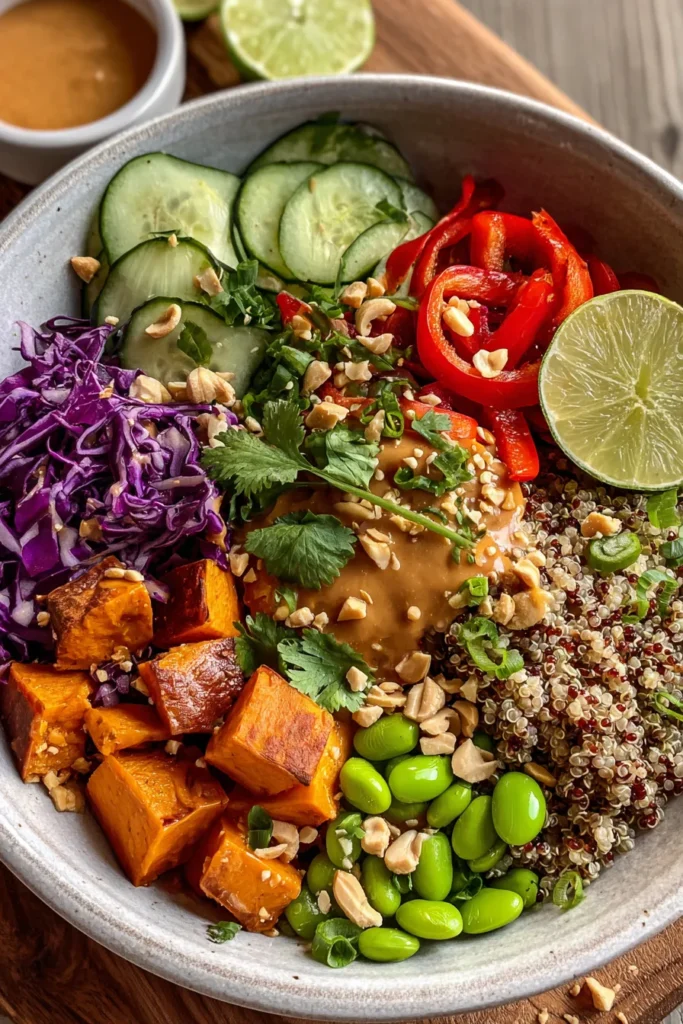

Thai Peanut Sweet Potato Buddha Bowl
Description
This Buddha bowl is a feast for the senses, combining the earthy sweetness of roasted sweet potatoes with crunchy veggies and a creamy Thai peanut sauce. It’s colorful, nutritious, and utterly satisfying!
Ingredients
Instructions
-
Preheat your oven to 400°F (200°C). Line a baking sheet with parchment paper.
-
Toss the cubed sweet potatoes with 1 tbsp of olive oil, salt, and pepper. Spread them evenly on the prepared baking sheet. Roast for 25-30 minutes until tender and slightly crispy, stirring halfway through.
-
While the sweet potatoes are roasting, prepare the quinoa. In a medium saucepan, combine quinoa and water. Bring to a boil, then reduce heat to low, cover, and simmer for about 15 minutes until the quinoa is fluffy and the water is absorbed. Remove from heat and set aside.
-
In a small bowl, whisk together all ingredients for the Thai Peanut Sauce except for the water. Gradually add the warm water, whisking until you reach your desired sauce consistency.
-
In a pan over medium heat, add 1 tbsp of olive oil and sauté the edamame and red bell pepper for about 5 minutes until they're slightly tender yet still crisp.
-
To assemble the Buddha bowls, start with a base of cooked quinoa. Top with roasted sweet potatoes, sautéed edamame, red bell pepper, sliced cucumber, shredded cabbage, and a drizzle of the Thai Peanut Sauce.
-
Garnish with chopped peanuts, fresh cilantro leaves, and serve with lime wedges on the side for an extra burst of flavor.
Note
- This Buddha bowl can be served warm or cold, making it perfect for meal prep.
- Substitute any preferred veggies to customize the bowl to your taste.
- Adding grilled chicken or tofu can increase the protein content of the bowl.
- Peanut sauce can be adjusted to your taste by modifying the amounts of ginger, garlic, and sweeteners.
- Make the peanut sauce in advance to save time on busy meal nights.