

This Thai Peanut Chicken Buddha Bowl combines tender peanut-marinated chicken nestled among vibrant veggies and fluffy grains, all drizzled with a creamy lime-kissed peanut sauce that dances on your tongue. Layer juicy chicken strips, a rainbow of crisp cabbage, bell pepper, cucumber, and more over warm brown rice or quinoa, then top with crunchy peanuts, fresh cilantro, and zesty lime wedges. It’s a meal-prep dream that’s ready in about an hour, and each colorful serving bowl feels like a mini-vacation for your taste buds. Let’s dive in and make magic happen!
Key Ingredients
Before we get cooking, here’s everything you’ll need to build that perfect bowl:
- 1 lb (450 g) boneless, skinless chicken breasts or thighs, cut into bite-sized strips: The juicy protein base that soaks up the tangy peanut marinade.
- 1 tbsp soy sauce (or tamari for gluten-free): Adds a savory umami boost to the chicken.
- 1 tbsp lime juice: Brightens both the chicken marinade and the peanut sauce.
- 1 tbsp neutral oil (canola, avocado, or vegetable): Helps the marinade coat the chicken and keeps it tender.
- 1 tsp sesame oil: Infuses a toasty, authentic flavor into the chicken.
- 2 cloves garlic, minced: Pungent aromatics that lift every component.
- 1 tsp fresh ginger, finely grated: Adds warmth and a subtle zing.
- 1/2 tsp ground coriander (optional): Brings a citrusy, floral note to the chicken.
- 1/2 tsp smoked or sweet paprika: Gives color and a hint of smokiness.
- 1/4 tsp black pepper: A gentle heat to balance flavors.
- 1/2 tsp salt (adjust to taste): Essential for seasoning the protein.
- 1/3 cup creamy peanut butter: The rich and nutty foundation of the sauce.
- 2 tbsp soy sauce (or tamari for gluten-free): Deepens the peanut sauce’s savory profile.
- 1–2 tbsp lime juice (to taste): Keeps the sauce tangy and fresh.
- 1–2 tbsp honey or maple syrup (to taste): Balances acidity with a touch of sweetness.
- 1 tbsp rice vinegar (or extra lime juice): Enhances the sauce’s complexity.
- 1–2 tsp sriracha or chili garlic sauce (adjust to desired spice level): Controls the heat in the sauce.
- 1 clove garlic, finely minced or grated: Infuses the peanut sauce with pungent depth.
- 1 tsp fresh ginger, finely grated: Adds a bright kick to the sauce.
- 3–5 tbsp warm water, to thin as needed: Ensures a spoon-coating, pourable consistency.
- 1 tsp sesame oil (optional, for extra flavor): Rounds out the sauce with toasty notes.
- 2 cups cooked brown rice, jasmine rice, or quinoa: The cozy grain base for each bowl.
- 1 cup shredded purple cabbage (or green cabbage): Crunchy, colorful veggie for texture.
- 1 cup shredded carrots (or matchstick-cut): Sweet, crisp ribbons of orange.
- 1 red bell pepper, thinly sliced: Adds vibrant color and mild sweetness.
- 1 small cucumber, halved and thinly sliced: Cooling crunch.
- 1 cup lightly steamed or microwaved edamame (shelled), peas, or broccoli florets: Protein-packed veggie burst.
- 1 avocado, sliced or cubed: Creamy richness to balance the bowl.
- 2–3 green onions, thinly sliced: Fresh, oniony garnish.
- 1/4 cup roasted peanuts, roughly chopped: Extra crunch on top.
- Small handful fresh cilantro leaves, roughly chopped: Herbal brightness.
- Lime wedges, for serving: Zesty finish.
- Toasted sesame seeds (optional): Visual appeal and nutty flavor.
- Extra sriracha or chili sauce, for drizzling (optional): Additional heat for spice lovers.
How To Make Thai Peanut Chicken Buddha Bowl
We’re about to transform simple ingredients into a stunning, flavor-packed bowl. You’ll start by marinating the chicken for maximum taste, then cooking your grains and veggies while you whip up a silky peanut sauce. Next, you’ll sear the chicken to carnivorous perfection, assemble each bowl with mindful layering, and finish with crunchy garnishes and zesty lime. Ready for a hands-on, fun, and ultimately rewarding cooking adventure? Let’s get into the step-by-step!
1. Marinate the chicken:
Place the chicken strips in a medium bowl, then add soy sauce, lime juice, neutral oil, sesame oil, minced garlic, grated ginger, ground coriander, paprika, black pepper, and salt. Toss well to coat each piece, then cover and let marinate for at least 15–20 minutes at room temperature (or up to 4 hours in the fridge for deeper flavor).
2. Prepare the base (rice or grains):
If your rice or quinoa isn’t yet cooked, start it now following package instructions. Once done, fluff it with a fork, cover it to keep warm, and season with a pinch of salt and a squeeze of lime juice for extra zing.
3. Prep the vegetables and toppings:
Shred the cabbage and carrots (or slice into matchsticks). Thinly slice the red bell pepper and cucumber. Steam or microwave the edamame (or peas/broccoli) until bright and tender-crisp, then season lightly with salt. Slice or cube the avocado just before assembling. Thinly slice green onions and roughly chop cilantro and roasted peanuts.
4. Make the Thai-inspired peanut sauce:
In a medium bowl, combine peanut butter, soy sauce, lime juice, honey or maple syrup, rice vinegar, sriracha, minced garlic, grated ginger, and sesame oil if using. Whisk until smooth, then add warm water one tablespoon at a time until you reach a pourable consistency that still clings to a spoon. Taste and adjust brightness, sweetness, saltiness, or heat.
5. Cook the chicken:
Heat a large skillet or nonstick pan over medium-high heat. Add a small drizzle of oil if needed, then add the marinated chicken in a single layer, shaking off excess marinade. Let it sear undisturbed for 2–3 minutes, then flip and cook another 3–5 minutes, stirring occasionally, until it reaches 165°F (74°C) and develops light browning. Optional: In the last 1–2 minutes, add 2–3 tablespoons of peanut sauce to glaze the chicken. Remove from heat and let rest briefly.
6. Assemble the Buddha bowls:
Divide the warm rice or quinoa among 3–4 bowls. Arrange shredded cabbage, carrots, bell pepper, cucumber, and edamame in separate sections for a vibrant, composed look. Add sliced avocado and top with a generous portion of the cooked chicken.
7. Add sauce and garnishes:
Drizzle each bowl with the peanut sauce. Sprinkle with chopped peanuts, green onions, cilantro, and toasted sesame seeds. Serve with lime wedges and extra sriracha on the side.
8. For meal prep:
Divide rice, chicken, and sturdy veggies into airtight containers. Pack avocado, peanut sauce, green onions, cilantro, and cucumber separately to keep them fresh. Properly stored, components stay good in the fridge for 3–4 days.
Serving Suggestions
Once your Thai Peanut Chicken Buddha Bowls are assembled, it’s time to serve them in style. These ideas will take your presentation and enjoyment up a notch:
- Extra sauce on the side: Offer small bowls of peanut sauce so everyone can drizzle or dunk to their heart’s content.
- Chilled Thai iced tea or coconut water: A refreshing drink pairing that complements the rich, nutty flavors.
- Family-style platter: Arrange all components on a large platter so guests can build their own bowls—perfect for casual gatherings.
- Garnish bar: Set out bowls of lime wedges, sriracha, toasted sesame seeds, and chopped peanuts for a fun, interactive finish.
Tips For Perfect Thai Peanut Chicken Buddha Bowl
This bowl is already a superstar, but a few smart tweaks can make it even better. Whether you’re accommodating diets, swapping textures, or craving extra crunch, these tips will help:
- For a vegetarian or vegan version, replace chicken with crispy tofu, tempeh, or chickpeas and use maple syrup or agave instead of honey.
- For gluten-free, use tamari or coconut aminos in place of soy sauce and check your sriracha or chili sauce label.
- You can switch the base to cauliflower rice, mixed greens, or soba noodles for a different texture and lighter or heartier feel.
- Add crunch with extra toppings like shredded lettuce, radishes, or pickled onions.
- Leftover peanut sauce is great as a dip for veggies, a spread for wraps, or a dressing for other salads and grain bowls.
How To Store It
Keeping your Thai Peanut Chicken Buddha Bowl fresh and flavorful is easy when you follow a few simple storage steps:
- Refrigerate components separately: Store rice, chicken, and sturdy veggies (cabbage, carrots, bell pepper, edamame) in one container, and avocado, cucumber, cilantro, green onions, and sauce in another to prevent sogginess.
- Seal peanut sauce airtight: Pour the sauce into a small jar or container with a tight lid—stays fresh for up to a week.
- Freeze cooked chicken and grains: If you want to prep well in advance, freeze the chicken and grains in separate bags for up to 2 months; thaw overnight in the fridge.
- Add avocado last minute: Keep avocado slices in a small, sealed container with a squeeze of lime juice; add right before serving to avoid browning.
Frequently Asked Questions
Got questions? Let’s clear up any Buddha bowl mysteries:
- How long does it take to prepare and assemble the Thai Peanut Chicken Buddha Bowl from start to finish?
From start to finish you’ll need about 60–75 minutes. This includes 15–20 minutes of marinating the chicken (while you can prep the rice, veggies, and peanut sauce), approximately 20–25 minutes to cook the rice or quinoa and chicken, and another 15–20 minutes to prep vegetables, make the peanut sauce, and assemble the bowls. If you marinate the chicken longer (up to 4 hours), you can spread out prep but total active time remains around an hour.
- What’s the best way to meal-prep these bowls for lunches throughout the week?
Divide cooked rice or quinoa and the fully cooked, cooled chicken into airtight containers first, along with sturdy veggies like shredded cabbage, carrots, bell pepper, and edamame. Store avocado slices, sliced cucumber, chopped cilantro, green onions, and peanut sauce separately in small containers. Add avocado and sauce just before eating to prevent sogginess. Properly sealed, components keep well in the fridge for 3–4 days.
- How can I adjust the spice level of the Thai peanut sauce?
The recipe calls for 1–2 teaspoons of sriracha or chili garlic sauce. Start with 1 teaspoon, whisk into the sauce, then taste. Add the second teaspoon if you want more heat, or omit entirely for a mild sauce. You can also balance extra heat with more honey or maple syrup, or more lime juice to keep the flavor bright.
- What substitutions work if I need to make this recipe gluten-free or vegan?
For gluten-free, swap soy sauce for tamari or coconut aminos and verify your chili sauce is gluten-free. To make it vegan, replace chicken with cubed tofu, tempeh, or chickpeas roasted until crisp, and use maple syrup or agave instead of honey. Everything else—from the peanut sauce to the veggies—remains the same.
- How do I keep avocado slices from browning before serving?
Slice or cube the avocado just before assembling each bowl. If you must prep it slightly ahead, toss the pieces in a squeeze of lime juice to slow oxidation and store them in an airtight container. For meal prep, pack avocado separately and add it at the last minute.
- What’s the best technique for cooking the chicken so it’s tender with a little char?
Shake off excess marinade so the chicken sears instead of steams. Heat your pan over medium-high heat until very hot, add a thin slick of neutral oil, then lay down the strips in a single layer. Cook without moving for 2–3 minutes to develop color, flip, and cook another 3–5 minutes until they reach 165°F (74°C). For extra flavor, toss in 2–3 tablespoons of peanut sauce during the last 1–2 minutes to glaze the chicken.
- Can I swap out the base or add other veggies for more variety?
Absolutely. You can use cauliflower rice, soba noodles, mixed greens, or farro instead of brown rice or quinoa. Swap edamame for lightly steamed peas, broccoli florets, snap peas, or even roasted chickpeas. Additional crunch options include shredded lettuce, radishes, or quick-pickled onions—just keep the colorful Buddha bowl concept in mind.
What Makes This Special
This Thai Peanut Chicken Buddha Bowl is a party in a bowl—creamy, tangy, crunchy, and colorful all at once. The peanut-marinated chicken brings bold flavors, while the veggies and grains add texture and balance. It’s flexible enough for meal prep or weeknight dinner yet impressive enough for guests. Feel free to print this recipe, save it for later, or bookmark it in your favorite recipe folder. If you try it, let me know how it turns out or drop any questions below—I love hearing feedback and helping you nail that perfect bowl!
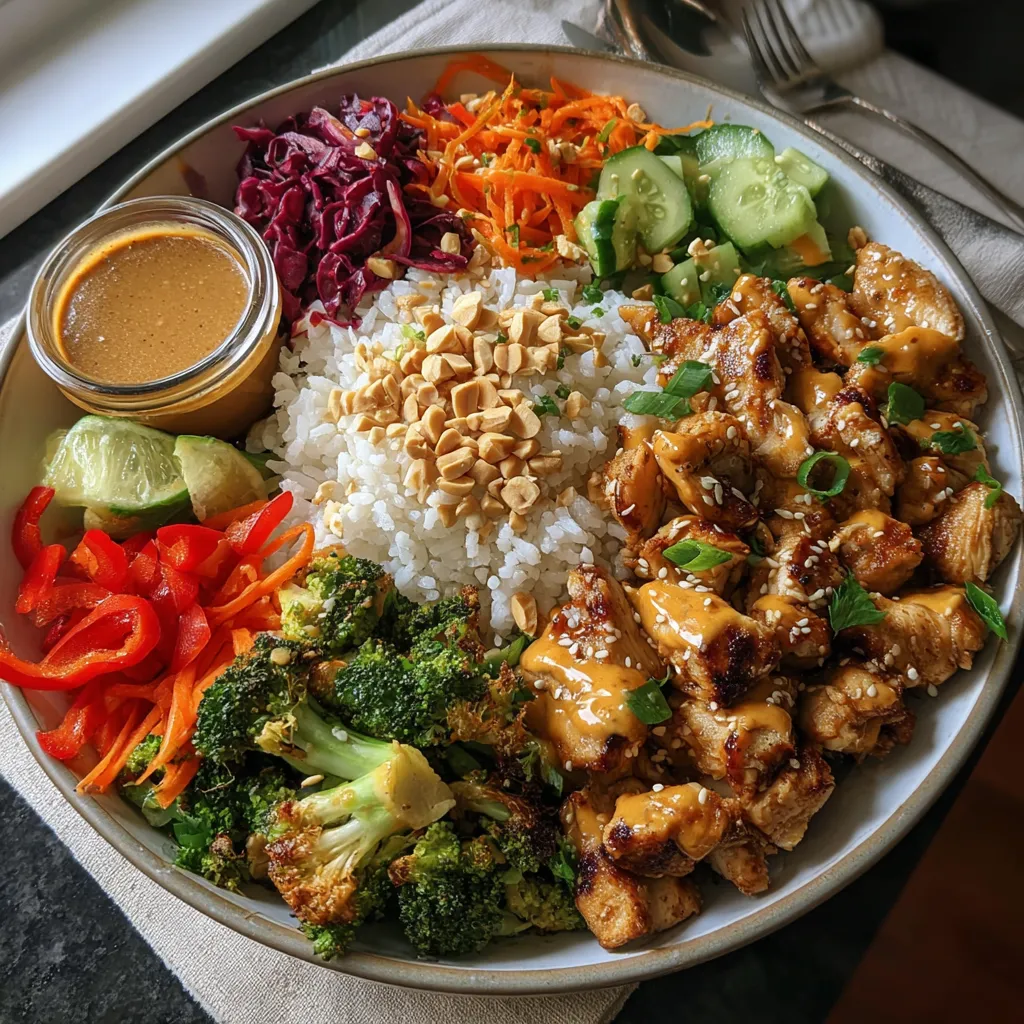

Thai Peanut Chicken Buddha Bowl
Description
This Buddha bowl layers juicy chicken strips, nutty peanut sauce, and a rainbow of crisp veggies over warm grains. Each bite delivers a creamy, tangy kick with fresh cilantro, lime brightness, and a satisfying crunch.
Ingredients
Instructions
-
Marinate the chicken:
-
- Place the chicken strips in a medium bowl.
-
- Add soy sauce, lime juice, neutral oil, sesame oil, minced garlic, grated ginger, ground coriander, paprika, black pepper, and salt.
-
- Toss well to coat all pieces evenly.
-
- Cover and let marinate for at least 15–20 minutes at room temperature, or up to 4 hours in the refrigerator for deeper flavor.
-
Prepare the base (rice or grains):
-
- If you do not already have cooked rice or quinoa, start cooking it now according to package instructions.
-
- When done, fluff with a fork and set aside, covered, to keep warm.
-
- For extra flavor, you can season the warm rice with a pinch of salt and a squeeze of lime juice.
-
Prep the vegetables and toppings:
-
- Shred the cabbage and carrots (or cut into thin matchsticks).
-
- Thinly slice the red bell pepper and cucumber.
-
- Steam or microwave edamame, peas, or broccoli just until bright and tender-crisp; season lightly with salt.
-
- Slice or cube the avocado just before assembling to prevent browning.
-
- Slice the green onions and roughly chop the cilantro.
-
- Roughly chop the roasted peanuts.
-
Make the Thai-inspired peanut sauce:
-
- In a medium bowl, add peanut butter, soy sauce, lime juice, honey or maple syrup, rice vinegar, sriracha or chili garlic sauce, minced garlic, grated ginger, and sesame oil (if using).
-
- Whisk until the mixture is thick and smooth.
-
- Add warm water 1 tablespoon at a time, whisking after each addition, until you reach a smooth, pourable consistency that still coats a spoon (typically 3–5 tablespoons).
-
- Taste and adjust: add more lime for brightness, more sweetener for balance, more soy for saltiness, or more sriracha for heat.
-
Cook the chicken:
-
- Heat a large skillet or nonstick pan over medium-high heat.
-
- When hot, add a small drizzle of oil if your pan needs it.
-
- Add the marinated chicken in a single layer, shaking off excess marinade to avoid overcrowding and steaming.
-
- Cook without moving for 2–3 minutes to develop some color, then flip and continue to cook for another 3–5 minutes, stirring occasionally, until the chicken is cooked through and lightly browned at the edges (internal temperature should reach 165°F / 74°C).
-
- Optional: During the last 1–2 minutes of cooking, add 2–3 tablespoons of the peanut sauce to the pan and toss to glaze the chicken.
-
- Remove from heat and let rest a couple of minutes.
-
Assemble the Buddha bowls:
-
- Divide the warm rice or quinoa among 3–4 serving bowls.
-
- Arrange the shredded cabbage, carrots, bell pepper, cucumber, and edamame (or other veggies) in separate sections around each bowl, creating a colorful, composed look.
-
- Add sliced or cubed avocado to each bowl.
-
- Top each bowl with a generous portion of the cooked chicken.
-
Add sauce and garnishes:
-
- Drizzle each bowl with a generous amount of the peanut sauce. You can serve extra sauce on the side for those who want more.
-
- Sprinkle with chopped peanuts, green onions, cilantro, and toasted sesame seeds if using.
-
- Serve with lime wedges and extra sriracha for added brightness and heat.
-
For meal prep:
-
- If preparing for lunches, divide the rice, chicken, and sturdy veggies (cabbage, carrots, bell pepper, edamame) into airtight containers.
-
- Pack avocado, peanut sauce, green onions, cilantro, and cucumber separately and add them just before eating to keep everything fresh.
-
- The cooked chicken and grains will usually keep well in the refrigerator for up to 3–4 days.
Note
- For a vegetarian or vegan version, replace chicken with crispy tofu, tempeh, or chickpeas and use maple syrup or agave instead of honey.
- For gluten-free, use tamari or coconut aminos in place of soy sauce and check your sriracha or chili sauce label.
- You can switch the base to cauliflower rice, mixed greens, or soba noodles for a different texture and lighter or heartier feel.
- Add crunch with extra toppings like shredded lettuce, radishes, or pickled onions.
- Leftover peanut sauce is great as a dip for veggies, a spread for wraps, or a dressing for other salads and grain bowls.