

Sweet Tangy Probiotic Fermented Cantaloupe is the perfect way to turn a summer favorite into a bubbly, gut-loving snack. With just a few pantry staples and a little patience, you’ll transform sweet melon cubes into a tangy treat that balances honeyed sweetness with lively probiotic fizz. Whether you’re new to fermentation or a seasoned fermenter, this fun project delivers delightful crunch, depth of flavor, and a healthy dose of live cultures in every bite.
Key Ingredients
Before we dive into the fun of fermenting, let’s gather the simple yet powerful components that make this recipe shine:
- 1 medium cantaloupe: Juicy, naturally sweet base that ferments beautifully and develops tangy complexity.
- 1 tablespoon raw honey: Provides fermentable sugars and a gentle sweetness that balances the tartness.
- 1 teaspoon sea salt: Essential for creating the right brine environment and enhancing the melon’s natural flavor.
- 1/2 cup whey: Packed with live cultures to kickstart the lacto-fermentation process.
- 1 cup filtered water: Dilutes the honey and salt evenly, ensuring a consistent brine.
How To Make Sweet Tangy Probiotic Fermented Cantaloupe
Let’s walk through the fermentation process step by step. You’ll learn how to prepare the fruit, mix the brine, and create the perfect environment for your cantaloupe to develop that signature tang and fizz. Follow these directions closely to ensure a safe, successful ferment, and don’t forget to taste along the way to find your ideal level of tanginess!
1. Cut and cube the cantaloupe: Slice the cantaloupe in half, scoop out the seeds, then chop the flesh into bite-sized pieces, ensuring even fermentation.
2. Mix the brine: In a bowl, combine filtered water, raw honey, sea salt, and whey, stirring until fully dissolved into a clear, homogeneous solution.
3. Pack the jar: Transfer the cantaloupe cubes into a clean, sanitized fermentation jar, leaving a bit of headspace at the top.
4. Add brine and weight down: Pour the brine over the fruit until completely submerged. Place a fermentation weight or a small clean bag of water on top to keep everything under the brine. Loosely seal the jar to let gases escape.
5. Ferment at room temperature: Set the jar in a cool, shaded spot away from direct sunlight. Let it sit for 3 to 5 days, tasting daily after day three until the flavor reaches your preferred tanginess.
6. Refrigerate: Once you’re happy with the taste, tighten the lid and move the jar to the refrigerator. This slows fermentation and locks in the flavor.
Serving Suggestions
Now that your cantaloupe is delightfully fermented, let’s talk about the best ways to enjoy it. These serving ideas highlight the sweet-tangy-fizzy character of your creation and make for a refreshing treat anytime.
- On a charcuterie board: Arrange chilled cubes alongside cheeses, cured meats, and nuts for a vibrant contrast of flavors and textures.
- Topped on yogurt: Spoon fermented cantaloupe over creamy yogurt for a probiotic powerhouse breakfast or snack.
- Mixed into salads: Add melon cubes to a greens salad with arugula, feta, and a light vinaigrette for a pop of sweet-tangy freshness.
- As a cocktail garnish: Skewer a few cubes and drop into a light spritzer or gin cocktail to infuse your drink with effervescence and complexity.
Tips For Perfect Sweet Tangy Probiotic Fermented Cantaloupe
Fermenting fruit can feel a bit experimental, but these friendly tips will help you get consistent, delicious results every time. Embrace the process, have fun with tasting, and tweak your setup for the perfect fizz!
- Fermentation time may vary depending on room temperature and desired tartness.
- Ensure the cantaloupe remains fully submerged in the brine to prevent mold growth.
- Store in the refrigerator for up to two weeks to maintain optimal flavor and probiotic benefits.
- For extra complexity, add a few slices of fresh ginger or a sprig of mint before fermenting.
How To Store It
Proper storage is key to preserving the flavor, texture, and probiotic benefits of your fermented cantaloupe. Keep your jar safe and your snack fresh by following these simple methods:
- Refrigerate promptly: After fermentation, tighten the lid and transfer the jar to the fridge to slow down the fermentation process and lock in flavor.
- Maintain brine coverage: Always ensure the cantaloupe remains submerged under the brine to protect it from air exposure and mold.
- Use clean utensils: When scooping out cubes, use a clean spoon to avoid introducing unwanted bacteria.
- Enjoy within two weeks: For peak taste and optimal probiotics, finish your fermented cantaloupe within fourteen days.
Frequently Asked Questions
Here are some quick answers to the most common questions about fermenting cantaloupe:
- Q: How long does it take to prepare this Sweet Tangy Probiotic Fermented Cantaloupe?
A: Initial preparation takes about 10 to 15 minutes, including cutting the cantaloupe into bite-sized cubes, mixing the brine with water, honey, salt, and whey, and assembling everything in a fermentation jar. Fermentation then takes 3 to 5 days at room temperature, with daily tasting to achieve your preferred tanginess.
- Q: What can I use if I don’t have whey?
A: If you don’t have whey, you can substitute with a tablespoon of unpasteurized sauerkraut juice or brine from another active fermented vegetable. These both contain live cultures that will initiate fermentation similarly to whey.
- Q: How can I tell when the cantaloupe is fully fermented and safe to eat?
A: Taste the brine and cubes once per day after day three. You’re looking for a pleasantly tangy, slightly fizzy flavor. The fruit should still hold its shape without any unpleasant off-smells. A clean, lactic acid aroma and a mild effervescence indicate a successful fermentation.
- Q: Which containers are best for fermenting cantaloupe?
A: Use a glass or food-grade ceramic jar with a wide mouth to ensure easy packing and cleaning. Make sure it’s sanitized in hot soapy water or with a mild vinegar rinse. Avoid metal containers that could react with the brine, and ensure you have a weight or water-filled bag to keep the cantaloupe submerged.
- Q: How should I store fermented cantaloupe once fermentation is complete?
A: After reaching your desired tanginess, tighten the jar lid and transfer it to the refrigerator. The cool temperature will slow down fermentation, preserve the flavor, and maintain probiotic benefits. It will stay at peak quality for up to two weeks.
- Q: Can I add extra flavorings like ginger or mint?
A: Yes. For added complexity, tuck a few thin slices of fresh ginger or a sprig of mint among the cantaloupe cubes before pouring in the brine. These aromatics infuse during fermentation, creating a subtle spice or herbal note without compromising the brine’s ability to cover the fruit completely.
What Makes This Special
This Sweet Tangy Probiotic Fermented Cantaloupe works its magic by combining simple, fresh ingredients with the ancient art of lacto-fermentation. The result? A snack that’s sweet, tangy, fizzy, and full of live cultures that support gut health. It’s playful, a little wild, and totally unexpected—exactly the kind of kitchen experiment that turns heads at potlucks and backyard gatherings. Don’t forget to print or save this recipe so you can recreate the fizzy fun anytime, and drop a comment below if you have questions or want to share how your batch turned out!
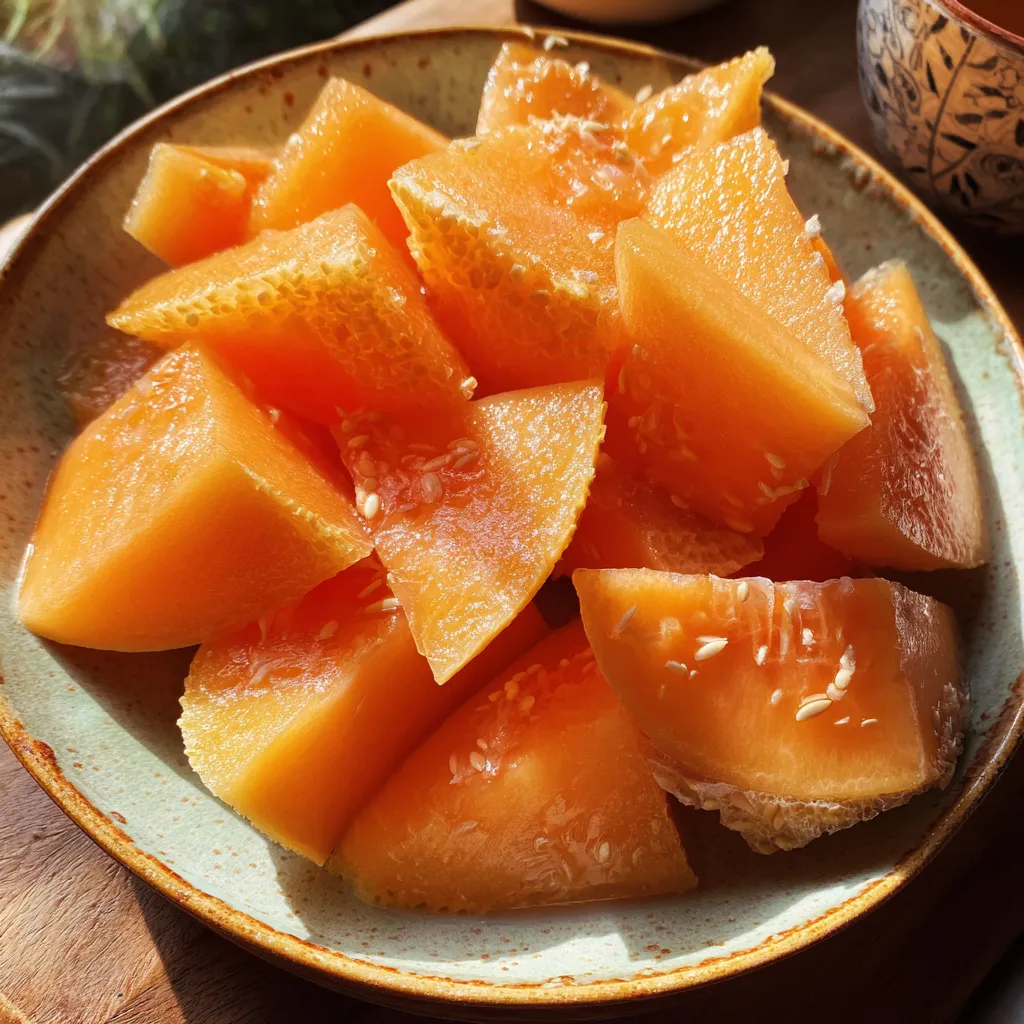

Sweet Tangy Probiotic Fermented Cantaloupe
Description
Cubes of cantaloupe bathe in a brine of whey, honey, and sea salt, blossoming into a bubbly, tangy treat. Each bite pops with refreshing sweetness entwined with lively probiotic fizz, perfect for a wholesome snack.
Ingredients
Instructions
-
Cut the cantaloupe in half, remove the seeds, and chop the flesh into bite-sized cubes.
-
In a bowl combine filtered water, raw honey, sea salt, and whey, stirring until fully dissolved.
-
Place the cantaloupe cubes into a clean fermentation jar and pour the brine over the fruit, ensuring it is completely submerged.
-
Use a fermentation weight or a small, clean bag filled with water to keep the cantaloupe under the brine, then loosely seal the jar to allow gases to escape.
-
Let the jar ferment at room temperature away from direct sunlight for 3 to 5 days, tasting once per day until you reach your preferred tanginess.
-
Once fermentation is complete, tighten the lid and transfer the jar to the refrigerator to slow down fermentation before serving.
Note
- Fermentation time may vary depending on room temperature and desired tartness.
- Ensure the cantaloupe remains fully submerged in the brine to prevent mold growth.
- Store in the refrigerator for up to two weeks to maintain optimal flavor and probiotic benefits.
- For extra complexity, add a few slices of fresh ginger or a sprig of mint before fermenting.