

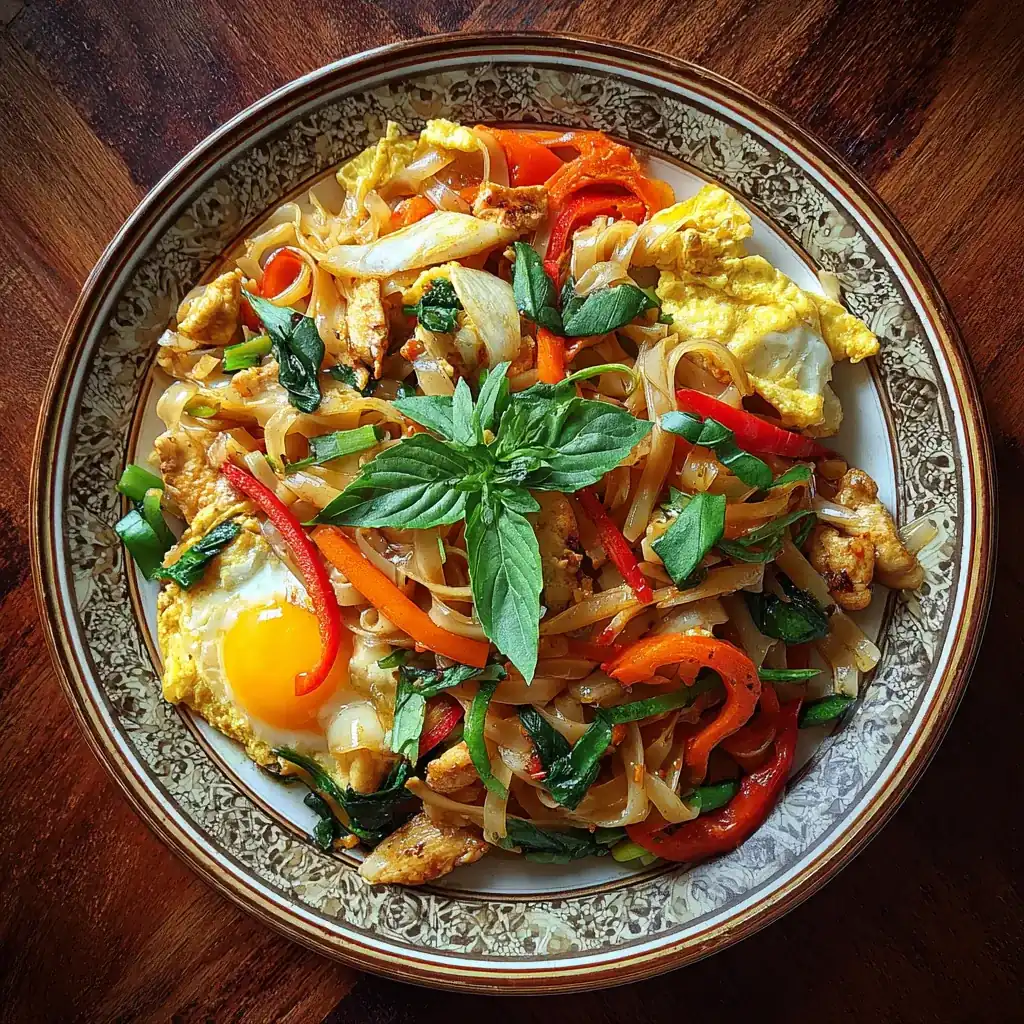
Spicy Thai Stir-Fried Drunken Noodles is an irresistible fusion of vibrant rice noodles tossed with fiery bird’s eye chilies, tender chicken, and crisp veggies, all finished with fragrant Thai sweet basil. This intermediate-level dinner recipe delivers sizzle and flavor straight from your wok, combining the savory depth of oyster and fish sauces with the bright kick of chili paste. Whether you’re craving a midweek pick-me-up or planning a Thai feast, these pad kee mao–inspired noodles will transport your taste buds to Bangkok’s bustling street stalls.
Key Ingredients
Let’s break down the stars of this dish—each one playing a vital role in building layers of texture and flavor.
- 200 g rice noodles: Chewy base that soaks up the spicy, savory sauce.
- 2 tbsp vegetable oil: High-heat cooking oil for quick stir-frying.
- 4 cloves garlic, minced: Pungent aromatics that form the flavor foundation.
- 2 shallots, thinly sliced: Sweet onion notes adding depth and sharpness.
- 2 bird’s eye chilies, finely chopped: Intense heat to wake up every bite.
- 1/2 cup bell pepper, sliced: Crunchy sweetness balancing the spice.
- 1 cup Chinese broccoli, cut into pieces: Earthy greens for color and nutrients.
- 1/2 cup carrots, julienned: Subtle sweetness and extra crunch.
- 200 g chicken breast, thinly sliced: Lean protein that soaks up all the bold flavors.
- 2 eggs, lightly beaten: Creamy binder adding richness and texture.
- 2 tbsp oyster sauce: Umami-packed sauce giving a savory backbone.
- 1 tbsp soy sauce: Salty seasoning to deepen the overall taste.
- 1 tbsp fish sauce: Classic Thai flavor that adds complexity.
- 1 tbsp Thai chili paste: Spicy, tangy punch to elevate the heat profile.
- 1 tsp sugar: Balances acidity and spice with a touch of sweetness.
- Fresh basil leaves for garnish: Fragrant finish that brightens every mouthful.
How To Make Spicy Thai Stir-Fried Drunken Noodles
Get ready to wok-toss your way to noodle nirvana! This method moves quickly once your ingredients are prepped, so have everything at the ready—noodle soaking, veggie slicing, sauce mixing—and work on medium-high heat for that signature char and chew.
1. Soak the rice noodles in warm water for 20 minutes or until pliable, then drain thoroughly to prevent excess moisture.
2. Heat the vegetable oil in a wok or large skillet over medium-high heat until shimmering, ensuring a quick, even sear.
3. Add the garlic, shallots, and chilies, stir-frying for about 1 minute until the aroma blossoms and the edges just begin to brown.
4. Add the chicken slices, spreading them in a single layer, and cook for 3–4 minutes, turning occasionally until the meat is opaque and golden.
5. Push the chicken to one side, pour in the beaten eggs, and stir gently, scrambling until just set but still soft and moist.
6. Add the soaked noodles, bell pepper, broccoli, and carrots, tossing vigorously so every strand and veg piece gets coated.
7. Pour in the oyster sauce, soy sauce, fish sauce, chili paste, and sugar, then stir-fry for 2–3 minutes until the sauce clings evenly to the noodles.
8. Remove from heat and gently fold in the basil leaves until they wilt, releasing their sweet-anise fragrance.
9. Transfer to plates and serve immediately to retain the noodles’ perfect chew and the veggies’ crisp bite.
Serving Suggestions
Once your Drunken Noodles are sizzling hot, consider these ideas to elevate the experience:
- Serve with lime wedges on the side to squeeze over just before eating for a tangy lift.
- Offer a small bowl of extra basil leaves and chilies so guests can customize their level of freshness and heat.
- Plate alongside cucumber slices or a simple green salad to refresh the palate between spicy bites.
- Accompany with a light Thai iced tea or coconut water to cool down the heat and complement the flavors.
Tips For Perfect Spicy Thai Stir-Fried Drunken Noodles
Nailing this dish is all about timing, balance, and fresh ingredients. Here are a few insider tips to make your noodles shine:
- Adjust the number of chilies or chili paste to control the heat level.
- Be careful not to over-soak the noodles to avoid sogginess.
- Substitute shrimp, beef, or tofu for chicken to vary the protein.
- Serve with lime wedges and extra basil for freshness.
How To Store It
If you have leftovers (lucky you!), proper storage keeps the texture and flavor intact for another meal:
- Refrigerate in an airtight container within an hour of cooking to preserve freshness.
- Use within two days for the best chew and brightness; ingredients start to soften over time.
- Reheat in a hot wok with a splash of water or soy sauce, tossing quickly to revive the sauce.
- Avoid microwaving if you want to maintain the original stir-fried texture and prevent steaming.
Frequently Asked Questions
Here are quick answers to the questions home cooks often ask:
- How long should I soak the rice noodles and how do I prevent them from becoming soggy?
Soak the rice noodles in warm (not hot) water for about 20 minutes or until they’re pliable but still slightly firm to the bite. Drain them thoroughly in a colander and shake off excess water. If they soften too quickly, rinse briefly under cool water to stop the cooking process. Over-soaking can lead to mushy noodles, so keep an eye on their texture and use them immediately after draining.
- What’s the best way to control the spice level in this dish?
The heat comes from bird’s eye chilies and Thai chili paste. For milder heat, reduce the number of chopped chilies or deseed them before adding, and use only half a tablespoon of chili paste. For extra heat, leave the seeds intact, add an extra chili, or increase the chili paste to 1½ tablespoons. You can also serve lime wedges on the side to balance spiciness with acidity.
- Can I substitute the chicken with another protein or make it vegetarian?
Yes. For seafood, use peeled and deveined shrimp, adding them at step 4 and cooking until pink (about 2–3 minutes). For beef, thinly slice sirloin or flank steak and stir-fry until just cooked through (about 2–3 minutes). To make it vegetarian or vegan, replace chicken with firm tofu cubed or sliced mushrooms, and swap oyster sauce for a vegan mushroom sauce alternative. Use soy sauce and a dash of vegetarian fish sauce if desired.
- How do I ensure the vegetables stay crisp while the noodles pick up all the flavors?
Slice vegetables uniformly—bell peppers in thin strips, carrots julienned, and Chinese broccoli in small pieces—so they cook evenly. Stir-fry everything over medium-high heat, tossing continuously. Add the vegetables together with the noodles so they absorb the sauce but retain a slight crunch. Avoid steaming by keeping the wok hot and stirring rapidly.
- Why are the eggs added separately, and how do I incorporate them evenly?
Pushing the chicken to one side and pouring in beaten eggs allows you to scramble them separately, giving them a light, fluffy texture. Once they begin to set, break them into pieces and fold them into the chicken. This method ensures the eggs don’t overcook or become rubbery and that each bite has tender egg bits.
- What’s the recommended storage and reheating method for leftovers?
Store any leftovers in an airtight container in the refrigerator for up to two days. To reheat, warm a tablespoon of oil in a wok or skillet over medium-high heat, add the noodles and a splash of water or soy sauce to rehydrate, and toss quickly until heated through. Avoid microwaving if you want to preserve the original texture and chewiness.
- Which type of basil should I use, and when is the best time to add it?
Use Thai sweet basil for its anise-like flavor, which pairs well with the savory, spicy sauce. Add the basil leaves off the heat at the very end of cooking—step 8—then gently fold them in so they wilt slightly but retain their bright aroma. Adding them too early can cause the flavor to dissipate.
What Makes This Special
Spicy Thai Stir-Fried Drunken Noodles blend bold heat, savory depth, and fresh aromatics in every forkful, making this dish a standout in your dinner rotation. The secret lies in balancing the intense chilies and chili paste with sweet basil and a touch of sugar, so each bite is spicy yet bright. Plus, it’s versatile—swap proteins, dial up the heat, or lighten it with extra veggies. Go ahead and print this guide, stash it in your recipe box, and have fun tweaking it. If you give it a whirl, drop a comment below—I’d love to hear how yours turned out or help if you have any questions!

Spicy Thai Stir-Fried Drunken Noodles
Description
Wok-tossed noodles sizzle as garlic, shallots, and bird’s eye chilies release their heat, coating tender chicken and crisp veggies in a savory, spicy sauce. A final flourish of fresh basil brings fragrant brightness to every chewy bite.
Ingredients
Instructions
-
Soak the rice noodles in warm water for 20 minutes or until pliable, then drain and set aside.
-
Heat the vegetable oil in a wok or large skillet over medium-high heat.
-
Add the garlic, shallots, and chilies, and stir-fry for 1 minute until fragrant.
-
Add the chicken slices and cook for 3–4 minutes until they turn opaque.
-
Push the chicken mixture to one side of the wok, pour in the beaten eggs, and scramble until just set.
-
Add the soaked noodles, bell pepper, broccoli, and carrots, tossing to combine.
-
Pour in the oyster sauce, soy sauce, fish sauce, chili paste, and sugar, then stir-fry for 2–3 minutes until the noodles are evenly coated.
-
Remove from heat and gently fold in the basil leaves until wilted.
-
Transfer to plates and serve immediately to retain the noodles’ chewy texture.
Note
- Adjust the number of chilies or chili paste to control the heat level.
- Be careful not to over-soak the noodles to avoid sogginess.
- Substitute shrimp, beef, or tofu for chicken to vary the protein.
- Serve with lime wedges and extra basil for freshness.