

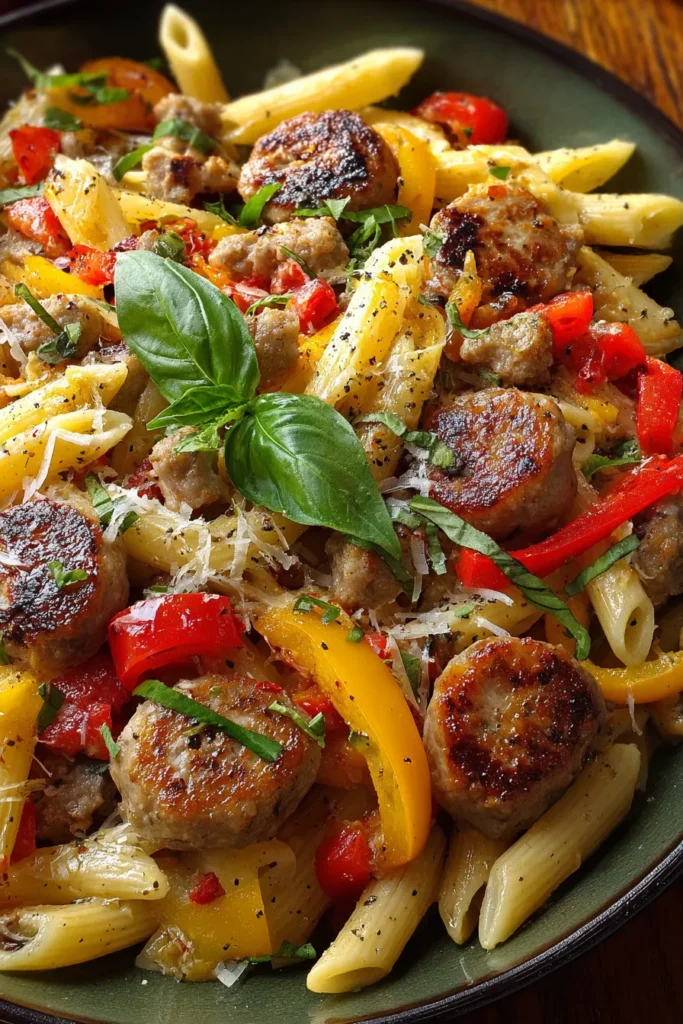
There’s something undeniably satisfying about sliding a vibrant skillet onto the table after a long day, especially when it’s brimming with savory Italian sausage, colorful bell peppers, and perfectly cooked pasta. This Sausage Pasta Skillet is like a warm hug on a plate, wrapping you in layers of flavor that build on each other with every forkful. It’s the kind of dish that whispers, “Dinner’s ready,” and before you know it, the family is gathered, mouths watering, ready to dive in. With a one-pan format, cleanup is a breeze, and you get to savor every bit of that rich, tomato-kissed sauce without juggling multiple pots and pans.
As a passionate home cook, I love how little tweaks—switching from sweet to spicy sausage or adding a handful of fresh spinach at the end—can completely transform the personality of this meal. Whether you’re hosting friends, feeding hungry teenagers, or simply treating yourself to a cozy solo supper, this skillet dinner checks all the boxes: it’s beginner-friendly, it takes just 10 minutes of prep and 20 minutes of cooking time (plus a 5-minute rest), and clocks in around 450 calories per serving. Let’s get ready to turn everyday ingredients into a show-stopping, flavor-packed feast that you’ll be making again and again.
KEY INGREDIENTS IN SAUSAGE PASTA SKILLET
Before we dive into the step-by-step instructions, let’s meet the stars of this one-pan wonder. Each ingredient plays its part, coming together to create a harmonious blend of textures, aromas, and tastes you’ll crave on repeat.
- Olive oil – Provides a smooth, fruity base for sautéing and helps the sausage brown beautifully without sticking.
- Italian sausage – The heart of the dish, offering savory, spiced richness; choose sweet, mild, or hot varieties depending on your spice preference.
- Onion – Adds a gentle sweetness and body to the sauce once it’s sautéed until soft and translucent.
- Garlic – Infuses the dish with a warm, aromatic depth that elevates every component.
- Red and yellow bell peppers – Deliver a pop of color and a crisp-tender bite, along with a touch of natural sweetness.
- Dried oregano – Brings earthy, herbal notes that complement the tomatoes and sausage.
- Red pepper flakes – Optional but perfect for a little kick, these flakes add heat that balances the dish.
- Chicken or vegetable broth – Forms the flavorful cooking liquid that hydrates and seasons the pasta from the inside out.
- Diced tomatoes – Contribute bright acidity and juicy texture, making the sauce hearty and satisfying.
- Uncooked pasta – Penne, rigatoni, or your favorite shape soaks up the sauce, becoming tender yet still al dente.
- Salt and pepper – The simplest seasonings that round out and enhance every flavor in the skillet.
- Grated Parmesan cheese – Melts into the sauce for a nutty, creamy finish that ties everything together.
- Fresh basil or parsley – A final flourish of herbal freshness and color to garnish each serving.
HOW TO MAKE SAUSAGE PASTA SKILLET
Let’s walk through the method for creating this comforting, one-pan pasta dish. Each step builds on the last, so you’ll end up with a luscious sauce and perfectly cooked pasta, all without switching between pots.
1. Heat the olive oil in a large skillet over medium-high heat. Once shimmering, add the sliced or crumbled sausage and let it brown undisturbed for about 5–7 minutes, tossing once or twice until golden on all sides. Use a slotted spoon to remove the sausage and set it aside, leaving behind those flavorful browned bits.
2. In the same skillet, add the chopped onion and minced garlic. Sauté for 2–3 minutes, stirring occasionally, until the onion turns translucent and garlic becomes fragrant—this builds a savory foundation for your sauce.
3. Toss in the sliced red and yellow bell peppers, and keep cooking for another 3–4 minutes until they’re softened but still have a slight bite, contributing both texture and vibrant color.
4. Sprinkle in the dried oregano and red pepper flakes. Stir constantly for about 1 minute to toast the spices and release their essential oils, deepening the overall flavor profile.
5. Carefully pour in the chicken or vegetable broth along with the undrained diced tomatoes. Increase heat just enough to bring the liquid to a gentle simmer, stirring to combine all the ingredients.
6. Gently nestle the uncooked pasta into the simmering mixture, making sure it’s completely submerged. Cover the skillet, reduce heat slightly, and cook for 10–12 minutes, lifting the lid now and then to stir gently and prevent sticking. The pasta should become al dente as it absorbs the flavorful broth.
7. Return the browned sausage to the skillet, folding it into the pasta and vegetables. Season generously with salt and pepper to taste, ensuring every bite is perfectly balanced.
8. Sprinkle the grated Parmesan cheese over the top, then stir until it melts and creates a creamy, cohesive sauce that clings to the pasta.
9. Remove the skillet from heat. Garnish with chopped fresh basil or parsley right before serving to add a pop of herbal brightness and finish the dish beautifully.
SERVING SUGGESTIONS FOR SAUSAGE PASTA SKILLET
Once your Sausage Pasta Skillet is out of the oven and resting, you’ll want to think about how to present it in a way that thrills both the eyes and the palate. Whether you’re serving a casual family dinner or a cozy date-night meal, these tips will help you elevate the experience and make each component shine.
- Rustic Bread Bowl – Hollow out a small round loaf and ladle steaming portions of pasta directly into the crusty interior. The bread soaks up any extra sauce, turning every bite into a delightful blend of soft crumb and chewy crust.
- Crispy Garlic Crostini – Slice a baguette, brush with olive oil and garlic, then toast until golden. Serve the skillet alongside to scoop up extra sauce, adding crunch and a garlicky punch that complements the sausage.
- Simple Green Salad – Toss mixed baby greens with a light vinaigrette of lemon juice, olive oil, salt, and pepper. The crisp, acidic notes refresh the palate between rich, savory forks of pasta.
- Chilled White Wine – A glass of Pinot Grigio or Sauvignon Blanc cuts through the richness of the dish with bright acidity and herbal undertones, making each bite taste as vibrant as the first.
HOW TO STORE SAUSAGE PASTA SKILLET
Storing leftovers properly ensures you get to enjoy this hearty skillet dinner again—and again—without sacrificing flavor or texture. Follow these tips to keep your Sausage Pasta Skillet tasting just as fresh as the moment it first hit your table.
- Airtight Containers – Transfer cooled portions into airtight glass or BPA-free plastic containers. This limits exposure to air, preserving moisture and preventing the pasta from drying out in the refrigerator.
- Label and Date – Always jot the preparation date on each storage container. That way, you can easily track freshness and know to consume your leftovers within three days for the best taste and safety.
- Freezing for Later – For longer storage, portion the cooled pasta into freezer-safe bags, pressing out excess air before sealing. Frozen, it maintains quality for up to two months—just thaw in the fridge overnight before reheating.
- Gentle Reheating – Warm individual servings in a skillet over low heat with a splash of broth or water to loosen up the sauce. Heat slowly and stir occasionally to avoid overcooking the pasta or drying out the sauce.
CONCLUSION
This Sausage Pasta Skillet has everything you need for a satisfying, flavor-packed weeknight dinner that feels anything but ordinary. From the first sizzle of Italian sausage in hot olive oil to the final sprinkle of Parmesan and fresh herbs, each step builds a comforting, hearty meal perfect for beginner cooks and seasoned home chefs alike. With just 10 minutes of prep time and 20 minutes of hands-on cooking (plus a quick 5-minute rest), you can go from pantry staples to a steaming skillet of deliciousness in under 40 minutes. Whether you opt for mild or spicy sausage, customize with extra veggies, or enjoy every bite as is, the beauty of this one-pan wonder lies in its flexibility—feel free to experiment until it becomes your family’s new favorite.
You can print out this recipe and save it for later use, tucking it into your recipe binder for those busy weeknights when dinner inspiration is hard to find. You’ll also find a FAQ section below to address any questions you might have about ingredient swaps, cooking times, or storage tips. If you give this sausage pasta skillet a try, I’d love to hear how it turned out for you—did you add spinach at the end? Swap in a gluten-free pasta? Leave your comments, questions, or feedback below, and let’s keep the conversation going as you make this hearty, one-pan meal your own. Enjoy!

Sausage Pasta Skillet
Description
This hearty sausage pasta skillet combines savory Italian sausage, vibrant bell peppers, and al dente pasta in a delightful one-pan meal bursting with flavor.
Ingredients
Instructions
-
Heat the olive oil in a large skillet over medium-high heat. Add the sliced or crumbled sausage and cook until browned, about 5-7 minutes. Remove the sausage from the skillet and set aside.
-
In the same skillet, add the chopped onion and minced garlic. Sauté for 2-3 minutes until the onion is translucent and fragrant.
-
Add the sliced red and yellow bell peppers to the skillet, and cook for another 3-4 minutes until softened.
-
Stir in the dried oregano and red pepper flakes. Cook for another 1 minute to release the flavors.
-
Pour the chicken or vegetable broth and the can of diced tomatoes (with their juice) into the skillet. Bring the mixture to a gentle simmer.
-
Add the uncooked pasta to the skillet, ensuring it is submerged in the liquid. Cover the skillet and let it cook for about 10-12 minutes, stirring occasionally, until the pasta is al dente.
-
Return the cooked sausage to the skillet and mix well. Season with salt and pepper to taste.
-
Sprinkle the grated Parmesan cheese over the pasta and stir until the cheese has melted and incorporated into the sauce.
-
Remove the skillet from heat. Garnish with fresh basil or parsley before serving.
Note
- Using different types of sausage (such as spicy or sweet Italian) can alter the flavor profile of the dish.
- This dish can easily be made gluten-free by using gluten-free pasta.
- Adding a splash of cream or a handful of spinach just before serving can enhance the creaminess and nutritional value.
- Leftovers can be stored in an airtight container in the fridge for up to 3 days.
- This is a one-pan meal, making cleanup simple and easy.