

There’s something undeniably comforting about gathering around a table laden with colorful vegetables that have been kissed by the autumn air and roasted to perfection. Sweet butternut squash, tender carrots, and miniature cabbages—Brussels sprouts—take center stage alongside caramelized red onion and velvety sweet potatoes in this simple, yet sensational side dish. Each bite brings out the season’s bounty: the squash’s buttery sweetness, the sprouts’ slight bitterness turned nutty, and the onions’ gentle tang amplified by high-heat roasting. It’s a recipe that feels as if it’s wrapped up in cozy layers of blankets and warm mugs of cider.
Over the years, this combination has become my go-to for Thanksgiving dinners and casual weeknight meals alike. What began as an experiment with mismatched odds and ends from my farmers’ market stash turned into a crowd-pleaser that friends request on repeat. With just 15 minutes of prep, a 30-minute roast, and a sprinkling of fragrant herbs, you’ll have a vibrant dish that serves six, clocks in at around 250 calories per serving, and requires nothing more than a baking sheet and a joyful spirit. Whether you’re a kitchen newbie or a seasoned cook, these roasted fall vegetables offer the perfect balance of ease, flavor, and seasonal flair.
KEY INGREDIENTS IN ROASTED FALL VEGETABLES
Let’s talk about the star players of this ensemble. Each ingredient adds its own personality, color, and texture to the final dish, creating layers of flavor that dance on your tongue. From hearty root vegetables to aromatic herbs, here’s what you’ll need:
- Butternut squash
This sweet, nutty squash becomes caramelized and tender under high heat, adding a creamy texture and vibrant orange hue to your tray.
- Carrots
Crisp and naturally sweet, carrots roast to a deep, golden color and lend an earthy brightness that balances richer flavors.
- Brussels sprouts
When halved and roasted, these mini cabbages develop toasty, slightly charred edges with a tender interior, transforming their bitterness into a delightful nuttiness.
- Red onion
Cut into wedges, red onion softens and becomes lusciously sweet, releasing layers of flavor and a hint of tang that tie everything together.
- Sweet potatoes
Similar to butternut squash but with an earthier profile, sweet potatoes hold their shape beautifully and add another note of soft sweetness.
- Olive oil
This liquid gold carries the dried herbs and spices, ensuring each vegetable piece roasts evenly and develops that irresistible, slightly crisp edge.
- Dried thyme
With its subtle, minty undertones, thyme infuses the vegetables with a gentle herbal aroma that feels like a cozy hug.
- Dried rosemary
Piney and robust, rosemary stands up to high temperatures, lending woodsy notes and flavor depth.
- Garlic powder
A quick way to incorporate garlicky warmth without risking burnt fresh garlic, this powder amplifies savory dimensions.
- Salt and pepper
Essential seasonings that enhance natural sweetness and balance flavors, allowing each vegetable’s character to shine.
- Balsamic vinegar (optional)
A drizzle of tangy-sweet vinegar just before finishing brings a glossy sheen, bright acidity, and a final burst of complexity.
- Fresh parsley (optional)
Chopped parsley provides a fresh, peppery pop of green, adding a bright finish and visual contrast.
HOW TO MAKE ROASTED FALL VEGETABLES
Transforming humble vegetables into a show-stopping side dish is easier than you might think. With simple, well-defined steps and a few key techniques—like tossing for even coating and stirring for balanced caramelization—you’ll master this recipe in no time.
1. Preheat your oven to 425°F (220°C). This high temperature creates intense, dry heat that helps vegetables develop deep caramelization and that golden-brown crust which locks in natural sweetness.
2. Combine the vegetables in a large mixing bowl. Add the butternut squash, carrots, Brussels sprouts, red onion, and sweet potatoes and make sure they’re evenly distributed before moving on.
3. Drizzle olive oil over the vegetables. Sprinkle on the dried thyme, dried rosemary, garlic powder, and a generous pinch of salt and pepper. Use your hands or a spatula to toss everything thoroughly, ensuring each piece is lightly coated in oil and seasonings.
4. Spread the vegetable mixture in a single layer on a large baking sheet. Leave a little space between pieces—this separation promotes even airflow and crisping rather than steaming.
5. Roast for 25–30 minutes, placing the baking sheet on the middle rack of the oven. Stir halfway through the cooking time to turn the pieces and ensure uniform caramelization and tenderness.
6. Optionally add balsamic vinegar. After about 25 minutes, pull the tray out, drizzle the vegetables with balsamic vinegar, and give everything a gentle toss. Return the sheet to the oven for an extra 5 minutes to allow the vinegar to reduce and coat each piece.
7. Let the vegetables rest. When they’re tender and richly browned, remove the baking sheet and let the vegetables cool for a few minutes. Taste and adjust seasoning with additional salt and pepper if needed.
8. Garnish and serve. Transfer the roasted vegetables to a serving platter and sprinkle with chopped fresh parsley for color and a pop of freshness. Serve them warm alongside your favorite mains.
SERVING SUGGESTIONS FOR ROASTED FALL VEGETABLES
These roasted fall vegetables are as versatile as they are delicious. Whether you’re aiming for a holiday spread or a quick family dinner, consider these creative serving ideas to elevate your meal:
- Family-style side dish
Arrange the vegetables in a large, shallow bowl or on a rustic wooden platter. Encourage everyone to dig in, passing juicy slices of roasted chicken or a vegan loaf around the table for an interactive, communal experience.
- Hearty grain bowl topper
Create a base of cooked quinoa, farro, or brown rice. Pile the warm roasted vegetables on top, drizzle with a dollop of tangy yogurt or tahini sauce, and finish with a handful of toasted nuts or seeds for extra crunch.
- Fresh leafy green salad
Toss a mix of baby spinach and arugula with a light citrus vinaigrette. Add the roasted veggies while they’re still warm, letting them wilt the greens slightly. Top with crumbled goat cheese or feta for a creamy contrast.
- Savory breakfast hash
Heat a skillet, add a pat of butter or coconut oil, then briefly sauté chopped roasted vegetables until warmed through. Nestle in a couple of eggs—fried or poached—and garnish with chopped parsley for a colorful, nutrient-packed morning feast.
HOW TO STORE ROASTED FALL VEGETABLES
A batch of these veggies makes excellent leftovers, and storing them properly ensures you preserve that roasted flavor and appealing texture for days to come. Whether you’re meal-prepping or simply saving fridge space, follow these tips to keep your vegetables tasting fresh:
- Refrigeration in airtight containers
Cool the roasted vegetables completely before transferring them to a sealable container. Stored this way, they’ll stay fresh for up to three days. Avoid stacking too deeply, as air circulation inside helps maintain texture.
- Freezing for longer storage
Spread cooled vegetables in a single layer on a baking sheet and flash-freeze for about an hour. Once firm, pour them into freezer-safe bags or containers. They’ll keep for up to two months—perfect for quick additions to stews or grain bowls.
- Vacuum sealing
If you have a vacuum sealer, remove as much air as possible before sealing. This method extends refrigerator life to about five days by preventing moisture loss and oxidation.
- Reheating with care
To revive the crisp edges, reheat in a preheated oven at 350°F (175°C) for 8–10 minutes, or until warmed through. A toaster oven also works beautifully, delivering that fresh-from-the-oven crunch.
CONCLUSION
This recipe for Roasted Fall Vegetables captures the essence of autumn’s harvest: vibrant colors, comforting warmth, and flavors that range from sweet to savory with just the right herbal kick. You’ve learned how to harness the oven’s high heat to coax out caramelized nuggets of squash, carrots, Brussels sprouts, red onion, and sweet potatoes, seasoned simply with olive oil, thyme, rosemary, garlic powder, salt, and pepper. Optional touches like balsamic vinegar and fresh parsley elevate the dish, adding tangy depth and a bright finish. With a prep time of just 15 minutes, a cooking window of half an hour, and a brief rest before serving, this beginner-friendly recipe is approachable for any home cook, yet satisfying enough for a special occasion. It’s vegetarian, packed with nutrients, and clocks in around 250 calories per serving—making it an ideal addition to dinner tables, holiday spreads, or meal-prepped lunches.
Feel free to print this article and save it for later use, or add it to your digital recipe binder so it’s always at your fingertips when fall arrives. Below, you’ll find an FAQ section tackling common questions, from reheating tips to ingredient swaps. If you give this recipe a whirl or need any guidance, drop a comment, question, or feedback—I’d love to hear how it turned out for you and help troubleshoot any kitchen conundrums. Enjoy the cozy flavors of the season, and here’s to many delicious, vegetable-packed meals ahead!
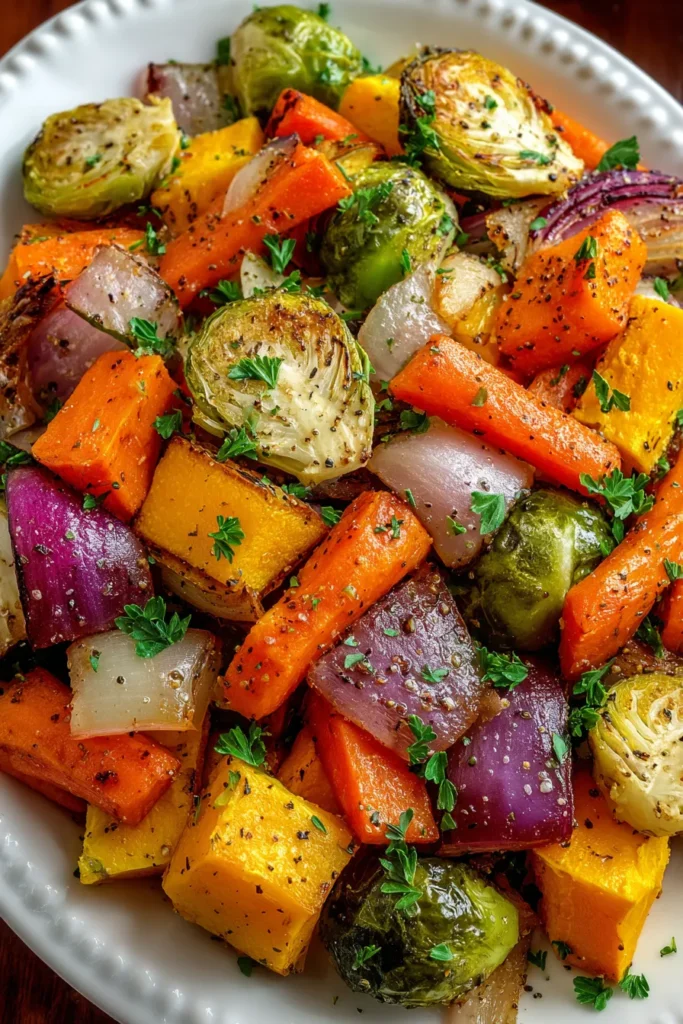

Roasted Fall Vegetables
Description
Experience a symphony of flavors with sweet butternut squash, crisp Brussels sprouts, and tender carrots, all beautifully caramelized for a cozy, healthy side dish.
Ingredients
Instructions
-
Preheat your oven to 425°F (220°C). This high temperature will help caramelize the vegetables, enhancing their natural sweetness.
-
In a large mixing bowl, combine the butternut squash, carrots, Brussels sprouts, red onion, and sweet potatoes.
-
Drizzle the olive oil over the vegetables and sprinkle with dried thyme, dried rosemary, garlic powder, salt, and pepper. Toss everything together until the vegetables are evenly coated.
-
Spread the vegetable mixture in a single layer on a large baking sheet. Make sure to leave some space between the pieces to promote even roasting.
-
Place the baking sheet in the preheated oven. Roast for 25-30 minutes, or until the vegetables are tender and caramelized, stirring halfway through for even cooking.
-
If using balsamic vinegar, remove the vegetables from the oven after 25 minutes, drizzle the vinegar over them, and give them a gentle toss. Return to the oven for an additional 5 minutes.
-
Once the vegetables are done, remove them from the oven and let them cool for a few minutes. Adjust the seasoning with more salt and pepper if necessary.
-
Transfer the roasted vegetables to a serving platter and garnish with chopped fresh parsley, if desired. Serve warm as a delicious side dish.
Note
- Feel free to mix and match your favorite fall vegetables such as parsnips, beets, or turnips.
- The addition of balsamic vinegar adds a tangy sweetness that complements the roasted flavors beautifully.
- These roasted vegetables can be served as a side dish or tossed into salads for added texture and flavor.
- Leftovers can be stored in an airtight container in the refrigerator for up to 3 days and make excellent additions to wraps or grain bowls.