

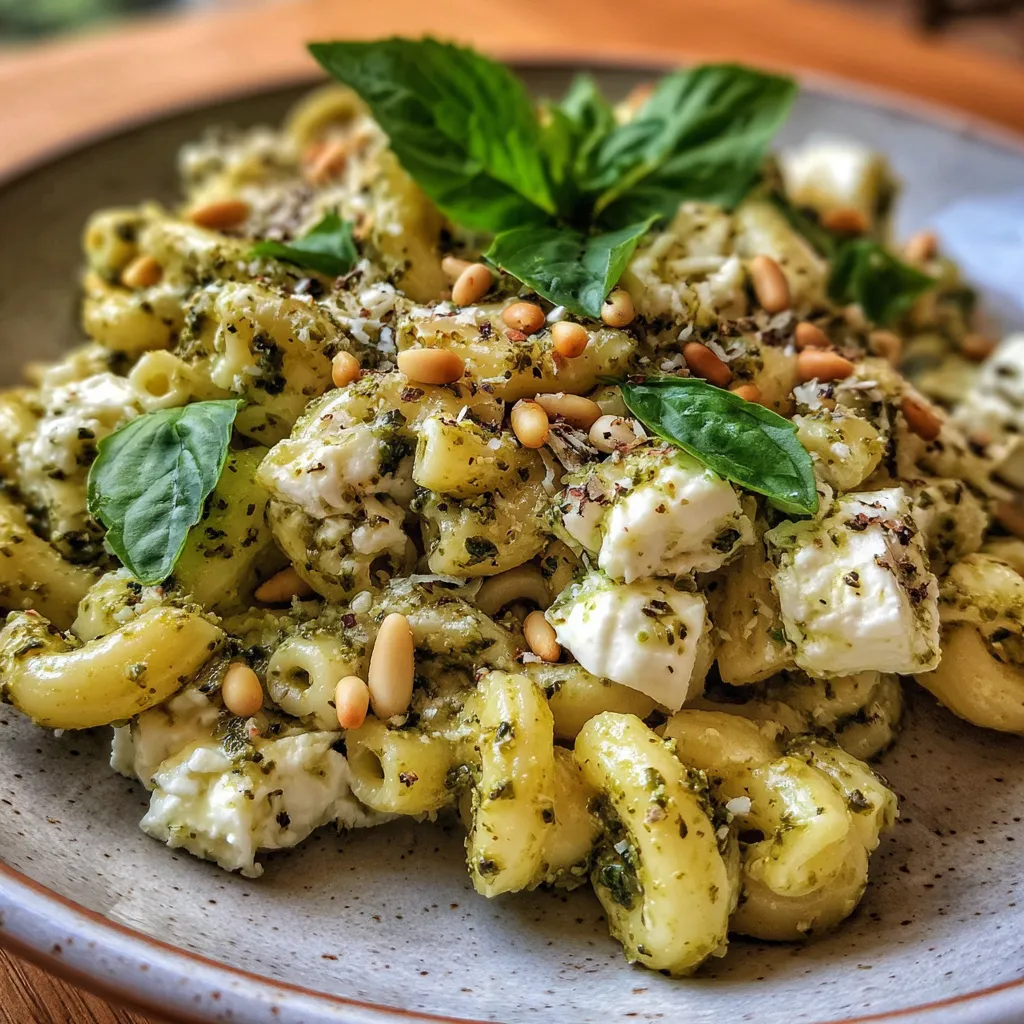
Pesto Goat Cheese Pasta brings together silky pasta ribbons bathed in vibrant basil pesto, tangy goat cheese melting into every strand, and the crunch of toasted pine nuts for a creamy twist on a classic favorite. With just a handful of pantry staples and minimal effort, this dish is perfect for busy weeknights or impressing friends at a cozy dinner. Grab your fork and get ready to create a plateful of herby, nutty goodness that’s as simple as it is sensational!
Key Ingredients
To whip up Pesto Goat Cheese Pasta, you only need a handful of simple ingredients that come together in minutes. Each component plays a vital role, from the flavorful pesto to the creamy goat cheese.
- 200 grams pasta: Base of tender ribbons that soak up the pesto and goat cheese sauce.
- 2 tablespoons olive oil: Heart of the sauté, helping to gently cook garlic and carry flavors.
- 1 clove garlic, minced: Aromatic punch that layers in a gentle savory depth.
- 100 grams goat cheese: Tangy creaminess that melts into the pasta, creating a luscious coating.
- 3 tablespoons basil pesto: Vibrant, herby foundation that ties every flavor together.
- 30 grams pine nuts, toasted: Nutty crunch that adds a delightful texture contrast.
- 50 milliliters pasta water, reserved: Starchy liquid used to bind and smooth out the sauce.
- Salt, to taste: Balances and enhances all the natural flavors.
- Black pepper, to taste: Provides a gentle peppery kick.
- Fresh basil leaves, for garnish: Bright, herbal finish that lifts the entire dish.
How To Make Pesto Goat Cheese Pasta
Creating this Pesto Goat Cheese Pasta is a breeze. You’ll boil your pasta to tender perfection, build a simple yet flavorful pesto sauce in the pan, and toss it all together with creamy goat cheese for an irresistibly smooth texture. In under 30 minutes, you’ll have a restaurant-worthy meal that’s both comforting and bright with fresh basil.
1. Bring a large pot of well-salted water to a rolling boil, about 4–5 minutes, ensuring the pasta cooks evenly and absorbs flavor.
2. Add the pasta and cook it until al dente, stirring occasionally to prevent sticking, following the timing on your package.
3. Meanwhile, heat the olive oil in a large pan over medium heat, then add the minced garlic and cook for 1–2 minutes until fragrant but not browned.
4. Stir in the basil pesto, then gradually pour in the reserved pasta water, about 1–2 tablespoons at a time, whisking until you achieve a smooth, velvety sauce.
5. Drain the pasta, reserving any extra pasta water, and immediately transfer the noodles into the pan with the sauce, tossing to coat every strand.
6. Crumble the goat cheese over the warm pasta and gently toss until the cheese softens into pockets of creamy tang.
7. Season the pasta with salt and freshly ground black pepper, tasting as you go to reach your perfect balance.
8. Serve the finished dish by sprinkling toasted pine nuts and fresh basil leaves on top for a crunchy, fragrant garnish.
Serving Suggestions
This pasta is a star on its own, but a few thoughtful pairings will elevate your meal to next-level deliciousness. Whether you’re hosting a casual dinner or enjoying an intimate night in, these serving ideas bring extra flair and balance to every plate.
- Serve on warm plates: Preheat your serving dishes in a low oven or microwave to keep the pasta piping hot and inviting.
- Pair with a crisp green salad: A simple mix of arugula, cherry tomatoes, and lemon vinaigrette offers a refreshing contrast to the creamy sauce.
- Add a drizzle of extra-virgin olive oil: A final swirl brightens the flavors and provides a glossy, restaurant-style finish.
- Complement with a glass of dry white wine: Sauvignon Blanc or Pinot Grigio bring bright acidity that cuts through the goat cheese’s richness.
Tips For Perfect Pesto Goat Cheese Pasta
Ready to take your pasta game up a notch? Here are a few friendly pointers to ensure every forkful of Pesto Goat Cheese Pasta is pure bliss. From choosing the right pasta shape to maximizing crunch and flavor, these little hacks will make you look like a pro in no time.
- Use any pasta shape you prefer for different textures.
- For extra flavor add a pinch of red pepper flakes.
- Store leftovers in an airtight container in the refrigerator for up to two days.
- To make it vegan substitute goat cheese with a cashew cream alternative.
How To Store It
Keeping your Pesto Goat Cheese Pasta fresh and tasty for next-day enjoyment is simple when you follow a few storage strategies. Proper handling ensures the creamy sauce stays smooth and the pine nuts retain their satisfying crunch.
- Store in an airtight container in the refrigerator for up to two days.
- Keep toasted pine nuts and fresh basil separate until serving to maintain their crunch and color.
- If the sauce thickens, stir in a splash of reserved pasta water before reheating to restore creaminess.
- Avoid freezing, as goat cheese and pesto can separate and change texture when thawed.
Frequently Asked Questions
Curious about timing, variations, or storage? Here are quick answers to the most common Pesto Goat Cheese Pasta questions.
- How long does it take to prepare this recipe?
It takes about 25–30 minutes in total. This includes 5 minutes to prep ingredients (mincing garlic, measuring pesto and cheese), 10–12 minutes to cook the pasta al dente, and 10–15 minutes to heat the sauce, combine everything, and garnish.
- Can I make this recipe vegan?
Yes. Substitute the goat cheese with a cashew cream alternative and ensure your basil pesto is vegan (no Parmesan). Follow the same steps, using the cashew cream in place of goat cheese when tossing the pasta to maintain a creamy texture.
- What pasta shapes work best for this sauce?
Medium-width shapes like fusilli, penne, or rigatoni hold the pesto sauce well in their grooves. Long strands such as fettuccine or linguine also work for a silkier coating. Feel free to experiment with shells or orecchiette for extra texture.
- How do I store and reheat leftovers?
Store leftovers in an airtight container in the refrigerator for up to two days. To reheat, warm a skillet over medium heat, add a splash of water or olive oil, then gently toss in the pasta until heated through. This prevents the sauce from drying out.
- Can I freeze the leftovers?
Freezing is not recommended because the texture of the goat cheese and pesto sauce can separate when thawed. Leftovers taste best when refrigerated and eaten within two days.
- What can I use if I don’t have pine nuts?
Toasted chopped walnuts, almonds, or sunflower seeds make great substitutes and add a pleasant crunch. You can also skip the nuts and sprinkle toasted breadcrumbs or extra fresh basil for garnish.
- How can I adjust the sauce consistency?
Gradually add the reserved pasta water, about 1–2 tablespoons at a time, while stirring until the sauce reaches your desired creaminess. If it becomes too thin, stir in a small extra crumble of goat cheese to thicken it.
- How can I enhance the flavor of this pasta?
Stir in a pinch of red pepper flakes for heat, a squeeze of fresh lemon juice for brightness, or a handful of halved cherry tomatoes for color and acidity. A dusting of grated Parmesan or Pecorino Romano before serving also adds depth.
What Makes This Special
This Pesto Goat Cheese Pasta ticks all the boxes: creamy, herby, tangy, and delightfully crunchy—what’s not to love? The magic lies in the simple combo of basil pesto and goat cheese, which meld into a silky sauce that clings to every noodle. Toasted pine nuts bring a playful crunch, while fresh basil leaves add a bright pop of color. Feel free to print this article and save it for future pasta nights. Got feedback, questions, or just want to share your tasty creations? Drop a comment and let’s chat!

Pesto Goat Cheese Pasta
Description
Silky pasta ribbons bathed in emerald pesto are dotted with tangy goat cheese and showered with warm, toasty pine nuts, creating a harmony of creamy, herby, and nutty bursts in every forkful.
Ingredients
Instructions
-
Bring a large pot of salted water to a boil.
-
Add the pasta and cook until al dente according to package instructions.
-
Meanwhile heat the olive oil in a large pan over medium heat and add the minced garlic.
-
Stir in the basil pesto and gradually add the reserved pasta water to create a smooth sauce.
-
Drain the pasta and add it to the pan with the sauce.
-
Crumble the goat cheese over the pasta and toss gently to combine.
-
Season with salt and black pepper to taste.
-
Serve the pasta topped with toasted pine nuts and fresh basil leaves.
Note
- Use any pasta shape you prefer for different textures.
- For extra flavor add a pinch of red pepper flakes.
- Store leftovers in an airtight container in the refrigerator for up to two days.
- To make it vegan substitute goat cheese with a cashew cream alternative.