

There’s something undeniably comforting about a plate of old school spaghetti served on a family table. With its humble roots in traditional Italian cooking, this dish has the power to transport you back to lively Sunday lunches where laughter mingled with the clinking of forks against plates. Savor the timeless flavors of Old School Spaghetti – a classic dish that brings warmth to any table! Every forkful dances with bright tomato notes, golden garlic slices, and the slightest whisper of red pepper heat, all wrapped around strands of perfectly al dente pasta. This subtitled delight proves that the simplest ingredients—when treated with care—can become the most memorable bites.
As a passionate home cook and SEO-savvy writer, I love sharing recipes that feel like a warm chat over the kitchen counter. This beginner-friendly recipe takes just 15 minutes to prepare, 40 minutes to simmer, plus a quick 5-minute rest before serving. At around 450 calories per serving, it’s a deliciously balanced option for lunch or dinner that fills the belly and the heart. From crushing whole peeled tomatoes by hand to that final sprinkle of grated Parmesan cheese, every step invites you into a timeless ritual of Italian comfort food.
KEY INGREDIENTS IN OLD SCHOOL SPAGHETTI
To create a sauce that sings with flavor, each ingredient must play its part. Here’s what you’ll need and the role each element plays in this classic recipe:
- Spaghetti
Provides the sturdy, slippery strands that soak up every bit of sauce. Cooking it to al dente texture ensures each bite has just the right amount of chew.
- Extra Virgin Olive Oil
Acts as the flavor foundation, infusing the garlic and red pepper flakes with a rich, fruity character. Good quality oil makes a noticeable difference.
- Garlic
Thinly sliced and gently sautéed, garlic releases its sweet, nutty aroma while building the savory backbone of the sauce.
- Red Pepper Flakes
Optional but highly recommendable for a hint of warmth that contrasts beautifully with the sweet tomatoes.
- Whole Peeled Tomatoes
Crushed by hand, they lend a rustic texture and bright acidity that forms the heart of the sauce.
- Salt and Freshly Ground Black Pepper
Essential seasonings that highlight and balance the natural flavors of tomato, garlic, and basil.
- Sugar
A small touch helps tame tomato acidity, creating a rounder, mellower sauce.
- Fresh Basil Leaves
Added at the end for a burst of herbal freshness and vibrant green color.
- Grated Parmesan Cheese
Sprinkled on top, it melts slightly into the hot spaghetti, adding savory, umami richness.
HOW TO MAKE OLD SCHOOL SPAGHETTI
Bringing this classic recipe together is both straightforward and incredibly rewarding. Follow these detailed steps to achieve a sauce that’s thick, flavorful, and perfectly coats every strand of pasta.
1. Bring a large pot of salted water to a boil. The salt seasons the spaghetti from the inside as it cooks. Add the spaghetti and cook according to package instructions until al dente. Before draining, reserve one cup of the starchy pasta water. This liquid will help adjust your sauce’s consistency later. Drain the pasta and set it aside.
2. In a large skillet, heat the extra virgin olive oil over medium heat. Add the thinly sliced garlic and, if you like a little kick, the red pepper flakes. Sauté until the garlic turns a light golden brown—this releases its sweet, mellow flavor—being careful not to let it burn, which can lead to bitterness.
3. Take the canned whole peeled tomatoes and gently crush them in a bowl with your hands, discarding any tough stem ends. Pour the crushed tomatoes and their juices into the skillet with your garlic-infused oil.
4. Season the sauce generously with salt, freshly ground black pepper, and, if you’re using it, a pinch of sugar to balance acidity. Bring the sauce to a gentle bubble, then simmer for about 20 minutes, stirring occasionally, until it thickens slightly and the flavors meld into a rich, cohesive sauce.
5. Add the cooked spaghetti straight into the skillet. Toss the noodles in the sauce to coat them evenly. If the mixture seems too thick or dry, pour in a ladle of your reserved pasta water to loosen things up and help the sauce cling lovingly to each strand.
6. Let the spaghetti cook in the sauce for an additional two minutes so it absorbs every bit of that garlicky, tomatoey goodness. Taste and adjust the seasoning as needed with more salt, pepper, or a splash of pasta water.
7. Serve immediately, garnished with fresh basil leaves and a generous grating of Parmesan cheese. Each plate emerges looking restaurant-worthy yet heartwarmingly homey.
SERVING SUGGESTIONS FOR OLD SCHOOL SPAGHETTI
Once your Old School Spaghetti is ready, presentation and complementary tastes can elevate the experience even further. Whether you’re dishing up a casual weeknight dinner or impressing weekend guests, these serving ideas will ensure every meal feels special and satisfying. Embrace warmth, color, and textural contrast to make each plate pop, and don’t shy away from little personal touches that reflect your style and preferences.
- Crusty Garlic Bread
Offer thick slices of toasted bread brushed with olive oil, garlic, and a sprinkle of parsley. It’s perfect for scooping up leftover sauce and adds a delightful crunch.
- Mixed Green Salad
A simple salad of peppery arugula, crisp romaine, or fresh spinach tossed with a light vinaigrette cuts through the richness of the pasta and refreshes the palate.
- Drizzle of Extra Virgin Olive Oil
A final swirl of high-quality olive oil over each serving adds a glossy sheen and extra layer of fruity complexity.
- Chianti or Sangiovese
Pairing your spaghetti with a medium-bodied Italian red wine enhances the tomato’s acidity and complements the garlic’s savory notes, creating a harmonious dining experience.
HOW TO STORE OLD SCHOOL SPAGHETTI
If you find yourself with leftovers—or if you want to prepare ahead for busy weeknights—proper storage will ensure your spaghetti stays fresh, flavorful, and ready to reheat. With a few simple techniques, you can preserve the texture of the pasta and the vibrant taste of the sauce without it turning soggy or dull. Here’s how to keep your Old School Spaghetti at its best when you’re not eating it immediately.
- Refrigerate in an Airtight Container
Transfer cooled spaghetti into a sealed, food-safe container. Store in the fridge for up to 3–4 days. Before reheating, let it come to room temperature or add a splash of pasta water to revive the sauce.
- Freeze in Portion-Sized Packs
Divide leftover spaghetti into individual servings in freezer-safe bags or containers. Lay flat while freezing so they thaw quickly and evenly. Use within 2 months for optimal flavor.
- Separate Sauce from Pasta (Optional)
If you prefer firmer noodles, store sauce and spaghetti in different containers. Combine and gently reheat on the stove with a bit of extra olive oil or reserved pasta water.
- Gentle Reheating Techniques
Warm your spaghetti slowly over low heat in a skillet, stirring often. Alternatively, microwave in short bursts, stirring in between, and adding water or oil to prevent drying out.
CONCLUSION
Old School Spaghetti captures everything we love about classic Italian cooking: accessible ingredients, simple techniques, and deeply satisfying flavors that bring people together. From that first sizzle of garlic in olive oil to the moment you scrape your fork across the last tender strand of pasta, this dish proves that good food doesn’t have to be complicated. With just a handful of staple pantry items—spaghetti, olive oil, garlic, canned tomatoes, and a few seasonings—you can create a memorable meal that feels both timeless and fresh. Whether you serve it for a casual weeknight dinner or a festive gathering, it promises to fill your kitchen with warmth and your table with smiles.
Feel free to print this article and save it for later use; it’s designed to be your go-to guide whenever you crave that comforting plate of spaghetti. You’ll find a helpful FAQ section below for quick answers to common questions, ensuring you feel confident every time you make this recipe. If you try Old School Spaghetti in your own kitchen, I’d love to hear how it turned out—please leave a comment, share any tweaks you made, or ask questions if you need a hand. Your feedback and stories make our cooking community richer and more connected!
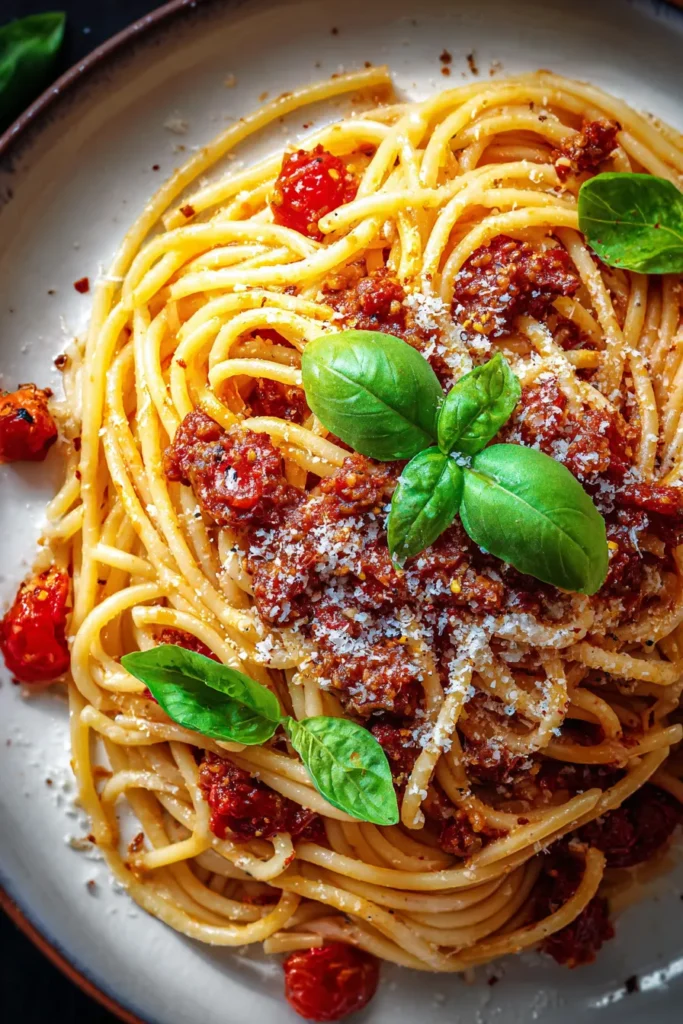

Old School Spaghetti
Description
This mouthwatering spaghetti dish features a robust tomato sauce infused with golden garlic and a hint of warmth from red pepper flakes, perfect for family dinners or casual gatherings.
Ingredients
Instructions
-
Bring a large pot of salted water to a boil. Add the spaghetti and cook according to package instructions until al dente. Reserve 1 cup of pasta water, then drain and set aside.
-
In a large skillet, heat the olive oil over medium heat. Add the sliced garlic and red pepper flakes (if using). Sauté until the garlic is golden brown, being careful not to burn it.
-
Crush the canned tomatoes in a bowl using your hands, removing any tough stem ends. Add the crushed tomatoes and their juices to the skillet.
-
Season the sauce generously with salt, freshly ground black pepper, and sugar (if using) to balance the acidity of the tomatoes. Simmer the sauce for about 20 minutes, stirring occasionally, until it thickens and the flavors meld together.
-
Add the cooked spaghetti to the sauce in the skillet and toss to coat. If needed, add a little reserved pasta water to loosen the sauce and help it cling to the spaghetti.
-
Cook the spaghetti in the sauce for an additional 2 minutes to absorb the flavors. Adjust seasoning if necessary.
-
Serve the spaghetti hot, garnished with fresh basil leaves and a generous sprinkle of grated Parmesan cheese.
Note
- Use good quality olive oil for the best flavor.
- Adjust the amount of garlic and red pepper flakes to suit your taste.
- For a deeper flavor, cook the sauce longer to allow it to reduce further.
- Adding a pinch of sugar helps reduce the acidity of the tomatoes.
- Fresh basil adds a lovely herbal note; however, it can be omitted if not available.