

There’s something undeniably comforting about gathering around a steaming pot of Moroccan Chicken Stew, its layers of spices and flavors weaving together in perfect harmony. Savor the spice of Morocco with this vibrant and hearty chicken stew that warms the soul! Every spoonful feels like a little celebration of sweet dried apricots, briny olives, and tender chicken thighs swimming in a rich tomato-and-spice broth. This dish bursts with aromatic spices—cumin, coriander, ginger, cinnamon, and turmeric—each adding its own distinctive note, while a pinch of cayenne pepper can bring a gentle kick. Whether it’s a weeknight family dinner or the main event at a cozy gathering, this stew delivers warmth, color, and an unforgettable balance of sweet, savory, and tangy flavors.
This Intermediate-level dinner recipe is surprisingly approachable, with just 15 minutes of prep time, an hour of simmering, and a brief 10-minute rest before serving. Clocking in at roughly 450 calories per serving, it’s a satisfying yet balanced option for anyone wanting to explore global flavors without spending all afternoon in the kitchen. I still remember the first time I made this stew—my kitchen felt like a Moroccan souk, alive with color and spice. The dried apricots melted into the sauce, the green olives lent their distinctive bite, and each aromatic wisp of steam beckoned everyone to the table. Let’s dive in and discover how each ingredient and simple technique comes together to create this soul-warming masterpiece!
KEY INGREDIENTS IN MOROCCAN CHICKEN STEW
Before we get cooking, let’s chat about the star players in this recipe. These ingredients work together to form the incredible depth of flavor, texture, and fragrance that make Moroccan Chicken Stew such a crowd-pleaser. You’ll recognize many of them as pantry staples, but combined in this way, they transform into something truly magical.
- Chicken thighs
Bone-in and skinless, these thighs stay juicy and absorb all the fabulous spices during cooking. The bones add an extra layer of savory richness to the broth.
- Olive oil
A cornerstone of Moroccan cooking, olive oil gently sautés the onions and spices, unfolding each flavor note and giving the stew its silky texture.
- Onion
Finely chopped and lightly browned, onions create a sweet, mellow base that balances the warm spice blend.
- Garlic
Minced garlic infuses the stew with its pungent depth, rounding out the savory profile and enhancing the overall aroma.
- Ground cumin
Earthy and nutty, cumin offers that signature Moroccan warmth—think smoky whispers in every spoonful.
- Ground coriander
With its citrusy undertones, coriander brightens the sauce and pairs beautifully with sweeter spices.
- Ground ginger
A gentle heat and fresh zing come from ground ginger, adding complexity to the flavor bouquet.
- Ground cinnamon
Just a hint of cinnamon brings a cozy sweetness that ties all the spices together in perfect harmony.
- Cayenne pepper (optional)
This optional ingredient adds a spark of heat. Adjust to taste if you like a bit more kick.
- Turmeric
Bright, golden turmeric lends earthiness and a beautiful color, while offering anti-inflammatory benefits.
- Diced tomatoes
Undrained canned tomatoes form the luscious tomato base, providing acidity and body for the stew.
- Chicken broth
A flavorful liquid that melds everything into a rich, savory sauce—feel free to use homemade or low-sodium store-bought.
- Chickpeas
Creamy and protein-packed, chickpeas bring texture, heartiness, and a subtle nutty taste.
- Dried apricots
Chopped apricots dissolve into the stew, offering pockets of sweetness that complement the savory elements.
- Green olives
Pitted and sliced, they add briny bursts of flavor and a delightful contrast to the sweeter apricots.
- Salt and black pepper
Essential seasonings to balance sweetness, saltiness, and spice—adjust to your personal preference.
- Fresh cilantro or parsley
Chopped herbs lend a fresh, bright finish that enlivens each warm, spice-laden bite.
- Cooked couscous or rice
A fluffy bed for the stew, couscous or rice soaks up the rich sauce, making every forkful irresistible.
HOW TO MAKE MOROCCAN CHICKEN STEW
Now that we’ve gathered our flavorful ingredients, let’s bring them together in a step-by-step journey. This intuitive process transforms simple pantry items into a heartwarming stew that’s sure to impress. Roll up your sleeves, and let’s get cooking!
1. Heat the olive oil in a large pot or Dutch oven over medium heat. Add the finely chopped onion and sauté for about 5 minutes, stirring occasionally, until the onion is translucent and tender.
2. Add the minced garlic, ground cumin, coriander, ginger, cinnamon, optional cayenne pepper, and turmeric. Cook for 1–2 minutes, stirring constantly, until the spices become fragrant and coat the onions in a vibrant, aromatic paste.
3. Turn the heat up to medium-high and add the chicken thighs to the pot. Season generously with salt and freshly ground black pepper. Brown the chicken on both sides, about 4–5 minutes per side, creating a golden crust that locks in juices.
4. Pour in the undrained diced tomatoes, chicken broth, cooked chickpeas, and chopped dried apricots. Use a wooden spoon to stir everything together, ensuring the ingredients are well mixed, then bring the mixture to a boil.
5. Once boiling, reduce the heat to low and cover the pot with a snug-fitting lid. Let the stew simmer gently for 30–40 minutes, or until the chicken is fork-tender and the sauce has thickened to a rich consistency.
6. Remove the lid and stir in the sliced green olives. Taste the stew and adjust the seasoning with extra salt and pepper if desired, ensuring a perfect balance of sweet, savory, and tangy notes.
7. To serve, spoon the Moroccan Chicken Stew over a steaming mound of cooked couscous or rice. Garnish generously with fresh chopped cilantro or parsley, adding a burst of green freshness to each hearty bowl.
SERVING SUGGESTIONS FOR MOROCCAN CHICKEN STEW
Serving this Moroccan Chicken Stew is half the fun! Whether you’re feeding a crowd or enjoying a cozy solo meal, presentation and accompaniments can elevate each spoonful. Below are my favorite ideas to showcase this vibrant dish and maximize every last drop of its luscious sauce. Think textures, colors, and complementary sides that celebrate Moroccan flavors and make your dinner table truly inviting.
- Serve the stew over fluffy couscous, allowing the grains to soak up every bit of the spiced tomato–apricot sauce. Fluff the couscous with a fork before plating to keep it light and airy.
- Offer warm flatbread or crusty bread alongside the stew for scooping and dipping. The soft, tear-apart texture of flatbread or the hearty crumb of a fresh loaf is perfect for sopping up the remaining sauce.
- Garnish each bowl with a drizzle of plain yogurt or crème fraîche to add a creamy, cooling contrast to the spices. A sprinkle of toasted pine nuts or slivered almonds also brings a delightful crunch.
- Present a small platter of preserved lemons (thinly sliced) and extra olives on the side. These tangy, salty bites provide an optional burst of flavor that guests can add as they please.
HOW TO STORE MOROCCAN CHICKEN STEW
Storing your Moroccan Chicken Stew properly ensures you can enjoy every delicious bite long after dinner is over. The flavors often deepen and meld over time, making leftovers a real treat. Here are a few tried-and-true methods to keep your stew tasting its very best, whether you’re refrigerating for tomorrow’s lunch or freezing for a future cozy night in.
- Refrigerator storage: Allow the stew to cool to room temperature, then transfer it into an airtight container. It will stay fresh in the fridge for up to 4 days—just reheat gently on the stove or in the microwave.
- Freezer method: Portion the cooled stew into freezer-safe bags or containers, leaving some headspace for expansion. Label with the date and freeze for up to 3 months. Thaw overnight in the fridge before reheating.
- Reheating tips: To maintain the stew’s texture, reheat slowly over low heat, stirring occasionally and adding a splash of broth or water if it seems too thick. This keeps the chicken moist and the sauce silky.
- Long-term prep: You can also freeze uncooked components—like the spiced tomato base and chickpeas—in separate bags. When you’re ready, simply defrost and add fresh chicken and apricots for a near-fresh experience.
CONCLUSION
Thank you for joining me on this delightful journey through the world of Moroccan Chicken Stew! We’ve explored every part of this vibrant, soul-warming dish—from gathering the perfect balance of spices and ingredients to mastering the cooking process that yields tender, flavorful chicken nestled in a sweet-tangy sauce. With prep time of just 15 minutes, an hour of simmering, and a brief 10-minute rest, this Intermediate-level dinner recipe delivers both convenience and flair. Whether served over couscous, rice, or alongside warm bread, each bowl is an invitation to savor a harmonious blend of textures and flavors. Don’t forget: this stew often tastes even better the next day, once the ingredients have had time to mingle and intensify.
Feel free to print this article and save it for later, so you can return anytime you crave a taste of Moroccan-inspired comfort. You’ll also find a FAQ section just below to address any lingering questions or troubleshooting needs. If you give this recipe a try—or even if you make your own delicious tweaks—I’d love to hear how it went! Leave your comments, questions, or feedback below, and let’s keep the conversation going about everything from spice variations to serving hacks. Happy cooking, and may your kitchen always be full of warmth and wonderful aromas!
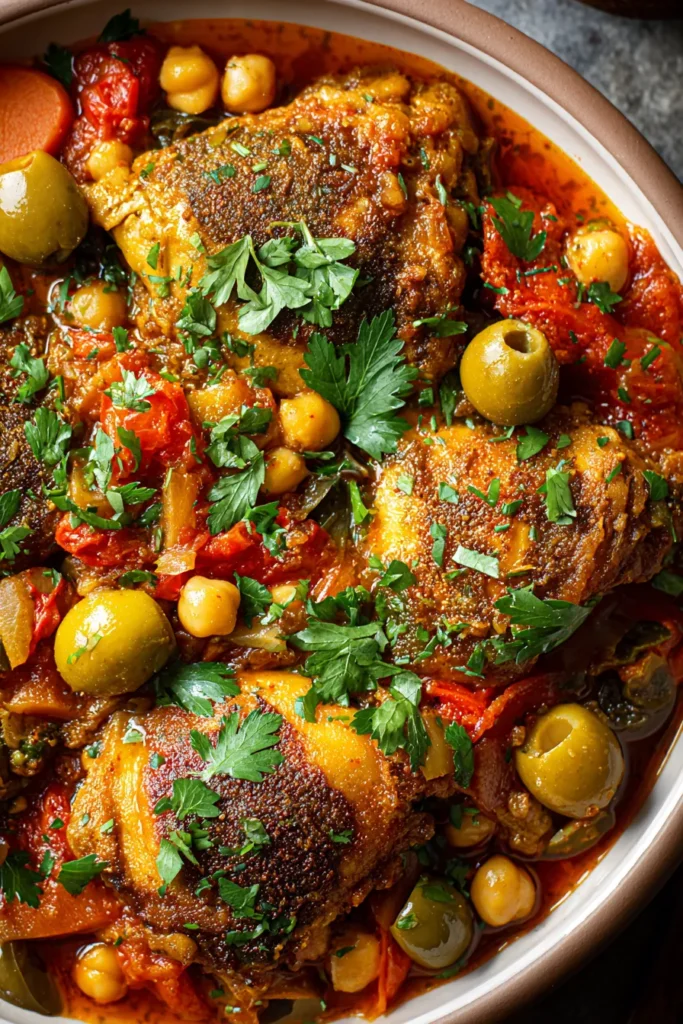

Moroccan Chicken Stew
Description
This Moroccan Chicken Stew bursts with aromatic spices, tender chicken, and sweet apricots, creating a delightful balance of flavors that's perfect for any dinner table.
Ingredients
Instructions
-
Heat the olive oil in a large pot or Dutch oven over medium heat. Add the chopped onion and sauté for about 5 minutes, or until translucent and tender.
-
Add the garlic, ground cumin, coriander, ginger, cinnamon, cayenne pepper (if using), and turmeric. Cook for 1-2 minutes, stirring constantly, until the spices are fragrant.
-
Increase the heat to medium-high, add the chicken thighs to the pot, and season them with salt and pepper. Brown the chicken on both sides, about 4-5 minutes per side.
-
Pour in the diced tomatoes, chicken broth, chickpeas, and chopped apricots. Stir to combine all the ingredients and bring the mixture to a boil.
-
Reduce the heat to low and cover the pot. Let it simmer gently for about 30-40 minutes, or until the chicken is fully cooked and tender.
-
Add the sliced green olives to the stew, stirring well to incorporate. Taste the stew and adjust the seasoning with additional salt and pepper if necessary.
-
Serve the Moroccan Chicken Stew over cooked couscous or rice. Garnish with fresh chopped cilantro or parsley before serving.
Note
- Traditionally, this stew can be varied by including preserved lemons for extra tartness.
- Experiment with adding different vegetables such as carrots or bell peppers for more texture and flavor.
- The stew is even better the next day as the flavors have had more time to blend.
- This dish pairs excellently with a side of fresh bread for dipping in the savory sauce.