

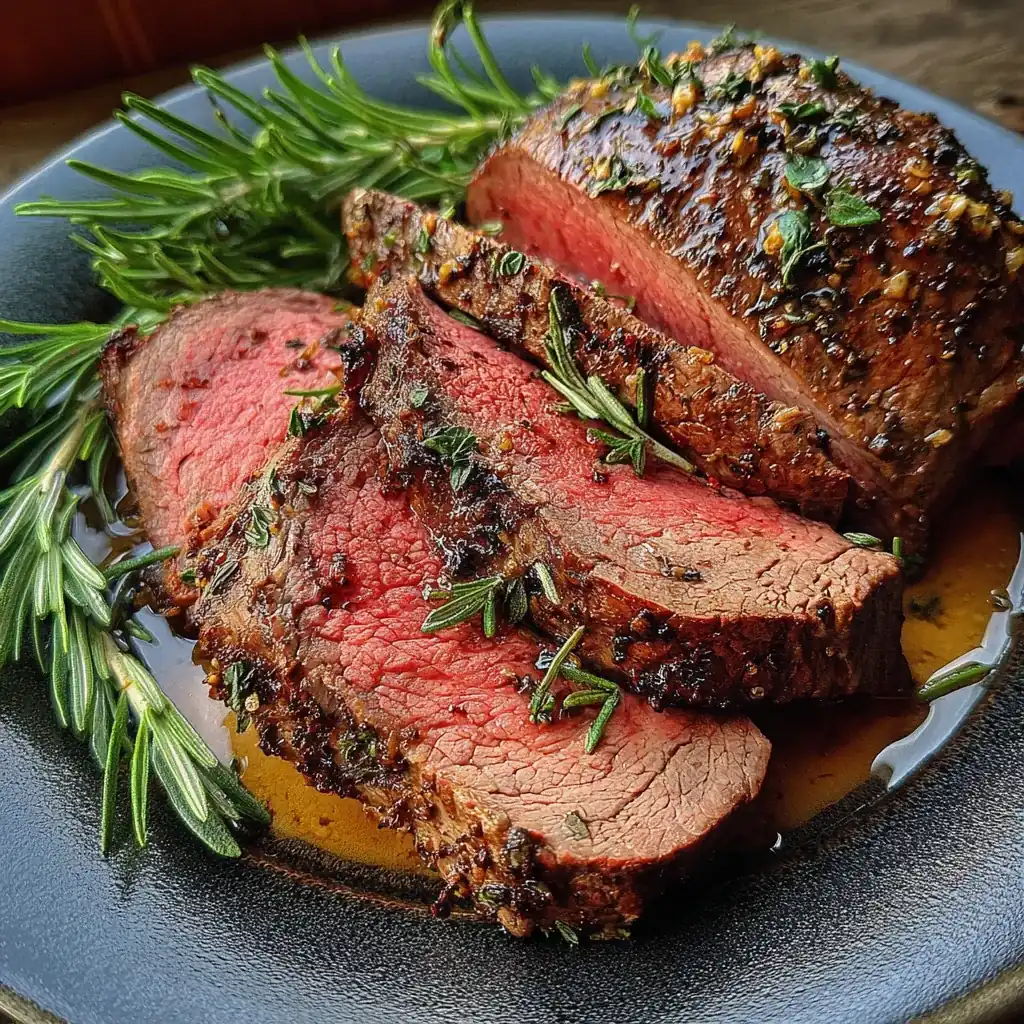
There’s nothing quite like sinking your teeth into tender, herb-crusted beef that’s seared to golden perfection and drizzled with a savory jus. Our Million Dollar Roast Beef Tenderloin is a showstopper for family dinners or special celebrations, combining fresh garlic, thyme, rosemary, Dijon, and Worcestershire into a crust that locks in every juicy note. Whether you’re impressing guests or treating yourself, this recipe promises unforgettable flavor from first slice to last. Grab your apron—amazing roast beef awaits!
Key Ingredients
All you need are a handful of simple ingredients that come together to create a gourmet experience in your own kitchen.
- 2 to 3 pounds beef tenderloin, trimmed: the tender, lean cut that’s perfect for slicing into juicy medallions.
- 2 tablespoons olive oil: helps seasonings adhere and encourages a crisp, golden sear.
- 2 teaspoons salt: enhances the natural beef flavor and balances the herbs.
- 1 teaspoon black pepper: adds a subtle kick and depth to the crust.
- 4 cloves garlic, minced: brings pungent, savory notes to the herb paste.
- 2 tablespoons Dijon mustard: provides tangy flavor and helps bind the herb paste.
- 2 tablespoons Worcestershire sauce: adds umami richness and depth to the beef.
- 1 tablespoon fresh rosemary, chopped: offers piney, aromatic fragrance to the crust.
- 1 tablespoon fresh thyme, chopped: contributes earthy, floral undertones for complexity.
- 1 cup beef broth: keeps the meat moist and forms the base of the jus.
- 1/4 cup red wine (optional): deepens the pan sauce with fruity acidity and richness.
- Fresh herbs for garnish (optional): add a pop of color and extra fragrance when serving.
How To Make Million Dollar Roast Beef Tenderloin
Ready to turn those ingredients into a succulent masterpiece? Follow these detailed steps to sear and roast your tenderloin to perfection, finishing with a flavorful, wine-scented jus that will have everyone asking for seconds.
1. Preheat your oven to 400°F (200°C), ensuring it reaches the right temperature for even roasting.
2. In a small bowl, mix the minced garlic, Dijon mustard, Worcestershire sauce, chopped rosemary, and chopped thyme to form a smooth herb-garlic paste.
3. Pat the beef tenderloin dry with paper towels. Rub olive oil all over the meat, then season evenly with salt and black pepper.
4. Spread the garlic and herb paste generously over the tenderloin, pressing it firmly into the surface to make sure it adheres.
5. Heat a large oven-safe skillet over medium-high heat. When the pan is hot, sear the tenderloin on each side until a golden brown crust forms, about 2–3 minutes per side.
6. Carefully pour the beef broth and red wine (if using) into the skillet around the meat, avoiding washing off the herb coating.
7. Transfer the skillet to the preheated oven. Roast for 20–30 minutes, or until an instant-read thermometer inserted into the thickest part reads 130°F (54°C) for medium-rare.
8. Remove the skillet from the oven, transfer the roast to a cutting board, and let it rest for 10–15 minutes to allow the juices to redistribute.
9. Slice the tenderloin into ¾-inch medallions, arrange on a platter, then spoon the pan juices over the top and garnish with fresh herbs.
Serving Suggestions
This roast beef tenderloin shines on its own, but pairing it with the right sides and garnishes can take the meal over the top. Here are four creative ways to serve your tenderloin for an impressive presentation and balanced plate that hits all the right notes.
- Serve alongside creamy mashed potatoes to soak up every drop of jus and create a comforting, hearty combo.
- Pair with a colorful roasted vegetable medley—think carrots, parsnips, and Brussels sprouts—for texture and seasonal flavors.
- Add a fresh arugula salad with lemon vinaigrette to introduce bright acidity and crisp greens that balance the rich beef.
- Offer warm crusty bread on the side so guests can mop up the savory mustard-wine jus and enjoy every last bit.
Tips For Perfect Million Dollar Roast Beef Tenderloin
Want to elevate your roast from great to unforgettable? A few insider tweaks can make all the difference, ensuring you achieve the ideal crust, perfect doneness, and the best possible flavor every time you roast this tenderloin.
- Beef tenderloin is best served medium-rare for optimum tenderness and flavor.
- For a crustier exterior, chill the tenderloin uncovered in the refrigerator for a few hours before roasting.
- Pair this dish with roasted vegetables or mashed potatoes for a complete, well-rounded meal.
- Leftovers can be sliced and used in sandwiches or salads for a delicious next-day treat.
How To Store It
After a delicious meal, you’ll want to preserve any leftovers so they stay just as flavorful. Here are some simple methods to store your roast beef tenderloin and maintain its juicy texture and rich taste.
- Refrigeration: Cool the slices to room temperature, then store in an airtight container for up to 3 days.
- Freezing: Arrange individual slices on a baking sheet, freeze until firm, then transfer to a sealed freezer bag for up to 2 months.
- Avoid air exposure: Wrap tightly in plastic wrap or use vacuum sealing to prevent freezer burn and preserve flavor.
- Reheat gently: Warm slices in a skillet over low heat with a splash of broth or jus to avoid overcooking.
Frequently Asked Questions
Got questions about making this tenderloin? You’re not alone—here are answers to some of the most common inquiries.
- How long does it take to prepare and cook the Million Dollar Roast Beef Tenderloin?
Preparation takes about 10–15 minutes, which includes trimming the tenderloin (if not already done), patting it dry, mixing the garlic-herb paste, and seasoning. Searing requires roughly 8–12 minutes (2–3 minutes per side). Roasting in a 400°F (200°C) oven takes 20–30 minutes, depending on your preferred doneness. Finally, resting the meat for 10–15 minutes brings the total time to about 50–70 minutes.
- What internal temperature should I aim for, and how do I check it accurately?
For medium-rare, pull the roast at 130°F (54°C), remembering that it will rise 5–10°F during resting. For medium, target 140°F (60°C). Use an instant-read meat thermometer inserted into the thickest part of the tenderloin, avoiding contact with the skillet or fat. Insert it straight in and wait for the reading to stabilize before removing it.
- How do I achieve a crustier exterior on the tenderloin?
After seasoning with olive oil, salt, and pepper, chill the tenderloin uncovered in the refrigerator for 2–4 hours. This dries the surface, which promotes better searing. When you sear in the hot skillet, ensure the pan is smoking hot before adding the meat. Press the tenderloin gently against the pan to maximize contact, and resist moving it until a golden crust forms.
- Can I substitute the red wine in the pan sauce with something else?
Yes. If you prefer not to use red wine, substitute an equal amount of additional beef broth or a combination of beef broth and a splash of balsamic vinegar for depth of flavor. You can also use red grape juice diluted with a teaspoon of lemon juice. Pour your substitute into the skillet around the meat after searing, then roast as directed.
- What’s the best way to rest and slice the tenderloin for serving?
After removing the skillet from the oven, transfer the tenderloin to a cutting board and tent loosely with foil. Let it rest for 10–15 minutes to allow the juices to redistribute. Use a sharp carving knife to slice into ¾-inch medallions, cutting across the grain for maximum tenderness. Arrange on a platter and spoon pan juices over each slice.
- How should I store and reheat leftovers?
Once fully cooled, wrap leftover slices tightly in plastic wrap or store in an airtight container in the refrigerator for up to 3 days. To reheat, place slices in a single layer in a skillet over low heat with a teaspoon of broth or pan sauce, covering briefly until warmed through. Avoid high heat to prevent overcooking.
- What side dishes pair well with this roast tenderloin?
Classic accompaniments include creamy mashed potatoes, roasted root vegetables (carrots, parsnips, Brussels sprouts), or a simple green bean almondine. For a lighter option, serve alongside a crisp arugula or mixed greens salad dressed with lemon vinaigrette. A warm, crusty bread also complements the savory pan juices.
What Makes This Special
This recipe is special because it marries the elegance of a prime cut with the rustic charm of a garlic-herb crust and a fragrant mustard-wine jus, making every slice taste like a million bucks. The simple sear-and-roast technique ensures a perfect medium-rare center, while fresh rosemary and thyme bring layers of flavor. The optional red wine adds depth to the pan sauce without fuss, and chilling the meat ahead of time guarantees a beautiful crust. Print this article, bookmark it, and feel free to save it for your next celebration—then come back to share your thoughts or ask any questions you might have!

Million Dollar Roast Beef Tenderloin
Description
This beef tenderloin is coated in garlic, thyme, and rosemary paste, seared to form a caramelized crust, then roasted until tender and served with a fragrant, wine-scented jus that drips over each slice.
Ingredients
Instructions
-
Preheat your oven to 400°F (200°C).
-
In a small bowl, mix together the minced garlic, Dijon mustard, Worcestershire sauce, chopped rosemary, and chopped thyme to create a paste.
-
Pat the beef tenderloin dry with paper towels. Rub the olive oil all over the meat, followed by the salt and black pepper, ensuring it is evenly coated.
-
Spread the garlic and herb mixture generously over the entire surface of the tenderloin, pressing it into the meat to adhere.
-
Heat a large oven-safe skillet over medium-high heat. Once hot, sear the tenderloin on all sides until golden brown (about 2-3 minutes per side).
-
Carefully pour the beef broth and red wine (if using) into the skillet around the tenderloin, avoiding pouring directly on the meat.
-
Transfer the skillet to the preheated oven. Roast for about 20-30 minutes, or until the internal temperature reaches 130°F (54°C) for medium-rare, or adjust according to your preferred doneness.
-
Once done, remove the skillet from the oven and transfer the tenderloin to a cutting board. Let it rest for 10-15 minutes before slicing to allow the juices to redistribute.
-
Slice the tenderloin into medallions and arrange on a serving platter. Spoon some of the pan juice over the slices and garnish with fresh herbs if desired.
Note
- Beef tenderloin is best served medium-rare for optimum tenderness and flavor.
- For a crustier exterior, you can chill the tenderloin in the refrigerator for a few hours before roasting.
- Pair this dish with roasted vegetables or mashed potatoes for a complete meal.
- Leftovers can be sliced and used in sandwiches or salads for a delicious next-day meal.