

Malaysian Honeycomb Cake, also known as kek gambang, is a delightful sponge that hides a playful network of air pockets ready to surprise every bite. Lightly sweetened with honey and enriched by creamy coconut milk, it offers a subtle tropical twist that’s perfect for afternoon tea or festive gatherings. Whether you’re craving a springy dessert or looking to impress friends with something new, this cake brings fun honeycomb patterns and a tender crumb everyone will love.
Key Ingredients
Gathering the right ingredients ensures that signature honeycomb texture and rich flavor shine through. Here’s what you’ll need:
- 1 cup all-purpose flour: Provides structure and supports the honeycomb cells.
- ½ cup tapioca flour: Adds elasticity and chewiness for those iconic air pockets.
- 1 teaspoon baking powder: Gives an initial lift for a light, airy crumb.
- ½ teaspoon baking soda: Reacts with coconut milk and honey to promote browning and tenderness.
- ¼ teaspoon salt: Balances sweetness and enhances overall flavor.
- ¾ cup sugar: Sweetens the cake and contributes to a fine, tender crumb.
- ½ cup coconut milk: Infuses richness and moisture with a subtle coconut aroma.
- ½ cup water: Hydrates flours evenly and adjusts batter consistency.
- ¼ cup vegetable oil: Locks in moisture and keeps the cake soft.
- 3 large eggs: Provide aeration and structure when beaten until fluffy.
- 1 teaspoon vanilla extract: Lends warm, familiar flavor depth.
- 1 tablespoon honey: Adds floral sweetness and aids in browning.
- ½ teaspoon pandan extract: Optional for a vibrant green hue and delicate grassy note.
How To Make Malaysian Honeycomb Cake
Transforming a simple batter into a golden, hole-studded sponge is easier than you might think. With a bit of whisking, beating, and gentle folding, you’ll achieve that classic honeycomb pattern and tender texture. Just follow each step carefully, giving special attention to aeration and even mixing for the best rise and crumb.
1. Preheat your oven to 180°C (350°F). Grease and line a rectangular or square cake pan with parchment paper to ensure easy release.
2. In a mixing bowl, combine the all-purpose flour, tapioca flour, baking powder, baking soda, and salt. Whisk thoroughly until evenly blended.
3. In another bowl, beat the eggs and sugar using an electric mixer on high speed until the mixture turns pale and fluffy, about 3–5 minutes.
4. Gradually pour in the coconut milk, water, vegetable oil, vanilla extract, and honey while continuing to beat on low–medium speed until fully incorporated.
5. Slowly fold the dry ingredients into the wet mixture using a rubber spatula. Mix gently until no streaks of flour remain. If using pandan extract, fold it in now for color and aroma.
6. Pour the batter into the prepared pan, using a spatula to spread it evenly and smooth the top.
7. Bake for 45–50 minutes, or until the top is golden brown and a toothpick inserted in the center comes out clean.
8. Remove the cake from the oven and let it cool in the pan for 10 minutes. Carefully lift it out and transfer to a wire rack to cool completely.
9. Once cooled, use a sharp knife to cut the cake into squares or cubes, revealing the delightful honeycomb pattern inside.
Serving Suggestions
Once your Malaysian Honeycomb Cake is cool, it’s time to enjoy its springy texture and sweet coconut notes. Whether you’re serving this at a casual gathering or a festive spread, these ideas will elevate every bite.
- Serve warm cubes with a pot of jasmine tea to highlight the cake’s honeyed sweetness.
- Dust slices lightly with powdered sugar for an elegant finish and subtle extra sweetness.
- Drizzle extra honey over individual pieces and add a sprig of fresh mint for color contrast.
- Garnish with a sprinkle of grated coconut or chopped nuts for crunchy texture and visual appeal.
Tips For Perfect Malaysian Honeycomb Cake
This airy sponge is all about balance—enough aeration to create those honeycomb holes, but gentle folding to keep the structure intact. A reliable electric mixer and carefully measured ingredients go a long way. Make sure your eggs are at room temperature to incorporate more air, and don’t skip the resting period in the pan before transferring to the wire rack. These simple practices will ensure a consistent rise and a tender crumb in every slice.
- The cake is best served fresh but can be stored in an airtight container for up to 3 days.
- For a unique twist, try adding grated coconut or chopped nuts into the batter for extra texture.
- This cake is also known as “kek gambang” in Malaysia and is a popular treat during festive occasions.
- Serve with a cup of tea or as part of a festive dessert platter for sharing.
How To Store It
Proper storage preserves that delightful chew and keeps the honeycomb pockets intact. Whether you need to prep ahead or save leftovers, these methods will help maintain freshness and flavor.
- Room Temperature: Place cooled cake in an airtight container at room temperature. Consume within 3 days to enjoy maximum softness.
- Refrigeration: Store in a sealed container in the fridge for up to 5 days. Bring to room temperature before serving to soften the crumb.
- Freezing: Wrap individual cubes in plastic wrap, then seal in a freezer-safe bag. Freeze for up to 1 month, and thaw at room temperature.
- Refreshing: To revive a slightly stale slice, warm in a preheated oven at 150°C (300°F) for 5 minutes for a just-baked feel.
Frequently Asked Questions
Curious minds often wonder about the magic behind those honeycomb pockets and flavor nuances. Here are some quick answers:
- What gives Malaysian Honeycomb Cake its characteristic honeycomb texture?
The honeycomb pattern forms from the combination of tapioca flour and a well-aerated batter. Tapioca flour creates a slightly elastic structure, and beating the eggs and sugar until pale and fluffy incorporates air. During baking, these air pockets expand, resulting in the signature honeycomb holes throughout the cake.
- Can I substitute the tapioca flour with another starch or flour?
Tapioca flour contributes elasticity and chewiness essential for the honeycomb structure. Substituting with cornstarch may yield a similar lightness but a slightly different texture. For a gluten-free version, you could experiment with a mix of cornstarch and potato starch, but the honeycomb effect might be less pronounced.
- Why are both baking powder and baking soda used in this recipe?
Baking powder and baking soda work together to create lift at different stages. Baking powder provides an initial rise, while baking soda reacts with the mild acidity of coconut milk and honey, enhancing browning and tenderness. Omitting either leavening agent can result in a denser or flatter cake.
- How important is it to let the cake cool before cutting, and what’s the best method?
Allowing the cake to cool completely ensures it sets and the honeycomb cells stabilize. Cutting too soon can collapse the air pockets. After 10 minutes in the pan, transfer to a wire rack and cool for at least 30–45 minutes. Use a sharp, serrated knife and make gentle sawing motions for clean edges.
- What role does pandan extract play, and can I omit it?
Pandan extract adds a subtle grassy aroma and a green hue traditional to Southeast Asian desserts. It’s optional; omitting it won’t affect the cake’s structure or sweetness. If you skip pandan, you’ll have a golden cake with pure vanilla flavor accented by honey.
- How should I store leftovers, and can I freeze the cake?
Store cooled cake in an airtight container at room temperature for up to 3 days to maintain moistness. For longer storage, wrap individual cubes in plastic wrap and freeze in an airtight bag for up to 1 month. Thaw at room temperature before serving and refresh in a warm oven (150°C/300°F) for 5 minutes if desired.
- Are there any recommended add-ins or serving variations?
You can fold in 2–3 tablespoons of grated coconut or chopped nuts for extra texture. Serve slices with a hot cup of tea or arrange cubes on a festive dessert platter. A light dusting of powdered sugar or a drizzle of additional honey enhances presentation and sweetness.
What Makes This Special
This Malaysian Honeycomb Cake is a playful fusion of simple pantry staples and tropical flair—every bite surprises you with springy air pockets and a gentle honey aroma. Its chewy yet tender crumb comes from that magical mix of tapioca flour and perfectly whipped eggs, while optional pandan injects a lovely green swirl. Feel free to print and save this recipe for later baking adventures! If you try it, let me know how those honeycomb holes turned out or drop any questions below—I’d love to hear from you.
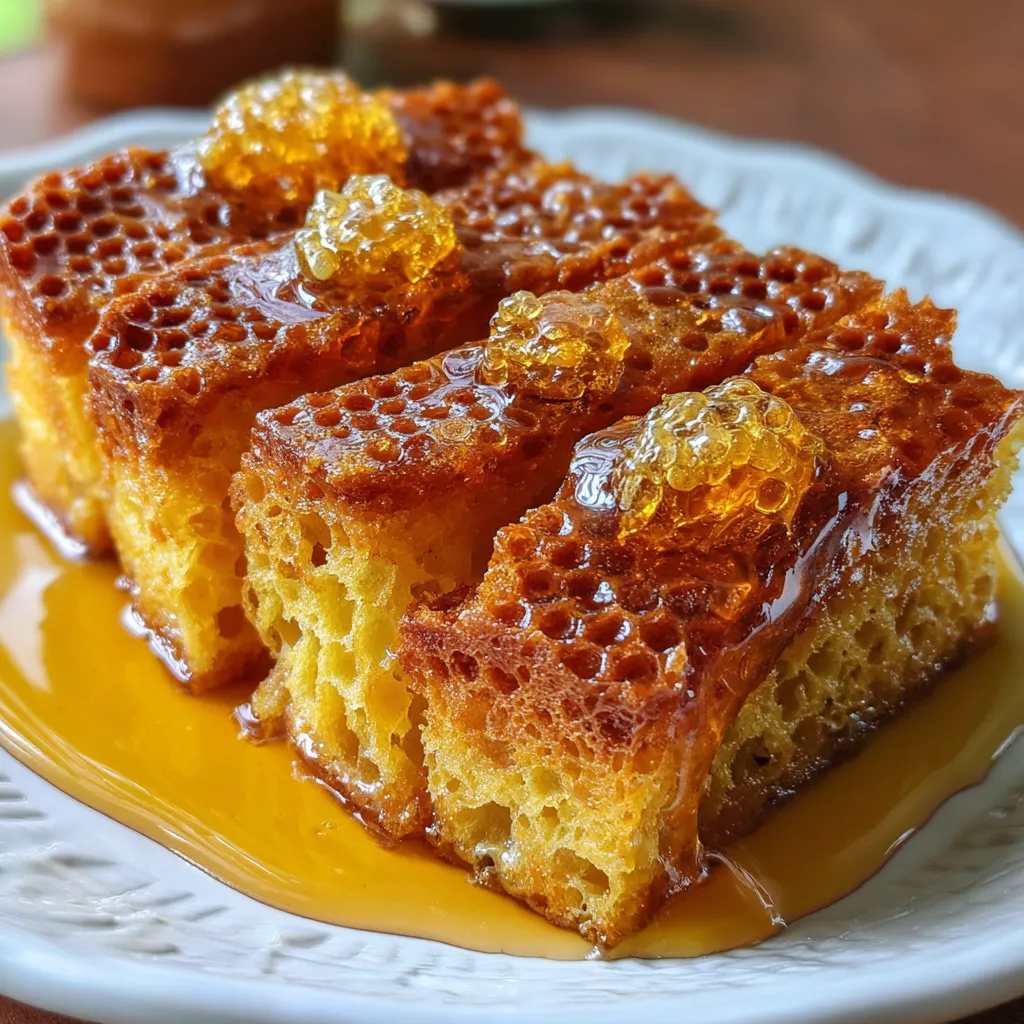

Malaysian Honeycomb Cake
Description
Soft, golden sponge reveals delicate air pockets, enriched with creamy coconut milk and a hint of pandan. Lightly sweet and fragrant, each bite offers tender springy texture and warm honey aroma.
Ingredients
Instructions
-
Preheat your oven to 180°C (350°F). Grease and line a rectangular or square cake pan with parchment paper.
-
In a mixing bowl, combine the all-purpose flour, tapioca flour, baking powder, baking soda, and salt. Whisk these dry ingredients together until evenly mixed.
-
In another bowl, beat the eggs and sugar together using an electric mixer until the mixture is pale and fluffy.
-
Gradually add the coconut milk, water, vegetable oil, vanilla extract, and honey to the egg and sugar mixture while continuing to beat until everything is well combined.
-
Slowly incorporate the dry ingredients into the wet mixture, mixing gently until there are no lumps. If you are using pandan extract for color and flavor, fold it in at this stage.
-
Pour the prepared batter into the greased cake pan, ensuring it is spread evenly.
-
Bake in the preheated oven for about 45-50 minutes, or until the top is golden brown and a toothpick inserted in the center comes out clean.
-
Once baked, remove the cake from the oven and let it cool in the pan for about 10 minutes. Then transfer it onto a wire rack to cool completely.
-
After the cake has cooled, cut it into squares or cubes, showcasing the honeycomb pattern inside.
Note
- The cake is best served fresh but can be stored in an airtight container for up to 3 days.
- For a unique twist, try adding grated coconut or chopped nuts into the batter.
- This cake is also known as "kek gambang" in Malaysia and is a popular treat during festive occasions.
- Serve with a cup of tea or as part of a festive dessert platter for sharing.