

Lemon Dill Cabbage Soup is a bright and tangy cabbage soup that feels like a warm hug in a bowl. This comforting lunch recipe combines crisp green cabbage, sweet carrots, and aromatic fresh dill, all lifted by a zesty lemon kick. A gentle simmer melds flavors into a vibrant, light broth that’s both soothing and refreshing. Whether you’re craving something healthy or just need a cozy pick-me-up, this beginner-friendly soup is a must-try!
Key Ingredients
Let’s take a look at the vibrant ingredients that make this soup shine, each bringing its own flavor and texture to the pot.
- 1 tablespoon olive oil: Provides a smooth, fruity base for sautéing the aromatics.
- 1 medium onion, chopped: Adds natural sweetness and depth when softened.
- 3 cloves garlic, minced: Delivers a punch of savory aroma and flavor.
- 2 carrots, sliced: Contribute subtle sweetness and a pop of color.
- 2 stalks celery, chopped: Bring a mild, refreshing crunch to balance richness.
- 4 cups green cabbage, shredded: The star vegetable, offering tender leaves and gentle sweetness.
- 6 cups vegetable broth: Creates a light, savory liquid that carries all the flavors.
- 2 tablespoons fresh dill, chopped: Infuses the soup with bright, herbaceous notes.
- 2 tablespoons lemon juice: Adds zesty acidity for that signature tang.
- 1 teaspoon salt: Enhances all the natural flavors.
- 1/2 teaspoon black pepper: Gives a subtle heat and spice balance.
How To Make Lemon Dill Cabbage Soup
This soup comes together in just a few simple steps, perfect for a beginner cook. You’ll start by building flavor with sautéed aromatics, then add your hearty veggies and broth, and finish with fresh dill and lemon juice for brightness. Follow these seven steps to transform humble ingredients into a vibrant, nourishing bowl of soup.
1. Heat 1 tablespoon of olive oil in a large pot over medium heat until it shimmers and coats the bottom evenly.
2. Add the chopped onion and minced garlic, stirring frequently. Sauté for about 3 minutes until the onion turns translucent and the garlic is fragrant.
3. Stir in the sliced carrots and chopped celery, cooking for another 5 minutes until the vegetables soften but still hold their shape.
4. Add the shredded green cabbage and pour in 6 cups of vegetable broth. Increase heat to bring the mixture to a gentle boil, stirring to combine.
5. Reduce heat to low and let the soup simmer uncovered for 15 minutes, allowing all the vegetables to become tender and the flavors to meld.
6. Stir in 2 tablespoons of fresh dill and 2 tablespoons of lemon juice, then season with 1 teaspoon salt and 1/2 teaspoon black pepper. Taste and adjust the seasoning if needed.
7. Ladle the hot soup into bowls and serve immediately to enjoy its bright, fresh flavors at their best.
Serving Suggestions
Once your Lemon Dill Cabbage Soup is ready, elevate the experience with these simple serving ideas that add texture, flavor, and extra comfort to every spoonful.
- Serve with crusty whole-grain bread to soak up the tangy broth and add hearty texture.
- Pair with a simple green salad topped with a lemon vinaigrette to echo the soup’s brightness.
- Top each bowl with a dollop of Greek yogurt or vegan sour cream for a creamy twist.
- Garnish with a sprinkle of toasted pumpkin seeds for nutty crunch and visual flair.
Tips For Perfect Lemon Dill Cabbage Soup
These friendly tips will help you fine-tune your soup so it always turns out bright, balanced, and utterly delicious.
- The soup can be garnished with extra fresh dill before serving.
- Adjust lemon juice for preferred tanginess.
- Store leftovers in an airtight container in the refrigerator for up to 3 days.
- This soup is low in calories and rich in vitamins.
How To Store It
Keeping your Lemon Dill Cabbage Soup fresh and flavorful is easy with the right storage methods. Follow these tips to maintain its texture, taste, and vibrant color so you can enjoy every spoonful later.
- Refrigerator: Allow the soup to cool to room temperature, then transfer into an airtight container. Store in the fridge for up to 3 days and reheat gently on the stove.
- Freezer: Let the soup cool completely, then portion into freezer-safe containers, leaving space for expansion. Freeze for up to 2 months and thaw overnight in the refrigerator.
- Reheating: Warm on low heat in a saucepan, stirring occasionally. Add a splash of broth or water if it thickens too much.
- Safe Handling: Discard any uneaten soup left at room temperature for more than 2 hours to ensure freshness.
Frequently Asked Questions
Here are quick answers to common questions about Lemon Dill Cabbage Soup:
- How long does it take to prepare and cook this Lemon Dill Cabbage Soup?
The total time is about 25 minutes of active prep (chopping onion, garlic, carrots, celery, and shredding cabbage) plus 20 minutes of cooking (sautéing and simmering), so roughly 45 minutes from start to finish.
- Can I substitute other types of cabbage or add additional vegetables?
Yes, you can swap green cabbage for Savoy or Napa cabbage for a slightly different texture, and you can add vegetables like zucchini or spinach in the last 5 minutes of cooking. Just ensure any added veggies reach tenderness without overcooking.
- Is this soup suitable for vegans and people following a gluten-free diet?
Absolutely. It uses olive oil, vegetables, vegetable broth, fresh dill, and lemon juice, all of which are naturally vegan and gluten-free. Just verify your vegetable broth label to confirm it’s free of gluten-containing additives.
- How can I adjust the tanginess or dill flavor in the soup?
For more tanginess, gradually increase the lemon juice by up to an extra tablespoon and taste as you go. To enhance the dill flavor, stir in up to an additional tablespoon of fresh chopped dill or garnish with extra sprigs before serving.
- What is the best way to store leftover soup, and how long will it keep?
Allow the soup to cool to room temperature, then transfer it to an airtight container and refrigerate. It will stay fresh for up to 3 days. Reheat gently on the stove over low heat to preserve the vegetable texture.
- Can I freeze this soup for longer storage?
Yes. Let the soup cool completely, then portion into freezer-safe containers or bags, leaving space for expansion. It freezes well for up to 2 months. Thaw overnight in the refrigerator before reheating on the stove.
- How can I add protein to make the soup more filling?
You can stir in a can of rinsed and drained white beans or chickpeas during the last 5 minutes of simmering. Alternatively, cubes of firm tofu or shredded cooked chicken can be added just before serving to warm through.
What Makes This Special
What really sets this Lemon Dill Cabbage Soup apart is its playful balance of sweet, tangy, and herbaceous flavors—without ever feeling heavy. It’s a recipe that works because each ingredient has its moment to shine, from the crisp cabbage ribbons to that final squeeze of lemon. Go ahead and print this article to save for busy weeknights or chilly weekends, then dive in and let me know how it goes! I’d love to hear about your tweaks, questions, or any fun twists you try.
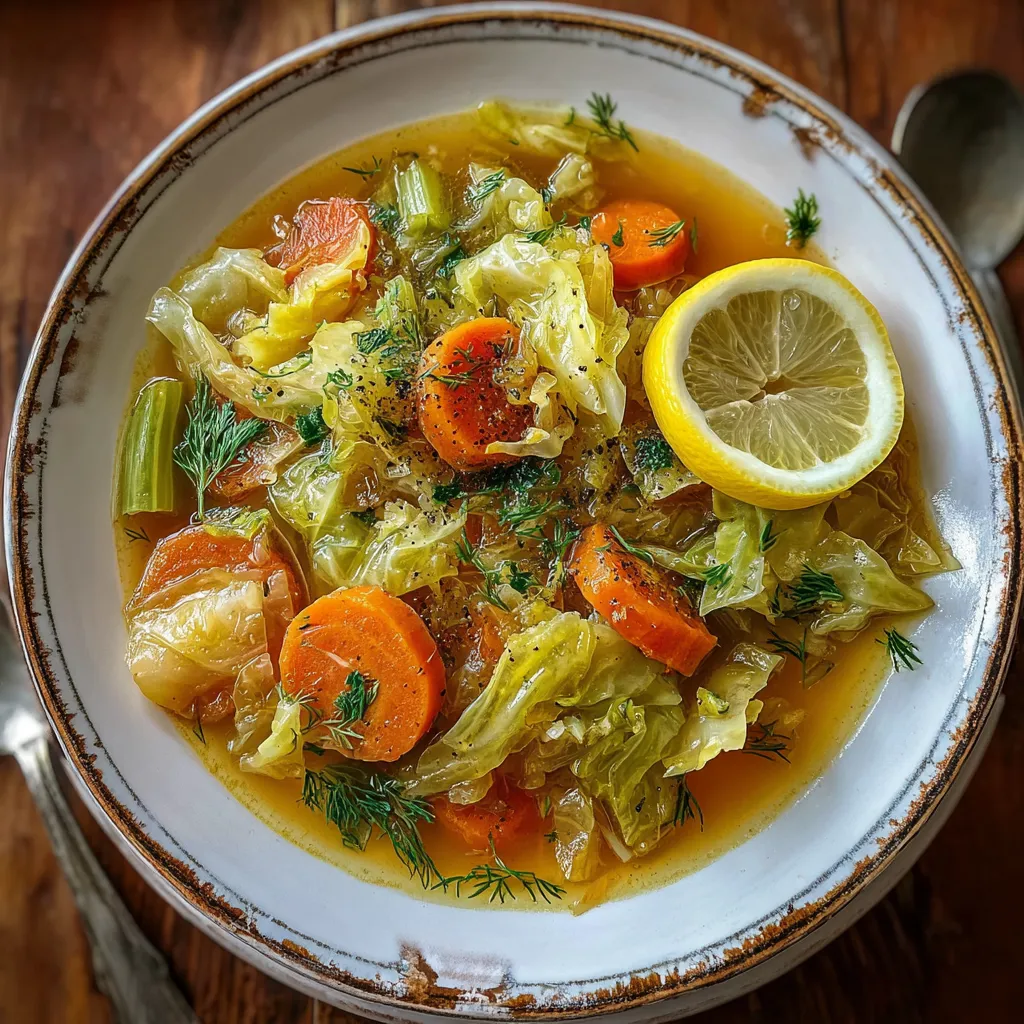

Lemon Dill Cabbage Soup
Description
A warm hug in a bowl, this lemon dill cabbage soup blends crisp cabbage, sweet carrots, and aromatic dill with a bright lemon kick. A gentle simmer melds flavors into a vibrant, light broth that feels both soothing and refreshing.
Ingredients
Instructions
-
Heat the olive oil in a large pot over medium heat.
-
Add the chopped onion and garlic, and sauté until translucent, about 3 minutes.
-
Stir in the carrots and celery, cooking for another 5 minutes until slightly softened.
-
Add the shredded cabbage and pour in the vegetable broth; bring to a gentle boil.
-
Reduce heat and simmer for 15 minutes, or until all vegetables are tender.
-
Stir in the fresh dill and lemon juice, then season with salt and black pepper.
-
Ladle into bowls and serve hot.
Note
- The soup can be garnished with extra fresh dill before serving.
- Adjust lemon juice for preferred tanginess.
- Store leftovers in an airtight container in the refrigerator for up to 3 days.
- This soup is low in calories and rich in vitamins.