

Lavender Blueberry Tea Cakes are tiny delights scented with floral lavender and bursting with juicy blueberries, perfect alongside your morning brew or as an afternoon pick-me-up. Floral notes of lavender weave through a tender crumb while sweet berries pop in every bite, creating a delicate tea cake that feels like sunshine on your plate. Beginner-friendly and irresistibly charming, these tea cakes invite you to bring a bit of elegance to your next baking adventure—grab your mixer and let’s get started!
Key Ingredients
Before we dive into baking, let’s highlight the starring ingredients that give these tea cakes their lovely texture and flavor:
- 1 3/4 cups all-purpose flour: Provides structure and a delicate crumb.
- 1 teaspoon baking powder: Gives a gentle lift for light, fluffy cakes.
- 1/4 teaspoon baking soda: Works with the buttermilk to create a tender rise.
- 1/4 teaspoon salt: Balances sweetness and enhances all the flavors.
- 1 tablespoon dried culinary lavender: Infuses a fragrant floral note into every bite.
- 1/2 cup unsalted butter softened: Adds rich moisture and tenderizes the crumb.
- 1/2 cup granulated sugar: Sweetens while helping to aerate during creaming.
- 2 large eggs: Bind ingredients and contribute to a light texture.
- 1 teaspoon vanilla extract: Rounds out flavors with warm, sweet depth.
- 1/2 cup buttermilk: Reacts with leaveners for a soft, tender cake.
- 3/4 cup fresh blueberries: Burst with juicy sweetness and natural color.
How To Make Lavender Blueberry Tea Cakes
Baking these charming tea cakes is all about gentle mixing, proper leavening, and careful folding to showcase the lavender and blueberries. From preheating your oven to dusting with powdered sugar, each step brings you closer to tender little cakes that are as beautiful as they are delicious. Follow the detailed instructions below, keeping an eye on timing and technique to ensure perfect results.
1. Preheat the oven to 350°F and grease or line a 12-cup muffin tin. This ensures even baking and easy release.
2. In a medium bowl whisk together flour, baking powder, baking soda, salt, and lavender until evenly combined.
3. In a large bowl cream butter and sugar with an electric mixer on medium speed until the mixture is light and fluffy, about 2–3 minutes.
4. Beat in eggs one at a time, scraping down the sides of the bowl after each addition, then mix in vanilla extract until smooth.
5. Alternately add the flour mixture and buttermilk in three additions—beginning and ending with the flour—mixing on low speed and stopping as soon as you can no longer see streaks of flour.
6. Gently fold in the blueberries using a rubber spatula, taking care not to crush the berries or overwork the batter.
7. Divide the batter evenly among the muffin cups (about ¼ cup per cup) and smooth the tops with the back of a spoon.
8. Bake for 18 to 20 minutes, or until a toothpick inserted into the center comes out clean and the tops are lightly golden.
9. Let the tea cakes cool in the pan for 5 minutes, then transfer them to a wire rack to cool completely.
10. Dust with powdered sugar before serving, if desired, for an elegant finishing touch.
Serving Suggestions
When it comes to presenting your Lavender Blueberry Tea Cakes, a few thoughtful touches can elevate the experience. Whether it’s a cozy breakfast or a chic brunch, these ideas will help you shine:
- Offer with a steaming cup of Earl Grey Tea, whose citrusy bergamot notes beautifully complement the lavender.
- Serve alongside a dollop of lemon curd for a bright, tangy contrast against the sweet blueberry.
- Top each cake with a swirl of fresh whipped cream and a sprinkle of additional lavender buds for a delicate garnish.
- Plate with sprigs of fresh mint and a light drizzle of honey to add a refreshing herbal finish.
Tips For Perfect Lavender Blueberry Tea Cakes
Whether you’re a baking newbie or a seasoned pro, these friendly tips will help you nail the texture and flavor every single time:
- For a more pronounced lavender aroma, steep the dried buds in warm buttermilk for 10 minutes, then strain before mixing.
- Handle the batter gently after adding blueberries to keep the cakes tender and the berries intact.
- Store cooled tea cakes in an airtight container at room temperature for up to 3 days or refrigerate for up to a week.
- Frozen blueberries can be used without thawing to prevent discoloration of the batter.
How To Store It
Keeping your tea cakes fresh couldn’t be simpler—just choose the method that fits your timeline and enjoy them whenever the craving strikes:
- Room Temperature: Place cooled tea cakes in an airtight container and keep on the counter away from direct sunlight for up to 3 days.
- Refrigeration: Seal them in a container and store in the fridge for up to one week; let come to room temperature or warm briefly before serving.
- Freezing: Wrap each tea cake individually in plastic wrap, then place in a freezer-safe bag for up to three months; thaw at room temperature.
- Reviving Freshness: For a quick refresh, reheat in a 300°F oven for about 5 minutes or microwave for 10–15 seconds to restore warmth and softness.
Frequently Asked Questions
Here’s a quick FAQ to clear up any lingering curiosities about these floral, fruity tea cakes:
- Q: How can I enhance the lavender aroma in these tea cakes without altering the texture?
A: To intensify the lavender scent, steep the dried culinary lavender in warm buttermilk for 10 minutes before using it in the recipe. After steeping, strain out the buds so only the infused buttermilk remains. Proceed with the recipe by alternating the infused buttermilk and flour mixture as instructed. This gentle infusion method preserves the cake’s tender crumb while delivering a more pronounced floral note.
- Q: What’s the best way to prevent blueberries from sinking or bleeding into the batter?
A: To keep blueberries evenly distributed and prevent discoloration, gently fold them into the batter at the very end, using a rubber spatula and minimal strokes. If using frozen berries, add them straight from the freezer—do not thaw—to reduce pigment release. You can also lightly coat the berries in a teaspoon of flour before folding them in; the flour helps absorb excess moisture and keeps berries suspended during baking.
- Q: I don’t have buttermilk—what can I substitute, and will it affect the final result?
A: You can create a buttermilk substitute by combining ½ cup of milk (whole or 2%) with 1 tablespoon of white vinegar or lemon juice. Stir and let it sit for 5–10 minutes until slightly thickened and curdled. This homemade buttermilk provides the same acid to activate the baking soda, ensuring proper rise and tender crumb. The flavor and texture will be nearly identical to using store-bought buttermilk.
- Q: My tea cakes turned out dense rather than light and fluffy—what might have gone wrong?
A: Dense tea cakes usually result from overmixing the batter once the flour is added, which develops gluten and deflates air incorporated during creaming. To avoid this, mix the dry ingredients into the wet in three additions, beginning and ending with the flour mixture, and stir only until you no longer see streaks of flour. Also, ensure your baking powder and soda are fresh; expired leaveners produce less lift.
- Q: How should I store the cooled lavender blueberry tea cakes, and how long will they stay fresh?
A: Once cool, store the tea cakes in an airtight container at room temperature for up to three days. For longer storage, refrigerate them in a sealed container for up to one week. To revive moisture and warmth, gently reheat individual cakes in the microwave for 10–15 seconds or in a preheated 300°F oven for about 5 minutes, uncovered.
- Q: Can I prepare the batter in advance or freeze the baked tea cakes?
A: You can mix the batter up to 12 hours ahead—cover the bowl with plastic wrap and keep it in the refrigerator. Before baking, stir the batter gently to redistribute any settled lavender or flour. For frozen tea cakes, allow them to cool completely, then wrap each individually in plastic wrap and place in a freezer-safe bag. They can be frozen for up to three months. Thaw at room temperature, then refresh in a 300°F oven for about 5–7 minutes.
- Q: The tops of my tea cakes aren’t smooth—any tips for a more uniform appearance?
A: To achieve smooth, domed tops, fill each muffin cup evenly—use an ice cream scoop for consistent portions—and tap the filled pan lightly on the countertop to release large air bubbles. Smooth the surface with the back of a small spoon or an offset spatula before baking. This technique ensures an even rise and polished presentation.
What Makes This Special
These Lavender Blueberry Tea Cakes shine thanks to their enchanting combination of floral lavender and juicy blueberries nestled in a tender, buttery crumb. The simple steps and accessible ingredients make it a stress-free bake, even for beginners—yet the result feels delightfully upscale. Print and save this recipe for easy reference, and don’t be shy about leaving a comment or question if you give it a try. I can’t wait to hear how your kitchen smells of lavender and how those little cakes turned out!
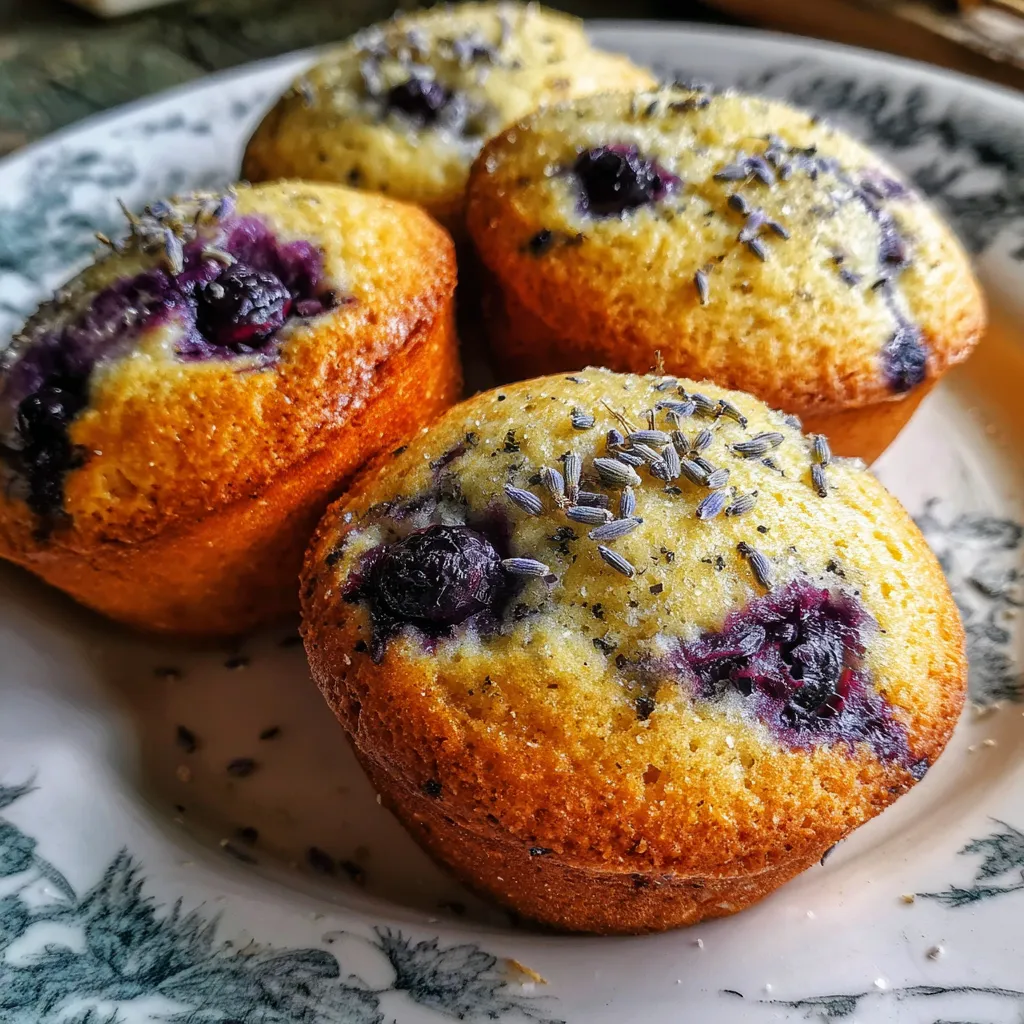

Lavender Blueberry Tea Cakes
Description
Floral notes of lavender weave through tender crumb as sweet blueberries pop in every bite, creating a delicate tea cake that feels like sunshine on your plate.
Ingredients
Instructions
-
Preheat the oven to 350°F and grease or line a 12-cup muffin tin.
-
In a medium bowl whisk together flour, baking powder, baking soda, salt, and lavender.
-
In a large bowl cream butter and sugar with an electric mixer until light and fluffy.
-
Beat in eggs one at a time, scraping down the bowl, then mix in vanilla extract.
-
Alternately add the flour mixture and buttermilk in three additions, beginning and ending with the flour mixture. Mix until just combined.
-
Gently fold in the blueberries to avoid crushing them.
-
Divide the batter evenly among the muffin cups and smooth the tops.
-
Bake for 18 to 20 minutes or until a toothpick inserted into the center comes out clean.
-
Let the tea cakes cool in the pan for 5 minutes, then transfer to a wire rack to cool completely.
-
Dust with powdered sugar before serving, if desired.
Note
- For a more pronounced lavender aroma, steep the dried buds in warm buttermilk for 10 minutes, then strain before mixing.
- Handle the batter gently after adding blueberries to keep the cakes tender and the berries intact.
- Store cooled tea cakes in an airtight container at room temperature for up to 3 days or refrigerate for up to a week.
- Frozen blueberries can be used without thawing to prevent discoloration of the batter.