

Korean Style Pot Roast delivers tender, flavor-packed beef slices bathed in a fragrant gochujang broth alongside melt-in-your-mouth carrots and mushrooms. This intermediate-level dinner transforms humble beef chuck into a saucy, sweet-spicy comfort feast that’s perfect for sharing around the table—trust me, everyone will be asking for seconds!
Key Ingredients
Before you dive into cooking, let’s gather everything you need:
- 3 to 3.5 lb (1.3–1.6 kg) beef chuck roast, trimmed of excess surface fat: Tender protein that soaks up every drop of the savory-sweet braising liquid.
- 1 1/2 tsp kosher salt: Essential for seasoning and bringing out the beef’s natural flavors.
- 3/4 tsp freshly ground black pepper: Adds a bright, spicy note to the roast’s crust.
- 2 tbsp vegetable oil or neutral cooking oil: For searing the beef to a rich brown.
- 1 large yellow onion, sliced: Provides a sweet, caramelized base to the sauce.
- 4 cloves garlic, minced: Offers a punchy, aromatic depth.
- 2-inch piece fresh ginger, peeled and thinly sliced (about 2 tbsp): Lends warmth and complexity to every bite.
- 3 green onions, cut into 2-inch pieces (separate white and green parts): Whites for the braise, greens for a fresh garnish.
- 2 medium carrots, cut into 1-inch chunks: Heartiness and natural sweetness in each forkful.
- 2 medium potatoes, peeled and cut into 1.5-inch chunks: Creamy texture that soaks up the glossy broth.
- 1 cup daikon radish, peeled and cut into 1-inch chunks (optional but traditional): Mild, crisp bite that mellows during cooking.
- 8 oz (225 g) cremini or button mushrooms, halved: Earthy flavor and meaty texture.
- 2 cups low-sodium beef broth: Your braising liquid base, rich and comforting.
- 1/3 cup low-sodium soy sauce: Delivers deep umami and salt balance.
- 3 tbsp gochujang (Korean chili paste), adjust to taste: The signature sweet-spicy kick.
- 2 tbsp brown sugar or honey: Balances heat with a touch of caramel sweetness.
- 2 tbsp mirin or rice wine: Brings a gentle acidity and depth.
- 1 tbsp toasted sesame oil: A nutty finish in the sauce.
- 1 tbsp rice vinegar (optional, for brightness at the end): Adds a bright counterpoint to the richness.
- 1 Korean pear or Asian pear, peeled and grated (or 1/2 sweet apple as substitute): Natural tenderizer and sweetener.
- 1 tsp toasted sesame seeds, for garnish: Provides a final toasty crunch.
- Extra sliced green onions, for garnish: Fresh color and mild onion flavor.
How To Make Korean Style Pot Roast
Get ready for a journey from searing to braising that builds intense layers of flavor. You’ll start by prepping the beef and veggies, whisking up a heady, sweet-spicy gochujang sauce, then searing your roast to lock in juices. After sautéing aromatics like onion, garlic, ginger, and green onion whites, you’ll deglaze the pot, nestle the beef into the sauce, and let it simmer low and slow—stovetop or oven, your choice. Veggies join the party partway through, soaking up all that glossy goodness until both meat and roots are shred-ready.
1. Prep the beef and vegetables: Pat the chuck roast dry to ensure a great sear, then press in kosher salt and black pepper on all sides. Slice onion, mince garlic, slice ginger, cut green onions, and chop carrots, potatoes, daikon, and mushrooms—set everything aside for easy assembly.
2. Make the Korean-style braising sauce: In a bowl, whisk beef broth, soy sauce, gochujang, brown sugar (or honey), mirin, sesame oil, and grated pear (or apple). Taste for a balance of savory, sweet, and spicy, adjusting gochujang or sugar as needed, then set aside.
3. Sear the beef: Heat oil in a heavy pot or Dutch oven over medium-high heat. When shimmering, add the seasoned roast and sear 3–4 minutes per side until deeply browned on all surfaces. Transfer to a plate.
4. Sauté aromatics: Reduce heat to medium in the same pot, add sliced onion and a pinch of salt, and sauté 3–4 minutes, scraping up browned bits. Stir in garlic, ginger, and the white parts of the green onions for 1–2 minutes until fragrant.
5. Deglaze and add sauce: Give the sauce a quick stir, pour it over the aromatics, and use a wooden spoon to scrape up any browned bits. Bring just to a simmer to meld flavors.
6. Return beef to the pot: Nestle the seared roast back into the liquid so it sits halfway submerged. Add more broth or water if needed, then cover with a tight lid.
7. Braise the pot roast (stovetop or oven): For stovetop, lower heat to a gentle simmer and cook 2½–3 hours, turning once or twice. For oven, preheat to 325°F (160°C), then transfer the covered pot and braise for 2½–3 hours, flipping halfway—until the beef pulls apart easily.
8. Add vegetables: About 45–60 minutes before it’s done, stir in carrots, potatoes, daikon, and mushrooms, making sure they’re partly submerged. Cover and continue braising until veggies are fork-tender and beef is shreddable.
9. Finish the sauce: Remove roast to a board, tent with foil, and transfer vegetables to a bowl. Skim any fat from the liquid, then simmer uncovered 5–10 minutes to reduce slightly. Taste and adjust with rice vinegar, soy sauce, or sugar as desired.
10. Slice or shred the beef: Use two forks to shred into large chunks or slice against the grain into thick pieces. Return to the pot or a serving platter and coat with the glossy sauce.
11. Serve: Arrange beef and veggies on a platter or in bowls, spoon extra sauce on top, and garnish with green onion tops and sesame seeds. Pair with steamed rice, kimchi, and other Korean sides for a full feast.
Serving Suggestions
When it’s finally time to eat, presentation and pairings elevate every bite. Here are four ideas to turn this pot roast into a memorable meal:
- Serve over a bed of steamed white rice: The rice soaks up every drop of that rich gochujang sauce for comforting, messy goodness.
- Accompany with kimchi and pickled veggies: The tangy crunch cuts through the richness and adds a refreshing contrast.
- Garnish with fresh herbs: Sprinkle chopped cilantro or Thai basil alongside the green onions to brighten each plate.
- Offer warm tortillas or flatbreads: Let guests wrap shredded beef and veggies for a fusion-style taco night.
Tips For Perfect Korean Style Pot Roast
Cooking this roast low and slow means you have time to play with flavors—here’s how to nail it every time. Consistent searing, balanced sauce, and timed veggie additions ensure both meat and roots reach that melt-in-your-mouth stage. Don’t rush the braise; gentle simmering develops unmatched depth, and resting the meat before shredding keeps juices locked in.
- For a slow cooker version, sear the beef and sauté aromatics first, then transfer everything to the slow cooker and cook on low for 8–9 hours or on high for 4–5 hours.
- Korean pear adds classic bulgogi-style sweetness and tenderizes the meat; if unavailable, use a crisp sweet apple.
- Gochujang levels vary in heat; start with 2 tbsp for milder spice and increase to 3–4 tbsp if you like more kick.
- You can add chunks of sweet potato or butternut squash for an extra layer of sweetness and texture.
- Leftovers taste even better the next day and make excellent fillings for Korean-style tacos or sandwiches.
How To Store It
This pot roast is even more irresistible after a day in the fridge, so plan ahead for leftovers. Cool the beef and veggies to room temperature before storing, and follow these methods to keep them at their best:
- Refrigerator: Store in an airtight container for up to 3–4 days. Gently reheat over low heat in a covered pot, adding a splash of beef broth if the sauce has thickened too much.
- Freezer: Freeze portions in freezer-safe bags or containers for up to 2 months. Thaw overnight in the fridge before reheating.
- Separate components: Keep veggies and beef in separate containers if you plan to use the roast for tacos or sandwiches later—this prevents over-softening.
- Sauce-only: Freeze extra sauce in ice cube trays for quick flavor boosts in future stir-fries or soups.
Frequently Asked Questions
Here are quick answers to common queries—so you can braise with confidence:
- How do I know when the beef is perfectly braised?
The roast is done when it is very tender and easily pulls apart with a fork. After about 2½ to 3 hours of gentle simmering on the stovetop (or in a 325°F/160°C oven), you should be able to insert a fork and twist—it should meet virtually no resistance and shred into large chunks.
- Can I prepare this pot roast in a slow cooker rather than on the stovetop or in the oven?
Yes. After searing the beef and sautéing the aromatics as instructed, transfer everything to a slow cooker. Cook on low for 8–9 hours or on high for 4–5 hours. Add the vegetables during the last 1–1½ hours of cooking so they stay tender but not mushy.
- My sauce is too thin. How can I thicken or concentrate it?
Once you remove the beef and vegetables, skim excess fat and simmer the remaining liquid uncovered over medium heat for 5–10 minutes. This reduction intensifies the flavors and slightly thickens the sauce. You can also whisk in a cornstarch slurry (1 tsp cornstarch mixed with 1 tbsp cold water) and cook for a minute or two until it thickens.
- What are good substitutions if I can’t find Korean pear or gochujang?
If you don’t have Korean pear, use a crisp sweet apple and grate it finely. For gochujang, substitute a blend of miso paste and a dash of chili garlic sauce or sambal oelek, adjusting to taste for both heat and umami.
- At what point should I add the vegetables so they don’t overcook?
Add the carrots, potatoes, daikon, and mushrooms about 45–60 minutes before the roast finishes braising. This timing ensures the vegetables become fork-tender while the meat reaches peak shreddability.
- How can I adjust the spiciness and sweetness levels?
Taste the braising sauce before using it. Increase gochujang from 2 to 3–4 tablespoons for more heat, or add an extra tablespoon of brown sugar or honey for sweetness. A splash of rice vinegar at the end brightens the flavors if it feels too rich.
- What’s the best way to store and reheat leftovers?
Cool the pot roast and vegetables to room temperature, then store in an airtight container in the refrigerator for up to 3–4 days. Reheat gently in a covered pot over low heat, adding a little beef broth if needed to restore the sauce’s consistency. This dish also freezes well for up to 2 months; thaw overnight in the fridge before reheating.
What Makes This Special
This Korean Style Pot Roast is the ultimate comfort meal that melds gentle heat, sweet pear notes, and deep umami into every forkful—plus it’s a breeze to make ahead and reheat. The layered technique of searing, sautéing, and low-and-slow braising brings out incredible depth of flavor, while the gochujang sauce ties it all together in a sweet-spicy embrace. Go ahead, print this recipe, save it for your next cozy dinner, and let me know how it turns out or if you have any questions—I can’t wait to hear your stories!
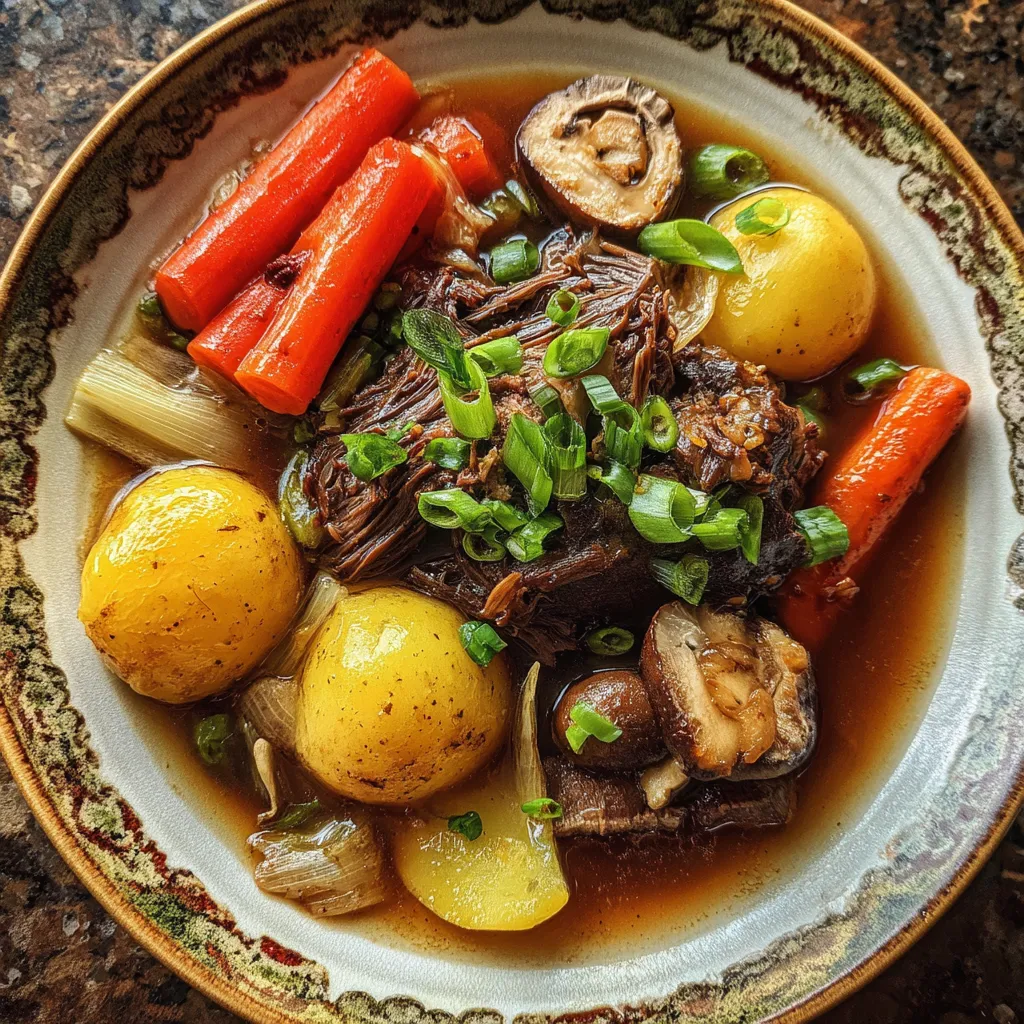

Korean Style Pot Roast
Description
A heady aroma of garlic and ginger fills the air as succulent beef simmers in a sweet-spicy gochujang sauce, while carrots and potatoes soak up every drop of glossy, tangy broth.
Ingredients
Instructions
-
Prep the beef and vegetables:
-
- Pat the beef chuck roast dry with paper towels.
-
- Season all sides evenly with kosher salt and black pepper, pressing it into the meat.
-
- Slice the onion, mince the garlic, slice the ginger, cut the green onions, and chop the carrots, potatoes, daikon, and mushrooms as described in the ingredients list. Set aside.
-
Make the Korean-style braising sauce:
-
- In a medium bowl, whisk together the beef broth, soy sauce, gochujang, brown sugar, mirin, toasted sesame oil, and grated Korean pear (or apple).
-
- Taste the mixture; it should be savory, lightly sweet, and gently spicy. Adjust with a bit more gochujang for heat or a little more brown sugar for sweetness if desired. Set aside.
-
Sear the beef:
-
- Heat the vegetable oil in a large heavy-bottomed pot or Dutch oven over medium-high heat.
-
- When the oil is shimmering and hot, carefully add the seasoned roast.
-
- Sear for 3–4 minutes on each side until deeply browned, using tongs to turn the roast to brown all surfaces, including the edges.
-
- Once seared, transfer the roast to a plate and set aside.
-
Sauté aromatics:
-
- In the same pot (do not clean it, keep the browned bits), reduce the heat to medium.
-
- Add the sliced onion and a pinch of salt. Sauté for 3–4 minutes, scraping up any browned bits from the bottom of the pot.
-
- Add the garlic, ginger, and the white parts of the green onions. Cook for another 1–2 minutes, stirring constantly, until fragrant but not burned.
-
Deglaze and add sauce:
-
- Give the sauce mixture a quick stir, then pour it into the pot with the onions and aromatics.
-
- Use a wooden spoon to scrape up remaining browned bits from the bottom; this adds deep flavor to the braising liquid.
-
- Bring the mixture just to a simmer.
-
Return beef to the pot:
-
- Place the seared roast back into the pot, nestling it into the liquid.
-
- The liquid should come about halfway up the sides of the roast. If needed, add a bit more beef broth or water.
-
- Cover the pot with a tight-fitting lid.
-
Braise the pot roast (stovetop or oven):
-
- Stovetop method:
-
- Reduce heat to low so the liquid is at a gentle simmer.
-
- Cook, covered, for about 2.5 to 3 hours, turning the roast once or twice during cooking to ensure even braising.
-
- Oven method:
-
- Preheat oven to 325°F (160°C).
-
- Once the pot is simmering on the stovetop, cover and transfer to the preheated oven.
-
- Braise for about 2.5 to 3 hours, turning the roast once halfway through.
-
- The roast is done when it is very tender and easily pulls apart with a fork.
-
Add vegetables:
-
- About 45–60 minutes before the roast is finished, add the carrots, potatoes, daikon, and mushrooms to the pot.
-
- Submerge the vegetables as much as possible in the braising liquid.
-
- Continue braising, covered, until the vegetables are tender and the beef is fully soft and shreddable.
-
Finish the sauce:
-
- When the beef is very tender, carefully remove the roast to a cutting board or platter and tent loosely with foil.
-
- Using a slotted spoon, transfer the vegetables to a separate bowl or serving dish.
-
- Skim any excess fat from the surface of the braising liquid.
-
- If you prefer a slightly thicker sauce, simmer the liquid uncovered over medium heat for 5–10 minutes to reduce it slightly.
-
- Taste and adjust seasoning: add a splash of rice vinegar for brightness, a bit more soy sauce for saltiness, or a pinch more sugar if needed.
-
Slice or shred the beef:
-
- Using two forks, shred the roast into large chunks, or slice it against the grain into thick slices.
-
- Return the beef to the pot with the reduced sauce and gently toss to coat, or pour some of the sauce over the beef on a serving platter.
-
Serve:
-
- Arrange the beef on a platter surrounded by the braised vegetables, or serve together in deep bowls.
-
- Spoon additional sauce over the top.
-
- Garnish with the green parts of the sliced green onions and a sprinkle of toasted sesame seeds.
-
- Serve hot with steamed white rice, kimchi, and other Korean side dishes if desired.
Note
- For a slow cooker version, sear the beef and sauté aromatics first, then transfer everything to a slow cooker and cook on low for 8–9 hours or on high for 4–5 hours.
- Korean pear adds classic bulgogi-style sweetness and tenderizes the meat; if unavailable, use a crisp sweet apple.
- Gochujang levels vary in heat; start with 2 tbsp for milder spice and increase to 3–4 tbsp if you like more kick.
- You can add chunks of sweet potato or butternut squash for an extra layer of sweetness and texture.
- Leftovers taste even better the next day and make excellent fillings for Korean-style tacos or sandwiches.