

Korean Spinach Side Dish Sigeumchi Namul is a vibrant side that pops on your palate—fresh spinach leaves blanched until they’re bright emerald green, then gently massaged with a fragrant mix of soy sauce, toasted sesame oil, garlic, and seeds for a crisp, nutty bite. This beginner-friendly banchan is quick to pull together and adds a colorful, healthy boost to any dinner spread. Dive in and discover how easy it is to elevate simple spinach into a flavor-packed dish you’ll crave again and again!
Key Ingredients
To make Korean Spinach Side Dish Sigeumchi Namul, you’ll need just a handful of simple ingredients that come together to create layers of flavor and texture.
- 1 pound (450 g) fresh spinach, preferably flat-leaf or baby spinach: Provides vibrant, tender leaves that form the base of this flavorful banchan.
- 1 tablespoon coarse sea salt (for blanching water): Seasons the spinach during blanching and helps maintain its bright green color.
- 1½ teaspoons soy sauce (more to taste; use gluten-free if needed): Adds savory depth and umami richness to the dressing.
- 1 teaspoon sesame oil: Infuses the dish with a nutty aroma and smooth, rich flavor.
- 1 to 1½ teaspoons toasted sesame seeds, lightly crushed: Deliver extra crunch and a toasty undertone when mixed into the spinach.
- 1 small garlic clove, very finely minced (about ½ teaspoon; adjust to taste): Offers aromatic pungency and traditional Korean flair.
- ¼ teaspoon fine sea salt (for seasoning, adjust to taste): Balances the flavors evenly without leaving grainy bits.
- ¼ teaspoon sugar (optional, to balance flavors): Rounds out the savory notes and enhances overall harmony.
- 1 to 2 teaspoons finely chopped green onion (optional, for extra aroma): Provides a fresh, mild oniony accent.
- Small pinch of black pepper (optional): Adds a subtle hint of spice and warmth.
- Additional sesame seeds for garnish (optional): Offers a decorative finish and a final nutty pop.
How To Make Korean Spinach Side Dish Sigeumchi Namul
This recipe is all about simple steps that build on each other to transform basic spinach into a banchan superstar. You’ll start by cleaning and blanching the leaves, then shock them to lock in color, squeeze out the water, and dress everything with a balanced seasoning. Follow along, and you’ll have a perfectly seasoned side dish ready in minutes!
1. Prepare the spinach
Fill a large bowl with cold water for shocking the spinach after blanching. Rinse the leaves in several changes of water to remove any grit, trim tough stem ends on mature leaves, and halve oversized leaves so they cook uniformly. This prep ensures a clean, tender base for the rest of the dish.
2. Boil the spinach
Bring a large pot of water to a roaring boil over high heat, then stir in 1 tablespoon of coarse sea salt. Submerge all the spinach at once and blanch for 30–45 seconds (baby spinach) or up to 1 minute (mature leaves) until the leaves wilt but retain a vivid green hue and just-tender stems.
3. Shock and drain
Immediately transfer the blanched spinach to your cold water bath to halt cooking and lock in color. Swish gently, drain in a colander, then gather the leaves into a loose bundle and gently squeeze out excess water, being careful not to crush the leaves for the best texture.
4. Cut and loosen
Place the drained spinach on a cutting board and roughly cut into 2–3 inch (5–7 cm) lengths. Gently fluff and separate the strands with your fingers so that the seasoning will coat each piece evenly.
5. Prepare the seasoning
In a medium bowl, whisk together 1½ teaspoons soy sauce, 1 teaspoon sesame oil, ½ teaspoon finely minced garlic, ¼ teaspoon fine sea salt, and ¼ teaspoon sugar (if using). Add chopped green onion, a pinch of black pepper, and the lightly crushed sesame seeds to create a fragrant, balanced dressing.
6. Mix the spinach
Add the spinach to the seasoning bowl, then use clean hands or chopsticks to gently toss and massage the leaves until every bite is coated. Taste and adjust with extra soy sauce, salt, or a splash of sesame oil if you prefer a richer flavor.
7. Rest for flavor
Allow the dressed spinach to rest at room temperature for at least 5–10 minutes. This pause helps the seasoning penetrate the leaves, deepening the overall taste and texture.
8. Serve and store
Serve your Sigeumchi Namul at room temperature or slightly chilled alongside rice and other banchan. Store any leftovers in an airtight container in the fridge for up to 2–3 days, tossing again and adjusting the seasoning before re-serving.
Serving Suggestions
This versatile side really shines when paired thoughtfully. Whether you’re building a traditional Korean spread or adding a twist to your weeknight plate, these serving ideas will highlight the spinach’s fresh, nutty flavor.
- Banchan spread: Arrange alongside other small Korean sides like kimchi, pickled radish, and seasoned bean sprouts to create a vibrant, multi-flavor table.
- Bibimbap topping: Layer the spinach on a bowl of warm rice with sautéed vegetables, gochujang, and a fried egg for a balanced, mix-and-match meal.
- Grilled protein side: Serve next to grilled bulgogi, teriyaki chicken, or tofu steaks to cut through the richness with a crisp, refreshing bite.
- Lettuce wraps: Use cool, crisp lettuce leaves to wrap a spoonful of Sigeumchi Namul with rice and meat or mushrooms for a fun hand-held snack.
Tips For Perfect Korean Spinach Side Dish Sigeumchi Namul
Getting this Sigeumchi Namul just right is all about the little extra touches that bring out its full potential. From toasting seeds to customizing the heat level, these tips will help you nail the texture, aroma, and balance every single time.
- For extra nuttiness, briefly toast raw sesame seeds in a dry pan over low heat until fragrant and lightly golden, then cool before using.
- You can reduce or omit garlic for a milder flavor, or add a little more for a stronger, more traditional Korean taste.
- A few drops of rice vinegar or a pinch of gochugaru (Korean red pepper flakes) can be added for a tangy or lightly spicy variation.
- This dish is naturally vegan if you use a vegan soy sauce; it is also commonly included in bibimbap as a topping.
- Blanching time is crucial: undercook and the stems can be tough; overcook and the spinach becomes mushy and dull, so watch closely.
How To Store It
Proper storage keeps your Sigeumchi Namul tasting as fresh as the day you made it. Follow these simple methods to maintain its bright color and nutty aroma for up to 3 days.
- Always let the spinach cool to room temperature before packing to prevent condensation and sogginess.
- Store in an airtight container in the refrigerator to keep flavors fresh and textures crisp for up to 2–3 days.
- Avoid freezing, as the spinach’s delicate texture will become waterlogged and lose its bright, fresh quality.
- Before serving leftovers, gently toss to redistribute any separated juices and add a few drops of soy sauce or sesame oil to revive the original flavor.
Frequently Asked Questions
Here are answers to some common questions about making and enjoying this dish:
- How do I choose the best spinach for this Sigeumchi Namul recipe?
For the most tender texture and vibrant color, use fresh flat-leaf or baby spinach. Baby spinach requires minimal trimming and has a delicate flavor, while mature flat-leaf spinach with tougher stems should have the ends trimmed and large leaves halved for even cooking. Avoid spinach with wilted leaves or yellow spots, and rinse thoroughly in cold water to remove any grit before blanching.
- How can I tell when the spinach is blanched perfectly?
The ideal blanch time is 30 to 45 seconds for baby spinach or up to 1 minute for mature spinach. You should see the leaves wilt completely while retaining a bright green hue, and the stems should be just tender but not floppy. Immediately transfer the spinach to ice water to halt cooking—this “shocking” step locks in color and prevents overcooking.
- Can I use frozen spinach instead of fresh, and if so, what adjustments are needed?
Yes, you can substitute frozen spinach in a pinch. Thaw it completely in the refrigerator or under cold running water, then squeeze out as much moisture as possible. Since frozen spinach is already cooked and wetter, skip the blanching step and proceed with cutting, seasoning, and tossing. You may need to reduce the added fine sea salt because frozen spinach can release extra liquid and dilute flavors.
- My seasoned spinach tastes a bit flat after refrigerating. How can I revive the flavors?
Over time, the soy sauce and sesame oil can mellow in the fridge. To refresh, gently toss the spinach again, then taste and adjust by adding a few drops of soy sauce for saltiness, a small drizzle of sesame oil for nuttiness, or a pinch of fine sea salt. A squeeze of rice vinegar or a sprinkle of gochugaru can also brighten the flavors if you prefer a tangy or mildly spicy kick.
- What’s the purpose of adding sugar and garlic, and can I adjust those amounts?
A small amount of sugar balances the savory and nutty notes, rounding out the flavor profile without making the dish sweet. The finely minced garlic provides a traditional Korean aroma and pungency. Feel free to omit the sugar for a more straightforward savory side dish, or skip the garlic for a milder taste. Conversely, add up to a full clove of garlic if you love a stronger, more pungent bite.
- Why do I add coarse sea salt to the blanching water and fine sea salt to the seasoning?
Coarse sea salt in the blanching water lightly seasons the spinach and helps preserve its bright green color. The larger crystals dissolve more slowly, imparting gentle seasoning during blanching. Fine sea salt in the seasoning mixes evenly with the other ingredients, ensuring precise control over saltiness in the final dish without leaving grainy bits.
- How long can I store leftover Sigeumchi Namul, and how should I reheat or serve it again?
Store leftovers in an airtight container in the refrigerator for up to 2 to 3 days. Serve it chilled or at room temperature—no reheating needed. Before serving, gently toss the spinach to redistribute any settled liquid and adjust seasoning if necessary, adding a drop of sesame oil or extra soy sauce to revitalize the flavors.
What Makes This Special
There’s something genuinely joyful about turning humble spinach into a banchan that dazzles with its bright color, nutty crunch, and subtle garlic kick. Korean Spinach Side Dish Sigeumchi Namul works its magic through simple steps—blanching, shocking, and a gentle massage with a balanced dressing—so you get maximum flavor with minimal fuss. Feel free to print this article and tuck it into your recipe binder for future dinners. When you give it a try, drop a comment or question below—I’d love to hear how it turned out or help troubleshoot any spinach shenanigans!
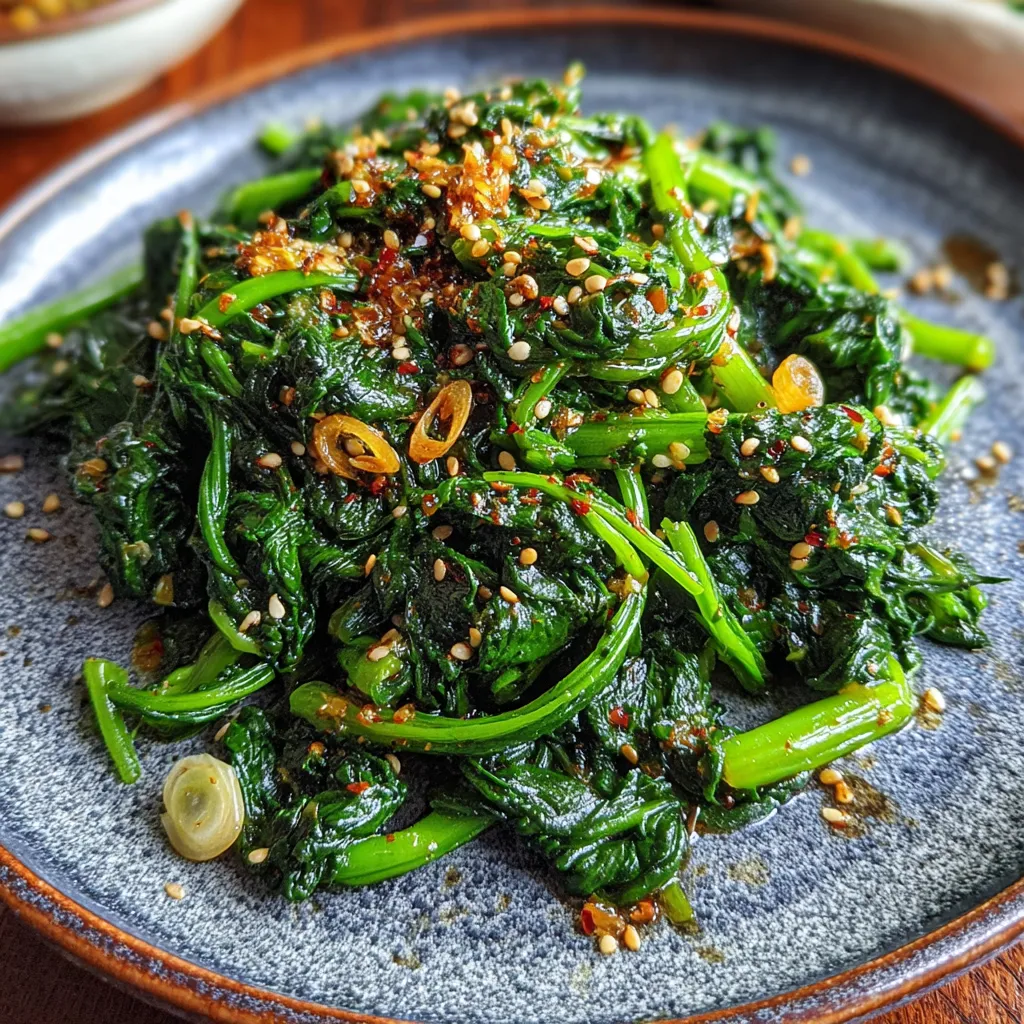

Korean Spinach Side Dish Sigeumchi Namul
Description
Fresh spinach is blanched until bright emerald green, then gently massaged with a fragrant mix of soy sauce, sesame oil, garlic, and toasted seeds for a crisp, nutty bite.
Ingredients
Instructions
-
Prepare the spinach:
-
- Fill a large bowl with cold water and set aside for shocking the spinach later.
-
- Rinse the spinach thoroughly in several changes of cold water to remove any grit or dirt, especially near the stems.
-
- If using mature spinach with long stems, trim any tough ends and cut very large leaves in half so they cook evenly. Baby spinach can be used as is.
-
Boil the spinach:
-
- Bring a large pot of water to a rolling boil over high heat.
-
- Add 1 tablespoon of coarse sea salt to the boiling water; this seasons the spinach lightly and helps keep its bright green color.
-
- Add the spinach all at once, submerging it fully with tongs or chopsticks.
-
- Blanch for about 30 to 45 seconds for baby spinach, or up to 1 minute for mature spinach, just until the leaves are wilted but still bright green and the stems are slightly tender.
-
Shock and drain:
-
- Immediately transfer the blanched spinach to the bowl of cold water to stop the cooking and preserve the color.
-
- Swish gently in the cold water, then drain in a colander.
-
- Gather the spinach into a loose bundle and gently squeeze out as much excess water as possible with your hands. Do not over-squeeze to the point of crushing the leaves; just press firmly until it is no longer dripping.
-
Cut and loosen:
-
- Place the squeezed spinach on a cutting board and roughly cut it into 2 to 3 inch (5 to 7 cm) lengths to make it easier to eat.
-
- Gently separate and fluff the pieces with your fingers so the seasoning will distribute evenly.
-
Prepare the seasoning:
-
- In a medium bowl, combine 1½ teaspoons soy sauce, 1 teaspoon sesame oil, ½ teaspoon very finely minced garlic, ¼ teaspoon fine sea salt, and ¼ teaspoon sugar (if using).
-
- Add the chopped green onion and a pinch of black pepper, if using.
-
- Lightly crush 1 to 1½ teaspoons toasted sesame seeds between your fingers or with the back of a spoon to release more aroma, and add them to the bowl.
-
- Stir the mixture well to create a fragrant seasoning sauce.
-
Mix the spinach:
-
- Add the prepared spinach to the bowl with the seasoning.
-
- Using clean hands or chopsticks, gently toss and massage the spinach with the seasoning, ensuring each piece is coated evenly.
-
- Taste and adjust: add a few more drops of soy sauce for saltiness, a pinch more salt, or a tiny splash of sesame oil if you want a richer, nuttier flavor.
-
Rest for flavor:
-
- Let the seasoned spinach rest for at least 5 to 10 minutes at room temperature; this allows the flavors to penetrate.
-
- Mix again just before serving and sprinkle additional toasted sesame seeds on top if desired.
-
Serve and store:
-
- Serve at room temperature or slightly chilled as a banchan (Korean side dish) alongside rice and other dishes.
-
- Store leftovers in an airtight container in the refrigerator for up to 2 to 3 days. Toss lightly before serving again, and adjust seasoning if needed since flavors can mellow in the fridge.
Note
- For extra nuttiness, briefly toast raw sesame seeds in a dry pan over low heat until fragrant and lightly golden, then cool before using.
- You can reduce or omit garlic for a milder flavor, or add a little more for a stronger, more traditional Korean taste.
- A few drops of rice vinegar or a pinch of gochugaru (Korean red pepper flakes) can be added for a tangy or lightly spicy variation.
- This dish is naturally vegan if you use a vegan soy sauce; it is also commonly included in bibimbap as a topping.
- Blanching time is crucial: undercook and the stems can be tough; overcook and the spinach becomes mushy and dull, so watch closely.