

There’s something incredibly cozy about a tender pork roast bathed in a sweet-spicy apple cider glaze—and this Homemade Apple Cider Pork Roast brings all those fall flavors right to your table. As the pork simmers alongside crisp apple slices and warming spices like cinnamon, nutmeg, and thyme, your kitchen transforms into a haven of comfort. Juicy, aromatic, and full of that perfect balance of sweet and savory, this recipe is sure to become a family favorite. Let’s dive in and get roasting!
Key Ingredients
Before we start cooking, let’s talk about what you’ll need. Every ingredient plays a starring role in building layers of flavor—from the sweet apple cider to the aromatic herbs.
- 3 to 4 pounds pork roast (shoulder or loin): A substantial cut that stays juicy during the long roast, absorbing all the cider and spice flavors.
- 1 cup apple cider: Provides the sweet-tangy base for the glaze and helps tenderize the meat.
- 1 large onion, sliced: Adds savory depth and creates a natural bed that flavors the pan juices.
- 4 cloves garlic, minced: Infuses a subtle pungency that complements the sweetness of the cider.
- 2 tablespoons olive oil: For searing the roast to build a flavorful crust before baking.
- 2 tablespoons brown sugar: Balances the tart cider and deepens the glaze’s caramel notes.
- 1 teaspoon ground cinnamon: Brings a warm, comforting spice perfect for autumn dishes.
- 1 teaspoon ground nutmeg: Enhances the glaze with a lightly sweet, nutty aroma.
- 1 teaspoon dried thyme: Lends an earthy herbal note that pairs beautifully with pork.
- 1 teaspoon salt: Essential for seasoning and drawing out the natural juices of the meat.
- 1/2 teaspoon black pepper: Adds a gentle heat and rounds out the sweet-spicy profile.
- 2 cups fresh apples, cored and sliced (such as Granny Smith or Honeycrisp): Tender fruit pieces that soak up juices and offer bursts of tart-sweet flavor.
- 1 cup chicken broth or water: Keeps the roast moist during its slow oven journey.
- Fresh rosemary sprigs for garnish (optional): A fragrant finishing touch that brightens each slice.
How To Make Homemade Apple Cider Pork Roast
Let’s walk through the process step by step. You’ll start by building that irresistible sweet-spicy liquor, then sear your roast for maximum flavor before letting the oven work its magic. By basting regularly and giving the meat time to rest, you’ll end up with juicy slices and a glossy, fragrant sauce.
1. Preheat your oven to 325°F (165°C) so it’s ready the moment your roast goes in.
2. In a large bowl, whisk together the apple cider, brown sugar, cinnamon, nutmeg, thyme, salt, and black pepper until the sugar dissolves and the spices are evenly distributed.
3. Heat the olive oil in a large skillet over medium-high heat. Once the oil shimmers, sear the pork roast on all sides until deeply browned, about 3–4 minutes per side—this locks in juices and builds flavor.
4. Transfer the seared pork roast to a roasting pan, then scatter the sliced onion and minced garlic around it for aromatic depth.
5. Pour the spiced apple cider mixture over the pork, ensuring every side is coated in the sweet glaze.
6. Arrange the sliced apples around the meat, then add the chicken broth or water to the bottom of the pan to keep everything moist.
7. Cover the roasting pan tightly with aluminum foil to seal in steam and tenderize the pork as it cooks.
8. Roast in the preheated oven for 2 to 2½ hours, or until the pork is fork-tender and reaches an internal temperature of 145°F (63°C). Every 30 minutes, baste with pan juices to intensify flavor and maintain moisture.
9. When the roast is done, remove it from the oven and let it rest for 15–20 minutes; this allows the juices to redistribute for a perfectly moist slice.
10. Slice the pork against the grain, serve with the softened apples and onions, and drizzle with the pan juices. Garnish with fresh rosemary if you like.
Serving Suggestions
This pork roast is a showstopper on its own, but pairing it with the right sides makes it truly unforgettable. Here are some ideas to elevate your meal:
- Creamy mashed potatoes: Spoon the glossy pan juices over mashed potatoes for a luscious, comforting plate.
- Roasted root vegetables: Carrots, parsnips, or Brussels sprouts roasted with a drizzle of olive oil and a sprinkle of thyme echo the dish’s warm spices.
- Crisp green salad: A simple mix of lettuce, sliced apples, and vinaigrette adds a refreshing counterpoint.
- Warm crusty rolls: Perfect for sopping up every last drop of that apple-cider sauce.
Tips For Perfect Homemade Apple Cider Pork Roast
With a few extra tricks, you can take this roast from great to legendary. Whether you’re prepping for a holiday feast or a cozy family dinner, these tips will ensure maximum flavor and minimal hassle.
- For a deeper flavor profile, marinate the pork in the apple cider mixture overnight before cooking.
- This dish pairs well with mashed potatoes, roasted vegetables, or a side of crisp salad.
- Leftover pork roast can be used in sandwiches or salads for delicious next-day meals.
- Experiment with different types of apples for varying sweetness and tartness in the dish.
How To Store It
Keeping your pork roast fresh and delicious is easy when you store it properly. Follow these guidelines to maintain the best texture and flavor:
- Refrigerate in an airtight container: Once cooled to room temperature, seal slices and apples in a container and store in the fridge for up to 4 days.
- Freeze for longer storage: Portion the cooled roast and apples into freezer-safe bags or containers and freeze for up to 3 months—thaw overnight in the fridge before reheating.
- Separate the juices: If you have extra pan sauce, store it in a small jar to pour over leftovers when serving.
- Label and date: Always note the date and contents on your storage containers to keep track of freshness.
Frequently Asked Questions
Here are answers to some common questions about this cozy fall roast:
- How long does it take to prepare and cook the Homemade Apple Cider Pork Roast?
Preparation takes about 15–20 minutes, including mixing the cider glaze, slicing onions and apples, and searing the pork. Cooking time is 2 to 2½ hours in a 325°F (165°C) oven. Allow an additional 15–20 minutes for the roast to rest before slicing, so plan for roughly 2½ to 3 hours from start to finish.
- Why is searing the pork roast important before roasting?
Searing the pork on all sides in hot olive oil locks in flavor and creates a savory brown crust. This Maillard reaction enhances both taste and appearance, and helps the meat retain juices during the longer, low-temperature oven roast.
- Can I marinate the pork overnight, and how will that affect the flavor?
Yes. Marinating the pork in the apple cider mixture overnight (up to 24 hours in the refrigerator) deepens the sweet-spicy notes of the cinnamon, nutmeg, and brown sugar. It also tenderizes the meat further. Make sure to cover the roast tightly and turn it once or twice for even flavor absorption.
- How do I know when the pork roast is fully cooked and safe to eat?
Insert an instant-read thermometer into the thickest part of the roast. The internal temperature should reach at least 145°F (63°C). Once it hits this temperature, remove it from the oven and let it rest; residual heat will continue to raise it slightly and allow the juices to redistribute.
- Can I use a different cut of pork besides shoulder or loin?
Yes. Pork butt (Boston butt) or a boneless pork sirloin roast can work well. Shoulder has more fat and connective tissue, which yields a juicier, pull-apart texture when cooked low and slow. Loin is leaner and will be firmer but still flavorful if not overcooked.
- What are the best side dishes to serve with this pork roast?
Mashed potatoes or creamy polenta soak up the spiced pan juices beautifully. Roasted root vegetables—like carrots, parsnips, or Brussels sprouts—complement the apple flavors. A crisp green salad dressed with vinaigrette adds a fresh contrast.
- How should I store and reheat any leftovers?
Cool the sliced pork and apples to room temperature, then store in an airtight container in the refrigerator for up to 4 days. Reheat covered in a 325°F (165°C) oven for 10–15 minutes, or microwave in short intervals, adding a splash of broth or apple cider to keep the meat moist.
- What apple varieties work best, and can I mix types?
Tart apples like Granny Smith hold their shape and add brightness, while sweet varieties such as Honeycrisp or Fuji offer a mellow contrast. Mixing two types gives a balance of tartness and sweetness, enhancing the overall flavor profile of the dish.
What Makes This Special
This Homemade Apple Cider Pork Roast is special because it brings together the sweet zing of cider, the warmth of cinnamon and nutmeg, and the tender juiciness of perfectly roasted pork. The simple prep and hands-off roasting make it an approachable centerpiece for any autumn gathering—or a weeknight treat when you want comfort food without fuss. Feel free to print this recipe and hang it on your fridge, then drop a comment below if you have questions or share your delicious results. I can’t wait to hear how it turns out!
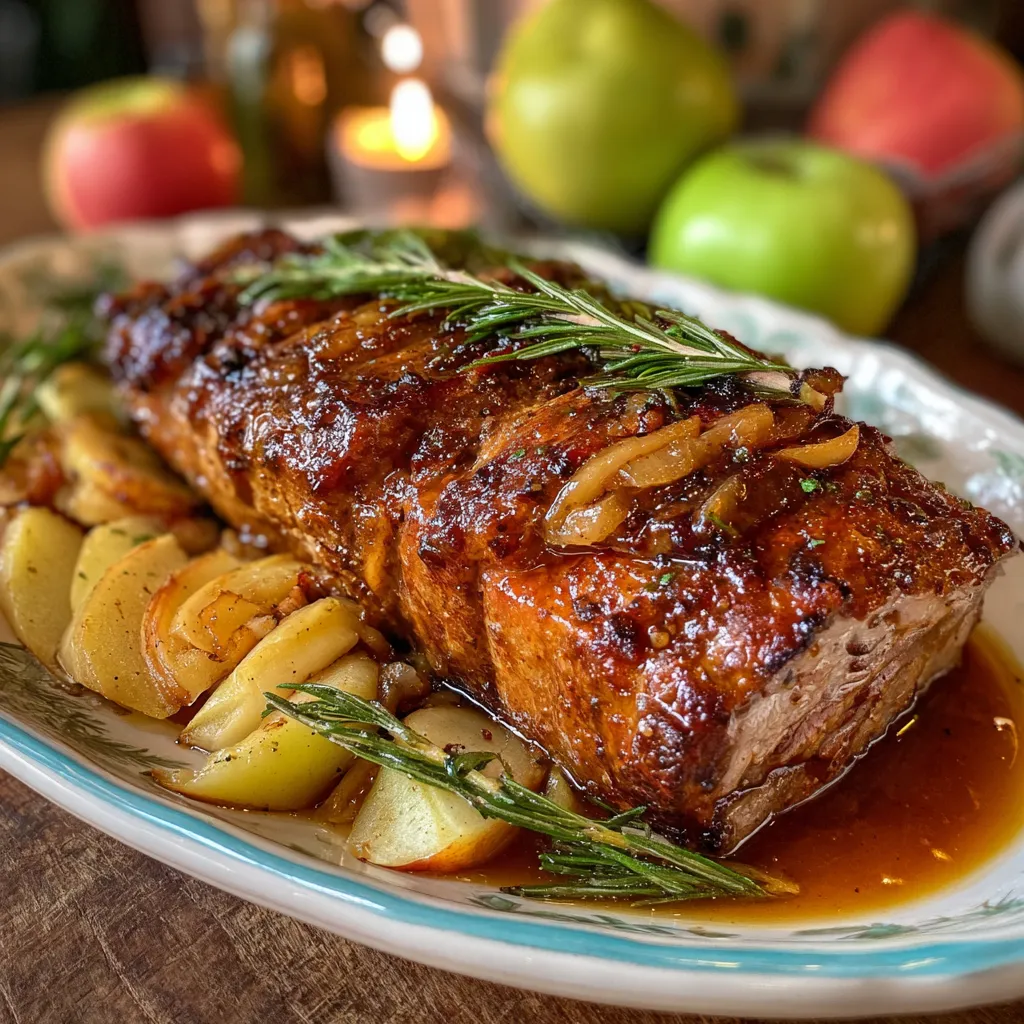

Homemade Apple Cider Pork Roast
Description
Tender pork roast simmers in a brown sugar and cider marinade, releasing notes of cinnamon, nutmeg, and thyme. Juicy apple slices soften around the meat as it bakes, and pan juices transform into a glossy, fragrant sauce.
Ingredients
Instructions
-
Preheat your oven to 325°F (165°C).
-
In a large bowl, combine the apple cider, brown sugar, cinnamon, nutmeg, thyme, salt, and black pepper. Stir until the sugar is dissolved and the mixture is well combined.
-
Heat olive oil in a large skillet over medium-high heat. Once hot, sear the pork roast on all sides until browned, about 3-4 minutes per side.
-
Transfer the seared pork roast to a roasting pan. Scatter the sliced onion and minced garlic around the roast.
-
Pour the apple cider mixture over the pork roast, making sure to coat it evenly.
-
Arrange the sliced apples around the pork in the roasting pan. Pour the chicken broth or water into the bottom of the pan to keep the roast moist during cooking.
-
Cover the roasting pan tightly with aluminum foil to retain moisture.
-
Roast in the preheated oven for approximately 2 to 2.5 hours, or until the pork is tender and reaches an internal temperature of 145°F (63°C). Baste the roast with pan juices every 30 minutes for optimal flavor.
-
Once cooked, remove the roast from the oven and let it rest for 15-20 minutes before slicing.
-
Serve the sliced pork with the apples and onions, drizzled with the pan juices, and garnish with fresh rosemary if desired.
Note
- For a deeper flavor profile, marinate the pork in the apple cider mixture overnight before cooking.
- This dish pairs well with mashed potatoes, roasted vegetables, or a side of crisp salad.
- Leftover pork roast can be used in sandwiches or salads for delicious next-day meals.
- Experiment with different types of apples for varying sweetness and tartness in the dish.