

Filipino Mango Ube Sticky Rice is a tropical treat that brings together sticky coconut-infused rice, creamy ube sauce, juicy mango ribbons, and a nutty sesame crunch in every bite. This intermediate-level Filipino dessert transforms simple ingredients into a vibrant plate of flavors and textures—perfect for impressing friends or treating yourself to a fun, hands-on kitchen adventure. Give it a try and let each spoonful whisk you away to sun-soaked islands!
Key Ingredients
To make this colorful dessert shine, you’ll need just eight simple ingredients that each play a starring role:
- 2 cups glutinous rice: Absorbs coconut flavors and creates that signature sticky texture.
- 2 cups water: Cooks the rice evenly until tender and chewy.
- 1 can (400 ml) coconut milk: Infuses the rice with a rich, creamy sweetness.
- 1/2 cup granulated sugar: Sweetens the coconut milk for balanced flavor.
- 1/4 teaspoon salt: Enhances flavors and keeps the sweetness in check.
- 1/2 cup ube halaya: Vivid purple yam paste that adds earthy ube creaminess.
- 2 ripe mangoes: Offer bright, juicy contrast to the warm rice and sauce.
- 2 tablespoons toasted sesame seeds: Provide a delightful nutty crunch finish.
How To Make Filipino Mango Ube Sticky Rice
Preparing Filipino Mango Ube Sticky Rice is a rewarding process that combines soaking, steaming, and gentle stirring to achieve its signature textures. First, you’ll soak and cook the glutinous rice until perfectly tender. Then, two separate coconut milk mixtures—one sweetened for the rice and one blended with ube halaya for the sauce—are gently heated to bring out their flavors. Finally, fresh mango ribbons and crunchy sesame seeds add color and contrast. Follow these steps to create a harmonious dessert plate:
1. Rinse the glutinous rice under running water until it runs clear, then soak in a bowl for at least 4 hours or overnight to ensure a tender, uniform texture.
2. Drain the rice and combine it with 2 cups water in a rice cooker or steamer; cook according to your appliance’s instructions until the grains are translucent and tender.
3. In a saucepan over medium heat, warm 1 cup of the coconut milk, add sugar and salt, and stir constantly until fully dissolved; then remove from heat to preserve creaminess.
4. Transfer the cooked rice into a large bowl and gently fold in the sweetened coconut milk until the liquid is completely absorbed; cover the bowl and keep the rice warm.
5. In another saucepan, combine the remaining coconut milk with ube halaya over low heat, stirring continuously until the mixture becomes a smooth, vibrant sauce.
6. Peel and slice the mangoes into thin strips for a fresh, juicy accompaniment.
7. To assemble, mound the warm sticky rice on serving plates, spoon over the creamy ube coconut sauce, arrange mango slices alongside, and sprinkle with toasted sesame seeds.
Serving Suggestions
This vibrant dessert looks as stunning as it tastes, and the way you present it can elevate every spoonful. Here are four fun ideas to serve your Filipino Mango Ube Sticky Rice:
- Serve on a chilled plate to keep the rice slightly cool, then drizzle the warm ube sauce just before eating.
- Garnish with a few mint leaves for a pop of green and an extra burst of freshness.
- Offer a side of coconut ice cream to double down on creamy textures and temperatures.
- Plate on a banana leaf or a colorful dish to highlight the tropical vibe and make it feel extra special.
Tips For Perfect Filipino Mango Ube Sticky Rice
Getting this dessert just right is all about timing and balance. With a few insider tweaks, you’ll nail the textures and flavors every time:
- For best results soak the rice for at least 4 hours to achieve a tender texture.
- Adjust the sugar in the coconut milk mix to suit your preferred sweetness level.
- Ube halaya can be substituted with ube powder prepared according to package instructions.
- Serve immediately to enjoy the contrast of warm rice, creamy ube sauce and cool mango.
How To Store It
Leftovers can still delight your taste buds, but proper storage is key to preserving that silky rice and sauce quality. Here’s how to keep everything fresh:
- Store the sticky rice in an airtight container in the refrigerator for up to 2 days to maintain chewiness.
- Keep the ube coconut sauce separate in its own sealed jar to prevent the rice from becoming soggy.
- When ready to enjoy again, reheat the rice gently in the microwave or on the stovetop with a splash of coconut milk to restore moisture.
- Place any extra mango slices in a sealed bag or container, and consume within 24 hours for the best flavor and texture.
Frequently Asked Questions
Here are answers to common questions about making and enjoying this tropical treat:
- How long does it take to prepare and cook this Filipino Mango Ube Sticky Rice?
You need at least 4 hours to soak the glutinous rice (overnight is ideal), about 20–25 minutes to cook it, plus 10–15 minutes to prepare the sweetened coconut milk and ube sauce, another 5 minutes to slice the mangoes, and a few minutes to assemble. In total, active cooking and assembly takes around 35–45 minutes, not including the soaking time.
- Can I shorten the rice soaking time if I’m short on time?
For the best tender texture, soak the rice for at least 4 hours. If you’re pressed for time, a minimum of 2 hours will work but the grains may be slightly firmer. Rinse thoroughly and consider briefly steaming an extra 5–10 minutes to compensate.
- How do I know when the sticky rice is perfectly cooked?
The rice is done when the grains are translucent and tender throughout with no white core. In a rice cooker it will switch to “warm,” or in a steamer you can test a few grains after about 20 minutes. If there’s any bite left, steam for another 5 minutes.
- How can I adjust the sweetness of the coconut rice and ube sauce?
The recipe calls for 1/2 cup sugar in the first cup of coconut milk, but you can reduce or increase this by up to 2 tablespoons to suit your taste. For the ube coconut sauce, the ube halaya already adds sweetness, so adjust that mix only if you find it too rich—add a teaspoon of sugar or a splash more coconut milk.
- What can I use if I don’t have ube halaya on hand?
You can substitute ube powder prepared according to package instructions. Dissolve the powder in the reserved coconut milk over low heat, stirring until it reaches a smooth, creamy consistency similar to melted halaya.
- Why do we cook the coconut milk mixtures separately?
The first coconut milk mixture sweetens and seasons the rice, ensuring every grain is flavored. The second mixture with ube halaya creates a vibrant, creamy sauce that contrasts in color and taste. Cooking them separately preserves their distinct textures and flavors.
- How should I serve and store leftovers?
Serve immediately while the rice is warm, the ube sauce is creamy, and the mango is cool for a perfect contrast. To store leftovers, keep rice and sauce in airtight containers in the refrigerator for up to 2 days. Reheat gently with a splash of water or coconut milk to restore softness before serving.
What Makes This Special
Filipino Mango Ube Sticky Rice stands out because it balances textures—warm sticky rice, luscious ube cream, and fresh mango slices—while highlighting tropical flavors in every bite. The vibrant purple sauce against the golden mango creates a playful presentation that’s almost too pretty to eat (almost!). Print this recipe, file it away, and try it next time you need a fun, crowd-pleasing dessert. Let me know in the comments how yours turned out or if you have any questions—I’m here to help!
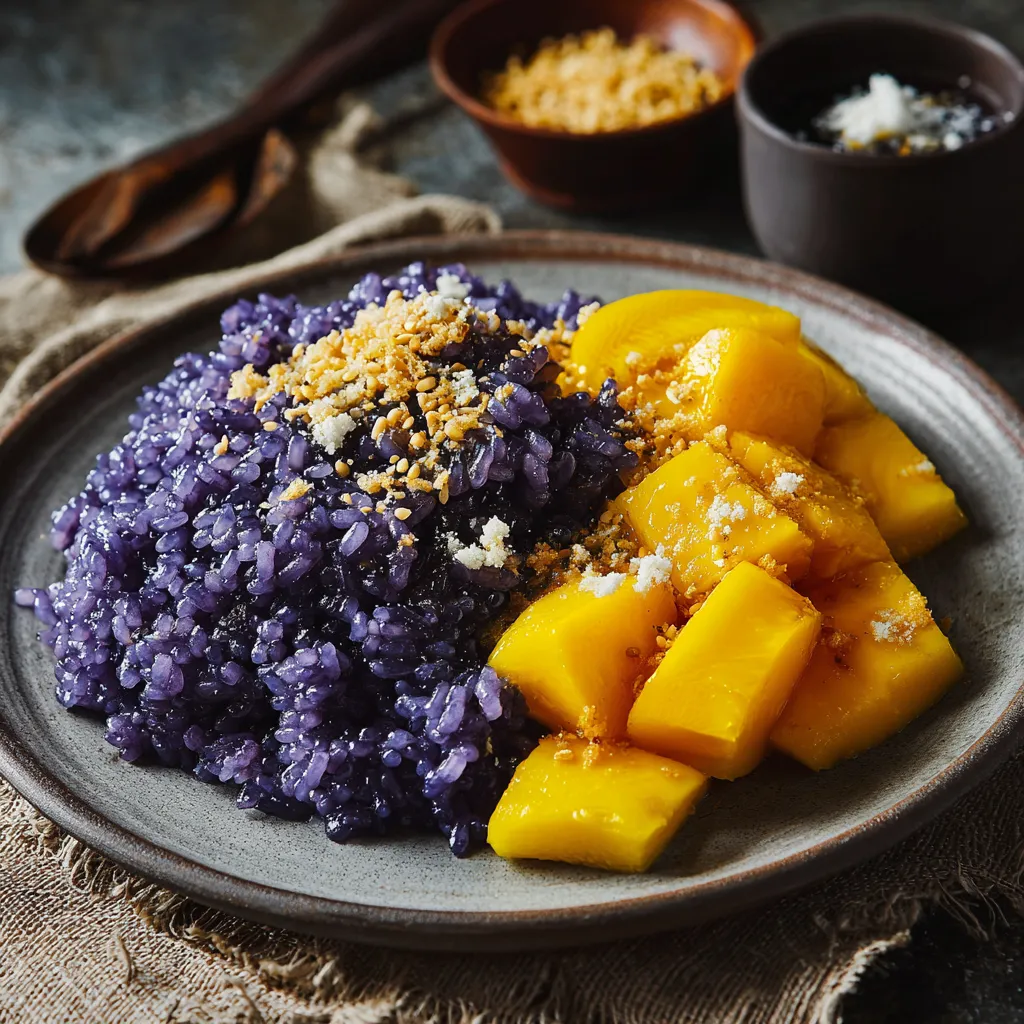

Filipino Mango Ube Sticky Rice
Description
Experience a tropical treat where warm coconut-infused sticky rice meets creamy ube sauce, juicy mango ribbons, and the nutty crunch of sesame seeds in every bite.
Ingredients
Instructions
-
Rinse the glutinous rice until the water runs clear then soak for at least 4 hours or overnight.
-
Drain the rice and combine with 2 cups water in a rice cooker or steamer; cook until tender.
-
In a saucepan over medium heat, warm 1 cup of the coconut milk, stir in sugar and salt until dissolved, then remove from heat.
-
Transfer the cooked rice to a bowl and gently fold in the sweetened coconut milk until fully absorbed; cover and keep warm.
-
In another saucepan, combine the remaining coconut milk with ube halaya over low heat, stirring until smooth and creamy.
-
Peel and slice the mangoes into thin strips.
-
To serve, mound the sticky rice on plates, spoon the ube coconut sauce over the rice, arrange mango slices on the side and sprinkle with toasted sesame seeds.
Note
- For best results soak the rice for at least 4 hours to achieve a tender texture.
- Adjust the sugar in the coconut milk mix to suit your preferred sweetness level.
- Ube halaya can be substituted with ube powder prepared according to package instructions.
- Serve immediately to enjoy the contrast of warm rice, creamy ube sauce and cool mango.