

Nothing beats twirling thick spaghetti ribbons drenched in a rich beef and tomato ragù that’s been slow-simmered with garlic, wine, and fragrant herbs. This Classic Spaghetti Bolognese marries velvety sauce with tender, al dente strands, finished with fresh basil and a generous shower of Parmesan for an unforgettable comfort meal. Whether you’re cooking for family or simply craving serious coziness, this recipe promises hearty layers of flavor in every forkful—so grab your apron and get ready to savor each savory bite!
Key Ingredients
Gathering fresh, quality ingredients sets the foundation for a perfect Bolognese. Here’s what you’ll need to build layers of deep, savory flavor:
- 400 g dried spaghetti: Tender strands that hold the hearty ragù and soak up every flavorful drop of sauce.
- 2 tbsp olive oil: The base for sautéing vegetables, adding fruity richness.
- 1 tbsp unsalted butter (optional, for richness): Enhances silkiness and adds a touch of indulgence.
- 1 large yellow onion, finely diced: Provides a sweet, aromatic backbone to the sauce.
- 2 medium carrots, finely diced: Contributes a subtle sweetness and texture to the ragù.
- 2 celery ribs, finely diced: Adds herbal notes and balances the sweetness of carrots.
- 3 cloves garlic, minced: Infuses pungent, savory depth into every bite.
- 500 g ground beef (80–90% lean): The meaty star that makes this sauce hearty and satisfying.
- 100 g pancetta or streaky bacon, finely chopped (optional but traditional): Renders salty fat for extra flavor complexity.
- 120 ml (1/2 cup) dry red wine: Deglazes the pan and adds acidity for balanced richness.
- 800 g canned crushed tomatoes or tomato passata: Forms the velvety tomato base of the sauce.
- 2 tbsp tomato paste: Intensifies tomato flavor and helps thicken the ragù.
- 250 ml (1 cup) beef stock or water: Keeps the sauce moist and deepens the savory notes.
- 150 ml (2/3 cup) whole milk or half-and-half: Softens acidity and imparts a luxuriously creamy finish.
- 1 bay leaf: Builds subtle herbal warmth during the long simmer.
- 1 tsp dried oregano: Introduces classic Mediterranean herbiness.
- 1 tsp dried thyme or Italian seasoning: Rounds out the flavor profile with earthy undertones.
- 1/2 tsp sugar (optional, to balance acidity): Tames tomato sharpness and brightens overall taste.
- Salt, to taste: Essential for seasoning and flavor enhancement.
- Freshly ground black pepper, to taste: Adds a final kick of warmth and spice.
- Pinch of red pepper flakes (optional, for gentle heat): Gives a subtle, lingering piquancy.
- Fresh basil or flat-leaf parsley, chopped, for serving: Bright, herbal garnish that freshens each bite.
- 60–80 g freshly grated Parmesan cheese, plus extra for serving: Salty, nutty finish that ties everything together.
How To Make Classic Spaghetti Bolognese
Bringing together so many layers of flavor requires a bit of patience, but every step is straightforward and rewarding. From building a classic soffritto base to a long, slow simmer that deepens the beef and tomato notes, you’ll learn to coax maximum richness out of simple ingredients. Follow these detailed steps to create a silky, aromatic ragù and achieve perfectly coated spaghetti that clings with every twirl.
1. Prepare the vegetables: Finely dice the onion, carrots, and celery into uniform pieces so they soften evenly and melt into the sauce. Mince the garlic and, if using, chop the pancetta or streaky bacon into small bits for even rendering.
2. Start the base (soffritto): Heat the olive oil and butter in a large, heavy-bottomed pot or deep skillet over medium heat. Add the diced onion, carrot, and celery with a pinch of salt. Stir occasionally for 8–10 minutes until the vegetables are very soft and lightly golden—lower the heat if they begin to brown too quickly. Add the garlic and cook for 30–60 seconds until fragrant.
3. Cook the pancetta and beef: Add the chopped pancetta or bacon to render its fat, cooking 3–4 minutes until edges brown. Increase heat to medium-high, then crumble in the ground beef. Season lightly with salt and pepper. Cook for 6–8 minutes, stirring and breaking up clumps, until the meat is no longer pink and has developed caramelized bits on the pan bottom.
4. Deglaze with wine: Pour in the red wine, stirring and scraping up any browned bits from the pot’s bottom. Let it simmer and reduce for 2–3 minutes until mostly evaporated but still moist, which infuses depth and acidity.
5. Add tomatoes and seasonings: Stir in the tomato paste and cook 1–2 minutes to caramelize. Add the crushed tomatoes or passata and beef stock (or water). Tuck in the bay leaf, dried oregano, thyme (or Italian seasoning), the sugar if using, and red pepper flakes if desired. Stir well, then bring to a gentle simmer.
6. Long, slow simmer: Reduce heat to low so the sauce barely bubbles. Partially cover with a lid ajar and simmer for 45–60 minutes, stirring every 10–15 minutes to prevent sticking. For even deeper flavor, continue up to 1.5–2 hours, adding a splash of stock or water if the sauce thickens too much. Adjust salt and pepper in the last 15 minutes.
7. Finish with milk: About 15 minutes before serving, stir in the milk or half-and-half. Simmer gently and uncovered, stirring occasionally until the sauce thickens to a silky consistency. Remove and discard the bay leaf, then taste and fine-tune seasoning.
8. Cook the spaghetti: Bring a large pot of well-salted water to a rolling boil (it should taste like the sea). Add spaghetti and cook until al dente according to package directions. Reserve about 1 cup (240 ml) of pasta cooking water before draining.
9. Combine pasta and sauce: Return drained spaghetti to the pot or a large serving bowl. Ladle in 2–3 scoops of Bolognese sauce and splash in reserved pasta water. Toss over low heat (or stir vigorously in the bowl) until each strand is evenly coated and glossy.
10. Serve: Plate the coated spaghetti in warm bowls, spoon a little extra sauce on top, and shower with freshly grated Parmesan. Garnish with chopped basil or parsley and a crack of black pepper. Serve immediately with more Parmesan at the table.
Serving Suggestions
Elevate your Classic Spaghetti Bolognese experience by pairing it thoughtfully and presenting it with style. Whether you want to keep things homey or impress company, these ideas will have your meal shining on any table:
- Rustic family-style platter: Pile the sauced spaghetti on a large wooden board, surround it with bowls of grated Parmesan and fresh basil, and let everyone dig in.
- Wine pairing: Offer medium-bodied red wines like Chianti or Barbera to complement the tomato’s acidity and the beef’s richness.
- Garlic bread accompaniment: Toast baguette slices with garlic butter and parsley for a crunchy counterpoint to the silky pasta.
- Light salad side: Serve a crisp arugula or mixed-green salad dressed with lemon vinaigrette to refresh the palate between bites.
Tips For Perfect Classic Spaghetti Bolognese
Mastering this classic takes a bit of know-how, but once you’ve got these friendly tricks up your sleeve, you’ll never look back. From ingredient swaps to cooking hacks, these pointers will elevate your ragù to restaurant-quality without the fuss:
- For a more traditional texture, use a mix of ground beef and ground pork or veal.
- A longer simmer (up to 2 hours) deepens flavor; just keep the heat low and the sauce gently bubbling.
- Leftover Bolognese sauce freezes very well; cool completely, then store in airtight containers for up to 3 months.
- For a richer flavor, substitute some of the beef stock with a splash of beef broth concentrate or add a Parmesan rind during simmering (remove before serving).
- This sauce pairs beautifully not only with spaghetti but also with tagliatelle, pappardelle, or lasagna.
How To Store It
When you’ve cooked up a big batch, proper storage keeps your Bolognese tasting fresh and vibrant days or even months later. Cool your sauce quickly, then follow these guidelines to maintain its home-cooked charm:
- Refrigerate: Transfer cooled sauce to an airtight container and store in the fridge for up to 3 days.
- Freeze in portions: Divide into freezer-safe bags or containers, label with dates, and keep for up to 3 months. Thaw overnight in the fridge before reheating.
- Store pasta separately: If you’ve cooked spaghetti ahead, toss it lightly in olive oil, seal in a container, and refrigerate for up to 2 days to prevent sticking.
- Reheat gently: Warm sauce over low heat, adding a splash of water or stock to revive the silky texture, then toss with pasta until piping hot.
Frequently Asked Questions
Got questions? I’ve got answers to help you nail this recipe:
- Q: How should I prepare the vegetables for the soffritto?
Finely dice the onion, carrots, and celery into small, even pieces so they soften uniformly and meld into the sauce. Mince the garlic and, if using, chop the pancetta or bacon finely.
- Q: What is the purpose of adding red wine, and how much should I use?
The red wine deglazes the pan, lifting browned bits for depth of flavor, and adds acidity that balances the richness of the meat. Use 120 ml (1/2 cup) of dry red wine, allowing it to simmer for 2–3 minutes until mostly evaporated but still moist.
- Q: Why do I stir in milk near the end, and can I skip it?
Adding 150 ml (2/3 cup) of whole milk or half-and-half about 15 minutes before serving softens tomato acidity and gives the sauce a silky, rich texture. You can skip it, but the sauce will be tangier and less creamy—consider adding a splash of extra olive oil or butter for richness.
- Q: How long should I simmer the sauce, and how do I know when it’s ready?
Simmer on low, partially covered, for at least 45–60 minutes, stirring every 10–15 minutes to prevent sticking. It’s ready when the sauce has thickened, deepened in color, and coats the back of a spoon. For deeper flavor, extend simmering up to 1.5–2 hours, adding a splash of stock or water if it becomes too thick.
- Q: How do I cook and combine the spaghetti with the Bolognese sauce?
Boil spaghetti in well-salted water until al dente, reserving about 1 cup (240 ml) of pasta water before draining. Return the pasta to the pot or a large bowl, add 2–3 ladles of sauce and a splash of reserved water, then toss over low heat or stir thoroughly until the noodles are evenly coated and glossy.
- Q: Can I make the Bolognese sauce ahead of time or freeze leftovers?
Yes. The flavors deepen if the sauce rests overnight in the refrigerator. Cool completely, then store in airtight containers for up to 3 days or freeze for up to 3 months. Thaw overnight in the fridge and reheat gently on the stove, adding a little stock or water if needed.
- Q: What variations can I try for a more traditional Bolognese?
Use a blend of ground beef, pork, and veal for authentic texture and flavor. For extra richness, render pancetta or add a Parmesan rind during simmering. You can also replace some beef stock with broth concentrate or finish with a pat of butter for silkiness before serving.
What Makes This Special
This Classic Spaghetti Bolognese hits all the right notes: the slow-simmered beef ragù is gloriously rich, the tomato base perfectly balanced by a splash of wine and a creamy finish with milk, and the al dente spaghetti ensures every twirl is a joyful moment. It’s the kind of recipe you’ll want to print out, stash in your recipe box, and revisit whenever you need genuine comfort on a plate. If you’ve tried it (or need a hand), drop your comments or questions below—I’d love to hear how your kitchen adventure turns out!
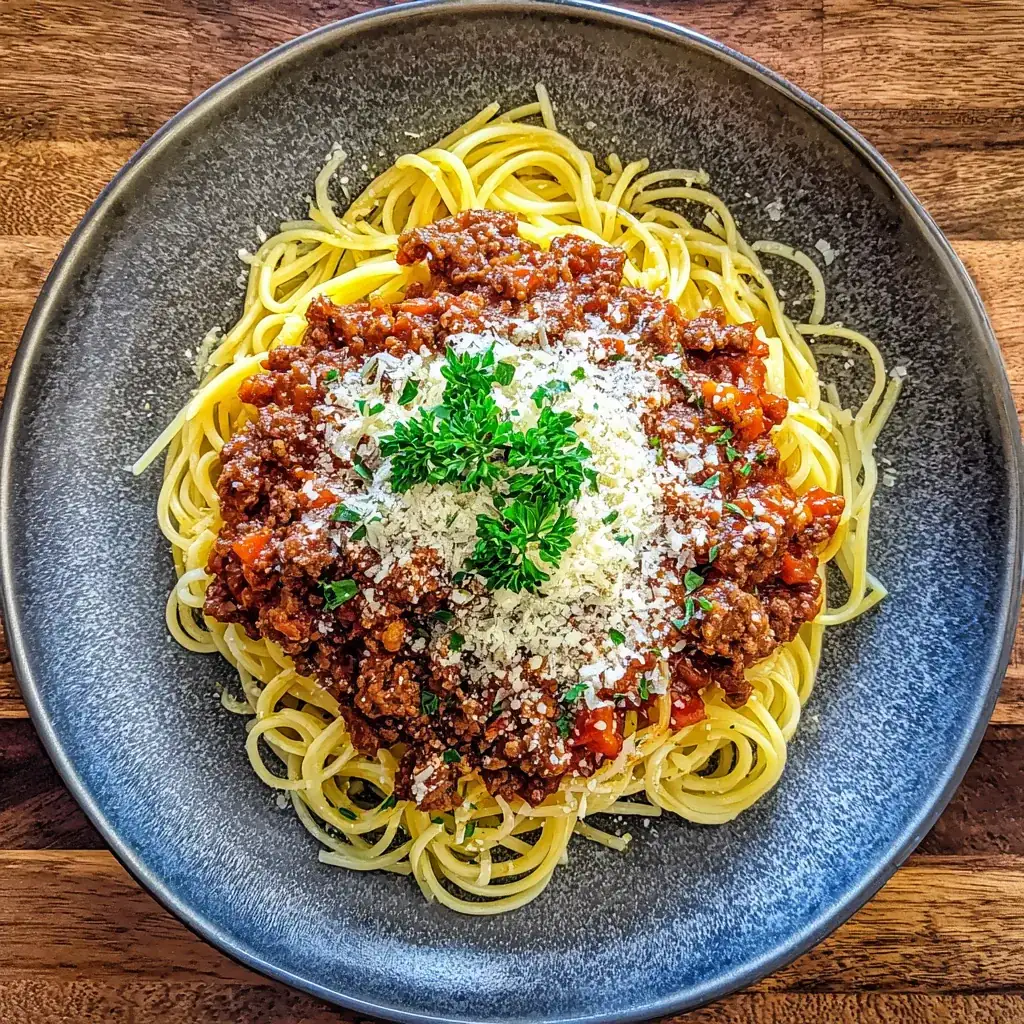

Classic Spaghetti Bolognese
Description
Velvety tomato and beef sauce simmers gently, filling the kitchen with garlic and wine aromas. Tender al dente spaghetti strands soak up the hearty ragù, finished with a sprinkle of fresh basil and Parmesan for deep savory layers.
Ingredients
Instructions
-
Prepare the vegetables:
-
- Finely dice the onion, carrots, and celery into small, even pieces so they soften evenly and blend into the sauce.
-
- Mince the garlic and finely chop the pancetta or bacon if using.
-
Start the base (soffritto):
-
- Heat the olive oil and butter in a large, heavy-bottomed pot or deep skillet over medium heat.
-
- Add the onion, carrot, and celery with a small pinch of salt.
-
- Cook, stirring occasionally, for 8–10 minutes until the vegetables are very soft and lightly golden but not browned or crisp. Lower the heat if they start to darken too quickly.
-
- Add the minced garlic and cook for 30–60 seconds until fragrant.
-
Cook the pancetta and beef:
-
- Add the chopped pancetta or bacon to the pot (if using) and cook for 3–4 minutes until the fat renders and the edges start to brown.
-
- Increase heat to medium-high. Add the ground beef, breaking it up with a wooden spoon into small pieces.
-
- Season lightly with salt and pepper.
-
- Cook for 6–8 minutes, stirring and breaking up any clumps, until the meat is no longer pink and has started to brown. Allow some bits to caramelize on the bottom of the pan for extra flavor.
-
Deglaze with wine:
-
- Pour in the red wine.
-
- Stir well, scraping up any browned bits from the bottom of the pot.
-
- Let the wine simmer and reduce for 2–3 minutes, until it has mostly evaporated but the mixture is still moist.
-
Add tomatoes and seasonings:
-
- Stir in the tomato paste and cook for 1–2 minutes to caramelize it slightly.
-
- Add the crushed tomatoes or passata and the beef stock (or water).
-
- Add the bay leaf, dried oregano, dried thyme or Italian seasoning, sugar (if using), and a small pinch of red pepper flakes if desired.
-
- Stir to combine, then bring the sauce to a gentle simmer.
-
Long, slow simmer:
-
- Reduce the heat to low so the sauce is just barely bubbling.
-
- Partially cover the pot with a lid, leaving it slightly ajar.
-
- Simmer for at least 45–60 minutes, stirring every 10–15 minutes to prevent sticking. For deeper flavor, continue simmering up to 1.5–2 hours, adding a splash of water or stock if it becomes too thick.
-
- Taste and adjust seasoning with salt and pepper during the last 15 minutes of cooking.
-
Finish with milk:
-
- About 15 minutes before serving, stir in the milk or half-and-half.
-
- Simmer gently, uncovered, stirring occasionally, until the sauce thickens again and becomes silky and rich.
-
- Remove the bay leaf and discard.
-
- Check seasoning one final time and adjust salt and pepper as needed.
-
Cook the spaghetti:
-
- Bring a large pot of well-salted water (it should taste pleasantly salty) to a rolling boil.
-
- Add the spaghetti and cook according to package instructions until al dente.
-
- Reserve about 1 cup (240 ml) of the starchy pasta cooking water, then drain the spaghetti.
-
Combine pasta and sauce:
-
- Return the drained spaghetti to the pot or place it in a large serving bowl.
-
- Add a generous amount of Bolognese sauce (start with about 2–3 ladles, adding more as needed) and a splash of reserved pasta water.
-
- Toss over low heat (if using the pot) or thoroughly in the bowl until the spaghetti is evenly coated and glossy. The pasta water will help the sauce cling.
-
Serve:
-
- Plate the sauced spaghetti in warm bowls.
-
- Spoon a little extra Bolognese on top of each portion.
-
- Sprinkle generously with freshly grated Parmesan cheese.
-
- Garnish with chopped fresh basil or parsley and a grind of black pepper.
-
- Serve immediately with extra Parmesan on the side.
Note
- For a more traditional texture, use a mix of ground beef and ground pork or veal.
- A longer simmer (up to 2 hours) deepens flavor; just keep the heat low and the sauce gently bubbling.
- Leftover Bolognese sauce freezes very well; cool completely, then store in airtight containers for up to 3 months.
- For a richer flavor, substitute some of the beef stock with a splash of beef broth concentrate or add a Parmesan rind during simmering (remove before serving).
- This sauce pairs beautifully not only with spaghetti but also with tagliatelle, pappardelle, or lasagna.