

Chicken in Orange Sauce is a vibrant weeknight dinner that brings together golden-seared chicken cutlets coated in a sweet-and-tangy orange-ginger glaze. With whispers of garlic, a gentle kick of red pepper flakes, and bright pops of fresh parsley and orange slices, this dish transforms simple pantry staples into a memorable meal. It’s perfect spooned over rice, quinoa, or mashed potatoes—and trust me, you’ll want to save this one for your recipe file.
Key Ingredients
Before we dive into cooking, let’s gather the essentials that make this dish shine:
- 1.5 lb (680 g) boneless, skinless chicken breasts or thighs, trimmed: The tender protein that soaks up the citrus-spiced sauce after being lightly crusted and seared.
- 1/2 tsp salt: Balances and enhances all the flavors in both chicken and sauce.
- 1/2 tsp freshly ground black pepper: Adds a gentle heat and depth to each bite.
- 1/2 tsp paprika (sweet or smoked): Imparts a warm, smoky color and subtle flavor to the chicken crust.
- 1/4 tsp garlic powder: Boosts garlic notes without overpowering the glossy glaze.
- 2 tbsp all-purpose flour (for light dredging): Creates a delicate crust on the chicken and helps thicken the sauce later.
- 2 tbsp olive oil: Provides a high-heat base for searing and develops golden edges.
- 1 tbsp unsalted butter: Adds richness and helps brown the chicken beautifully.
- 3/4 cup freshly squeezed orange juice (from about 3–4 oranges): The sweet-tangy foundation of the citrus glaze.
- 1 tbsp finely grated orange zest (from 1–2 oranges, avoid white pith): Intensifies orange flavor without bitterness.
- 1/4 cup low-sodium chicken broth: Builds savory depth and balances sweetness.
- 2 tbsp soy sauce (low-sodium recommended): Introduces umami and saltiness to the sauce.
- 2 tbsp honey (or light brown sugar): Sweetens and creates that glossy sheen.
- 1 tbsp rice vinegar or white wine vinegar: Brightens the sauce with a touch of acidity.
- 2 cloves garlic, minced: Fresh aromatics that pop in every spoonful.
- 1 tsp freshly grated ginger (or 1/2 tsp ground ginger): Lends warm, zesty spice to the glaze.
- 1/4 tsp crushed red pepper flakes (optional, for mild heat): Adds a whiff of spice without overwhelming.
- 1 tbsp cornstarch: Helps thicken the sauce to a clingy consistency.
- 2 tbsp cold water: Used to make a smooth cornstarch slurry.
- 1–2 tbsp fresh parsley or cilantro, chopped: Garnish that adds a burst of color and freshness.
- Optional orange slices or segments, for garnish: Elevate presentation with bright citrus accents.
- Cooked rice, quinoa, or mashed potatoes, for serving: The ideal base to soak up every drop of sauce.
How To Make Chicken in Orange Sauce
Getting from raw ingredients to a saucy, satisfying dinner is easier than you think. You’ll start by prepping and seasoning your chicken, then searing it to golden perfection. Next, you’ll build a bright orange-ginger sauce right in the same skillet, deglazing those flavorful browned bits. A simple cornstarch slurry brings the sauce to a glossy finish, and a final gentle simmer infuses the chicken with all those citrus notes. Follow these steps to nail each technique and end up with tender, flavorful chicken in every bite:
1. Prepare the chicken
Pat the chicken breasts or thighs dry with paper towels to ensure even browning. If any pieces are extra thick, slice them horizontally into thinner cutlets for faster cooking. Season both sides with salt, freshly ground black pepper, paprika, and garlic powder. Lightly dredge each piece in flour, shaking off excess—this creates a light crust and later helps the sauce thicken.
2. Sear the chicken
Heat a large skillet over medium-high heat and add olive oil and unsalted butter. Once the butter is melted and foamy, swirl to coat the pan. Place the chicken in a single layer without crowding and sear for 4–5 minutes on the first side until it turns golden brown. Flip and cook the second side for 3–5 minutes, until it’s nearly cooked through (160°F/71°C). Transfer chicken to a plate and cover loosely with foil to keep warm.
3. Prepare the orange sauce mixture
In a small bowl, whisk together orange juice, orange zest, chicken broth, soy sauce, honey, and vinegar until the honey dissolves. In another bowl, stir the cornstarch into cold water to make a smooth slurry, and set aside.
4. Build the flavor base in the pan
Reduce heat to medium. If the skillet is dry, add a splash of olive oil. Add minced garlic and grated ginger, then sauté for 30–45 seconds, stirring constantly, just until fragrant—don’t let the garlic brown too much.
5. Deglaze and simmer the sauce
Pour in the orange juice mixture and stir to scrape up browned bits from the bottom of the pan. Bring to a gentle simmer over medium heat and cook for 2–3 minutes to blend flavors.
6. Thicken the sauce
Stir the cornstarch slurry again, then slowly pour it into the simmering sauce while stirring constantly. Continue to simmer for 1–3 minutes until the sauce becomes glossy and coats the back of a spoon. If it’s too thick, add water or broth to reach your desired consistency. Taste and adjust seasoning with salt, extra honey, or a splash more vinegar. Add extra red pepper flakes for more heat if you like.
7. Return the chicken to the pan
Lower heat to medium-low and nestle the seared chicken back into the skillet. Turn to coat each piece generously in sauce. Simmer gently for 3–5 minutes until the chicken reaches 165°F (74°C) and soaks up the sauce.
8. Finish and garnish
Turn off the heat and spoon additional sauce over the chicken. Sprinkle with chopped parsley or cilantro. Add orange slices or segments for a bright, decorative touch.
9. Serve
Plate the chicken over steamed rice, quinoa, couscous, or creamy mashed potatoes. Spoon extra orange sauce around and over the top for maximum flavor and eye appeal.
Serving Suggestions
This Chicken in Orange Sauce shines most when paired thoughtfully—here are a few ideas to elevate your meal:
- Steamed Broccoli or Green Beans: The crisp, earthy greens offer a refreshing contrast to the sweet-tangy glaze.
- Citrus Arugula Salad: Toss peppery arugula with orange segments, a light vinaigrette, and shaved Parmesan for a bright side.
- Garlic Butter Noodles: Simple egg noodles tossed in garlic-infused butter soak up extra sauce for a comforting twist.
- Crusty Bread or Dinner Rolls: Perfect for mopping up every last drop of that glossy orange sauce.
Tips For Perfect Chicken in Orange Sauce
A few insider touches can turn good into unforgettable. These tips come straight from my own kitchen adventures:
- For extra fragrance, add a small splash of orange liqueur (like Grand Marnier or Cointreau) to the sauce while it simmers, then cook off the alcohol for 1–2 minutes.
- For a lighter version, skip the flour dredge and simply sear the seasoned chicken; you may need a little extra cornstarch slurry to achieve the same sauce thickness.
- This dish pairs especially well with crisp green vegetables such as steamed broccoli, green beans, or a simple mixed salad with citrus dressing.
- You can substitute boneless pork chops or turkey cutlets for chicken; adjust cooking times depending on thickness.
- Leftovers keep well refrigerated in an airtight container for up to 3 days; reheat gently over low heat with a splash of water or broth to loosen the sauce.
How To Store It
Once you’ve enjoyed your Chicken in Orange Sauce, storing leftovers properly keeps that flavor fresh:
- Refrigerate in an airtight container: Cool the chicken and sauce to room temperature, then seal and chill for up to 3 days.
- Reheat gently: Warm on low heat in a skillet, adding a splash of broth or water to loosen the sauce and maintain moisture.
- Freeze for longer storage: Place cooled pieces and sauce in a freezer-safe container for up to 2 months; thaw overnight in the fridge before reheating.
- Separate sauce and chicken: For best texture, store sauce and chicken in two containers—combine when reheating.
Frequently Asked Questions
Here are quick answers to your top questions:
- How long does it take to prepare and cook Chicken in Orange Sauce?
From start to finish you should allow about 45 minutes. Prep work—including patting and slicing the chicken, zesting and juicing oranges, and measuring ingredients—takes roughly 15 minutes. Searing the chicken and building the sauce requires an additional 20 minutes, and a final 10 minutes of gentle simmering brings the dish to perfect doneness.
- Can I use chicken thighs instead of breasts, and how does that affect cooking time?
Yes, boneless, skinless chicken thighs work beautifully in this recipe. Thighs tend to be more forgiving and stay juicy, though they may be slightly thicker than breasts. Sear each side for about 4–6 minutes until golden brown, then simmer in the sauce for 5–7 minutes or until the internal temperature reaches 165°F (74°C). Thighs may need a couple more minutes of simmering compared to thinly sliced breasts.
- What’s the best way to thicken the orange sauce without lumps?
The key is a smooth cornstarch slurry made by whisking 1 tablespoon of cornstarch with 2 tablespoons of cold water until completely lump-free. Stir the slurry again just before adding and pour it slowly into the simmering sauce while stirring constantly. This method yields a glossy, spoon-coating consistency without clumps.
- How can I balance the sweetness and acidity in the sauce?
Taste the sauce after it has thickened. If it’s too sweet, add a little more rice or white wine vinegar by teaspoonfuls until the flavors brighten. If it’s overly tangy, stir in a touch more honey or brown sugar and allow it to cook for another minute. Adjusting in small increments ensures a perfectly balanced sweet-savory profile.
- Are there any helpful substitutions or variations for this recipe?
For a lighter version skip the flour dredge and increase the cornstarch slurry slightly to achieve the same thickness. You can swap honey for light brown sugar at an equal measure. To boost citrus aroma add a splash of orange liqueur such as Grand Marnier in the final simmer. Boneless pork chops or turkey cutlets can replace chicken—just adjust searing and simmer times to ensure they reach 165°F (74°C).
- What side dishes pair well with Chicken in Orange Sauce?
This dish shines over steamed jasmine rice, fragrant quinoa, or creamy mashed potatoes to catch every drop of the glossy sauce. Crisp green vegetables like steamed broccoli, green beans, or a mixed salad with a citrus vinaigrette complement the sweet-tangy flavors and add texture contrast for a well-rounded meal.
- How should I store and reheat leftovers for best results?
Cool the chicken and sauce to room temperature, then transfer to an airtight container and refrigerate for up to three days. To reheat, warm gently in a skillet over low heat, adding a splash of chicken broth or water to loosen the sauce. Stir occasionally until heated through to preserve moisture and prevent the sauce from sticking or thinning excessively.
What Makes This Special
This Chicken in Orange Sauce works because it balances sweet, tangy, and savory notes in every bite thanks to fresh orange juice, zest, ginger, and garlic, all hugging tender chicken coated in a light crust. It’s playful yet comforting—perfect for impressing dinner guests or elevating a simple weeknight meal. Feel free to print and save this recipe card, then leave a comment below if you try it or have any questions. I can’t wait to hear how your kitchen adventure turns out!
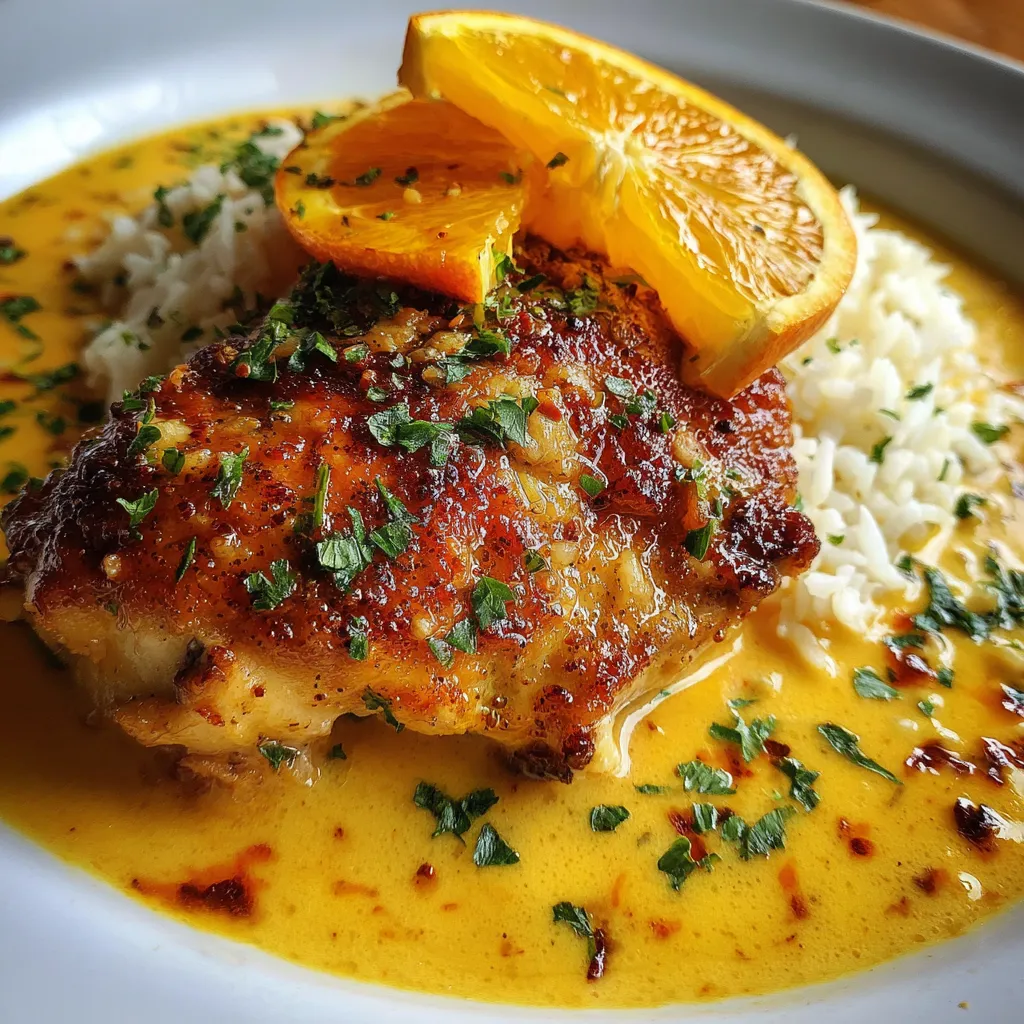

Chicken in Orange Sauce
Description
Tender chicken breasts crusted with paprika, seared until golden, then simmered in a glossy orange juice sauce laced with honey, ginger, garlic, and soy. Topped with fresh parsley and orange slices, perfect over rice or mashed potatoes.
Ingredients
Instructions
-
Prepare the chicken:
-
- Pat the chicken breasts or thighs dry with paper towels. If breasts are thick, slice them horizontally to create thinner cutlets for faster, more even cooking.
-
- Season both sides with salt, black pepper, paprika, and garlic powder.
-
- Lightly dredge each piece in flour, shaking off any excess. The flour helps create a light crust and slightly thickens the sauce later.
-
Sear the chicken:
-
- Heat a large skillet over medium-high heat.
-
- Add the olive oil and butter. Once the butter is melted and foamy, swirl to coat the pan.
-
- Add the chicken in a single layer, without crowding. Sear for about 4–5 minutes on the first side, until golden brown.
-
- Flip and cook the second side for another 3–5 minutes, depending on thickness, until the chicken is nearly cooked through (internal temperature 160°F/71°C; it will finish in the sauce).
-
- Transfer the chicken to a plate and loosely cover with foil to keep warm.
-
Prepare the orange sauce mixture:
-
- In a small bowl or measuring cup, combine the orange juice, orange zest, chicken broth, soy sauce, honey, and vinegar. Stir well to dissolve the honey.
-
- In a separate small bowl, mix the cornstarch with the 2 tbsp cold water until completely smooth; set this slurry aside to add later.
-
Build the flavor base in the pan:
-
- Reduce the skillet heat to medium. If the pan looks very dry, add a small splash of olive oil.
-
- Add the minced garlic and grated ginger. Sauté for 30–45 seconds, stirring constantly, just until fragrant; do not let the garlic brown too much.
-
Deglaze and simmer the sauce:
-
- Pour the orange juice mixture into the skillet, stirring to scrape up any browned bits from the bottom of the pan; these add depth of flavor.
-
- Bring the mixture to a gentle simmer over medium heat and cook for 2–3 minutes to let the flavors meld.
-
Thicken the sauce:
-
- Give the cornstarch slurry a quick stir (it tends to settle), then slowly pour it into the simmering sauce while stirring constantly.
-
- Continue to simmer for 1–3 minutes, stirring, until the sauce thickens to a glossy, spoon-coating consistency. If it becomes too thick, add a splash of water or chicken broth to loosen it to your desired texture.
-
- Taste and adjust seasoning: add a pinch of salt, extra honey for sweetness, or a few drops more vinegar for brightness, as needed. If you like more heat, add a little extra red pepper flakes.
-
Return the chicken to the pan:
-
- Lower the heat to medium-low.
-
- Nestle the seared chicken pieces back into the skillet, coating each piece generously with the orange sauce.
-
- Simmer gently for 3–5 minutes, turning once, until the chicken is fully cooked through (165°F/74°C) and infused with the sauce.
-
Finish and garnish:
-
- Turn off the heat. Spoon more sauce over the chicken.
-
- Sprinkle with chopped parsley or cilantro.
-
- Garnish with fresh orange slices or segments, if using, for a vibrant look.
-
Serve:
-
- Serve the chicken hot over a bed of steamed rice, quinoa, couscous, or creamy mashed potatoes.
-
- Spoon plenty of extra orange sauce over the top and around the plate for flavor and presentation.
Note
- For extra fragrance, add a small splash of orange liqueur (like Grand Marnier or Cointreau) to the sauce while it simmers, then cook off the alcohol for 1–2 minutes.
- For a lighter version, skip the flour dredge and simply sear the seasoned chicken; you may need a little extra cornstarch slurry to achieve the same sauce thickness.
- This dish pairs especially well with crisp green vegetables such as steamed broccoli, green beans, or a simple mixed salad with citrus dressing.
- You can substitute boneless pork chops or turkey cutlets for chicken; adjust cooking times depending on thickness.
- Leftovers keep well refrigerated in an airtight container for up to 3 days; reheat gently over low heat with a splash of water or broth to loosen the sauce.