

This Authentic Eggplant Caponata brings a vibrant Sicilian eggplant stew bursting with tangy sweetness and Mediterranean flair straight to your kitchen. Chunky eggplant cubes fry to golden perfection, then mingle with sweet-sour tomatoes, briny olives, crunchy pine nuts, and plump raisins for a flavor explosion. Best served at room temperature with crusty bread, this vegetable relish is an irresistible twist on antipasti that’ll have everyone asking for seconds.
Key Ingredients
Before you begin, gather these fresh and pantry staples to create the perfect balance of sweet, sour, and savory in your caponata:
- 500 g eggplant: The star vegetable that soaks up all the sweet-sour juices and provides a silky base.
- 60 ml olive oil: Rich oil used to fry and sauté ingredients, ensuring golden color and mouthfeel.
- 1 large onion: Adds a subtle sweetness and aromatic foundation when sautéed.
- 2 stalk celery: Contributes a refreshing crunch and herbal note.
- 2 cloves garlic: Infuses a sharp, savory depth.
- 400 g canned chopped tomatoes: Forms the luscious, tangy sauce that coats every bite.
- 2 tbsp white wine vinegar: Provides the signature tangy zing that balances sweetness.
- 2 tbsp sugar: Sweetens and rounds out the vinegar note for the classic sweet-and-sour profile.
- 2 tbsp capers: Brings a pop of briny saltiness and texture.
- 100 g green olives: Offers a savory, slightly fruity taste and extra brine.
- 50 g pine nuts: Adds a delicate nutty crunch contrast.
- 30 g raisins: Introduces bursts of natural sweetness.
- salt to taste: Enhances all the vibrant flavors.
- pepper to taste: Adds a gentle heat and complexity.
- basil leaves for garnish: Delivers a fresh herbal finish and bright color.
How To Make Authentic Eggplant Caponata
This recipe combines simple techniques—salting, frying, sautéing, and simmering—to develop depth of flavor. You’ll start by drawing out moisture and bitterness from the eggplant, then crisp it up before melding it with the other ingredients in a tangy tomato-vinegar sauce. Each step builds layers of taste that come together in a beautifully balanced relish.
1. Cut eggplant into 2 cm cubes, sprinkle with salt and let drain in a colander for 30 minutes, then rinse and pat dry to remove excess moisture.
2. Heat half the olive oil in a large skillet over medium heat, fry the eggplant until golden brown on all sides, then transfer to a plate lined with paper towels to absorb any extra oil.
3. Add remaining olive oil to the skillet, sauté chopped onion, sliced celery, and minced garlic until softened and translucent, about 5 minutes.
4. Stir in canned tomatoes, sugar, and white wine vinegar, bring to a simmer and cook uncovered for 10 minutes until the sauce is slightly thickened.
5. Add capers, pitted and chopped olives, pine nuts, raisins, and the fried eggplant, then simmer for another 5 minutes, gently stirring so flavors meld without breaking down the vegetables.
6. Season with salt and pepper, remove from heat, and let the caponata cool to room temperature to fully develop its sweet-and-sour personality.
7. Garnish with fresh basil leaves before serving and enjoy at room temperature.
Serving Suggestions
Caponata is wonderfully versatile—whether you’re planning appetizers or a casual dinner, these ideas will elevate your dish:
- Serve on toasted crusty bread as a flavorful bruschetta topper for a rustic antipasto platter.
- Accompany grilled fish with a spoonful of caponata to add bright, tangy contrast to delicate fillets.
- Pair alongside charcoal-grilled meats like lamb chops or chicken for a Mediterranean-inspired feast.
- Spoon over creamy polenta and finish with extra basil for a satisfying vegetarian entrée.
Tips For Perfect Authentic Eggplant Caponata
Creating an outstanding caponata is all about patience, balance, and timing. Letting the flavors marry over time and tweaking sweetness versus tang will bring out its signature charm. When you follow these friendly pointers, you’ll enjoy a more complex, beautifully textured relish every single time.
- Caponata tastes best when made a few hours or a day ahead to develop flavors.
- You can replace raisins with currants or golden raisins for a different sweetness.
- Adjust the sugar and vinegar quantities to suit your preferred sweet-and-sour balance.
- Serve with crusty bread, grilled fish, or as a flavorful side to grilled meats.
How To Store It
Proper storage keeps your caponata tasting fresh and balanced, whether you’re enjoying leftovers the next day or saving it for later:
- Refrigerate in an airtight container once cooled to room temperature; it will stay fresh for up to 4 days and deepen in flavor.
- Freeze cooled caponata in freezer-safe containers or heavy-duty bags, leaving a little headspace; it keeps for up to 2 months.
- Thaw overnight in the refrigerator before serving or reheating to preserve texture and prevent excess moisture.
- Reheat gently on the stovetop over low heat if you prefer it warm, stirring occasionally to avoid sticking.
Frequently Asked Questions
Here are some quick answers to the most common questions about making and enjoying caponata:
- Q: How long does it take to prepare this recipe?
A: Drain the salted eggplant for 30 minutes, then you’ll spend about 10 minutes frying the eggplant and 15 minutes sautéing the vegetables and simmering the sauce, for roughly 55 minutes of active cooking and prep time. In total, including the draining step, plan for about 1 hour and 25 minutes from start to finish.
- Q: Can I shorten the eggplant draining time?
A: You can reduce draining to 15–20 minutes in a pinch, but the eggplant will retain more moisture and may become less firm when fried. For the classic caponata texture and to remove any bitterness, 30 minutes is recommended.
- Q: How can I adjust the sweet‐and‐sour balance?
A: During step 4, taste the tomato, sugar, and vinegar mixture as it simmers. Add more sugar in ½-teaspoon increments for sweetness or an extra splash of white wine vinegar for tang. Adjust gradually until you reach your preferred sweet-and-sour harmony.
- Q: What substitutions work for raisins?
A: You can swap the 30 g of raisins with currants, golden raisins, or chopped dried apricots. Each will bring a slightly different fruity sweetness—currants are smaller and tarter, while apricots add a deeper stone-fruit note.
- Q: How should I store leftovers and how long will they last?
A: Transfer cooled caponata to an airtight container and refrigerate. It will keep for up to 4 days, and the flavors often deepen after a day. Before serving, bring it to room temperature or gently reheat on the stovetop.
- Q: Can I freeze this caponata?
A: Yes. Cool the caponata completely, then pack into freezer‐safe containers or heavy‐duty bags, leaving some headspace. Freeze for up to 2 months. Thaw overnight in the refrigerator and reheat gently to retain texture.
- Q: What are the best ways to serve caponata?
A: Serve at room temperature on crusty bread for antipasto, alongside grilled fish or meats as a side dish, or over polenta for a vegetarian entrée. Garnish with fresh basil leaves just before serving to highlight the bright herbal notes.
What Makes This Special
Authentic Eggplant Caponata shines because each component plays its part: the slightly crispy eggplant cubes, the sweet-and-sour tomato sauce, briny olives, and bursts of raisin sweetness. It’s a lively Sicilian stew that tastes even better the next day, so feel free to prepare it ahead and let the flavors mature. This versatile relish is perfect for entertaining or a simple family meal—print this article, save it for later, and share your thoughts or questions in the comments if you give it a try!
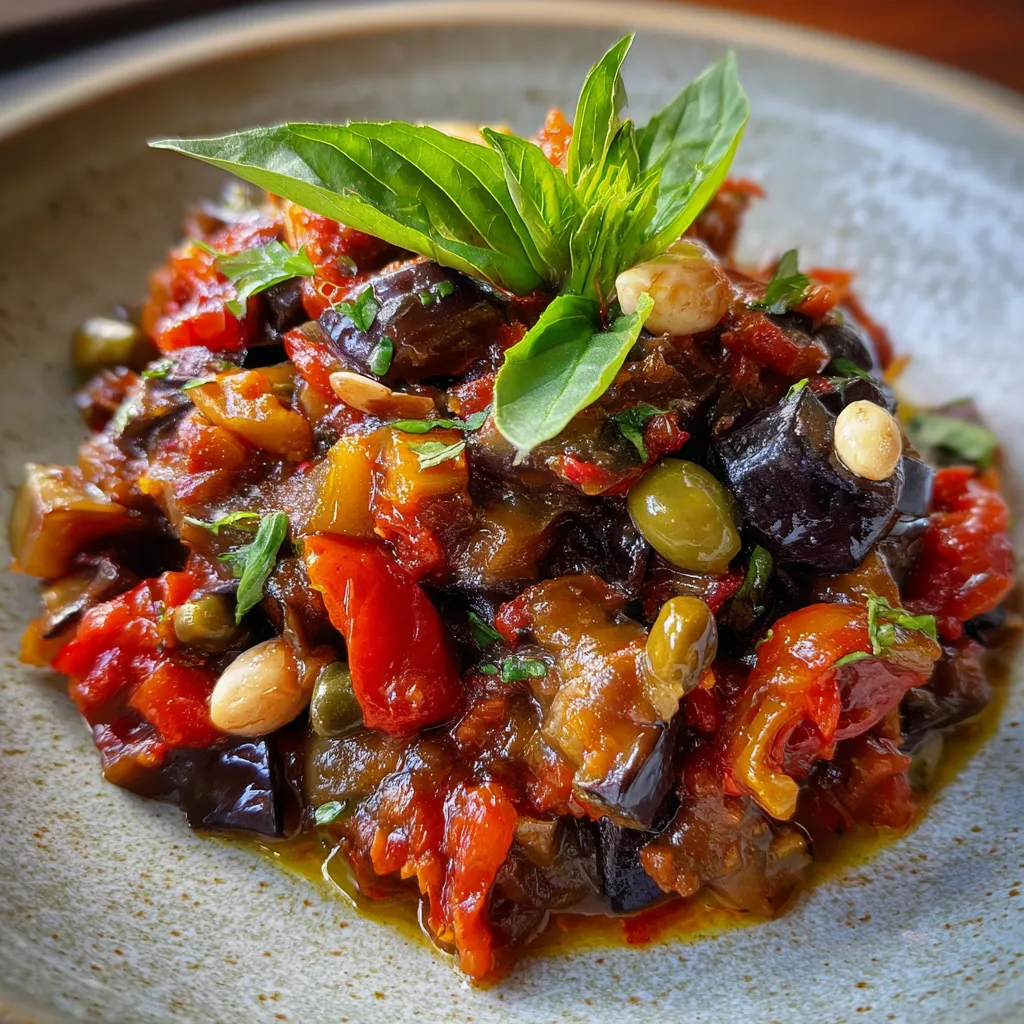

Authentic Eggplant Caponata
Description
Chunky eggplant cubes fry to golden perfection, then mingle with sweet-sour tomatoes, olives, and raisins. Each bite offers a balance of silky eggplant, crunchy celery, and bright vinegar zing—best served at room temperature with crusty bread.
Ingredients
Instructions
-
Cut eggplant into 2 cm cubes, sprinkle with salt and let drain in a colander for 30 minutes, then rinse and pat dry.
-
Heat half the olive oil in a large skillet over medium heat, fry the eggplant until golden brown, transfer to a plate lined with paper towels.
-
Add remaining olive oil to the skillet, sauté chopped onion, sliced celery, and minced garlic until softened, about 5 minutes.
-
Stir in canned tomatoes, sugar, and white wine vinegar, bring to a simmer and cook for 10 minutes until slightly thickened.
-
Add capers, pitted and chopped olives, pine nuts, raisins, and the fried eggplant, then simmer for another 5 minutes to meld flavors.
-
Season with salt and pepper, remove from heat, and let the caponata cool to room temperature.
-
Garnish with fresh basil leaves before serving and enjoy at room temperature.
Note
- Caponata tastes best when made a few hours or a day ahead to develop flavors.
- You can replace raisins with currants or golden raisins for a different sweetness.
- Adjust the sugar and vinegar quantities to suit your preferred sweet-and-sour balance.
- Serve with crusty bread, grilled fish, or as a flavorful side to grilled meats.